How a 7 Step Fan Regulator Saves Electricity — Explained Simply
Your ceiling fan runs for hours every day. In most Indian homes, it is one of the most-used electrical appliances from March through October. Yet many people never think about how the regulator controlling that fan actually works, or how much electricity it helps save.
If you have recently heard about a 7-step fan regulator and wondered what makes it different from the old knob-type regulator on your wall, this guide answers that clearly. No technical overload. Just a plain explanation of how it works, why it saves electricity, and how to pick the right one for your home.
What Exactly Is a 7 Step Fan Regulator?
A 7-step fan regulator is a speed-control device that lets you set your ceiling fan to one of seven distinct speed levels rather than a continuous dial. Each step corresponds to a specific voltage supply to the fan motor, which directly controls how fast the fan spins. Traditional rotary regulators offer a smooth, continuous adjustment with no fixed positions. A step-type regulator, by contrast, gives you clearly defined positions — step 1 being the slowest, step 7 being full speed. This precision is what makes it more energy-efficient in practice. The device itself fits into a standard modular switchboard slot and is available in both open-body and modular panel formats, depending on your installation type.How Does It Actually Save Electricity?
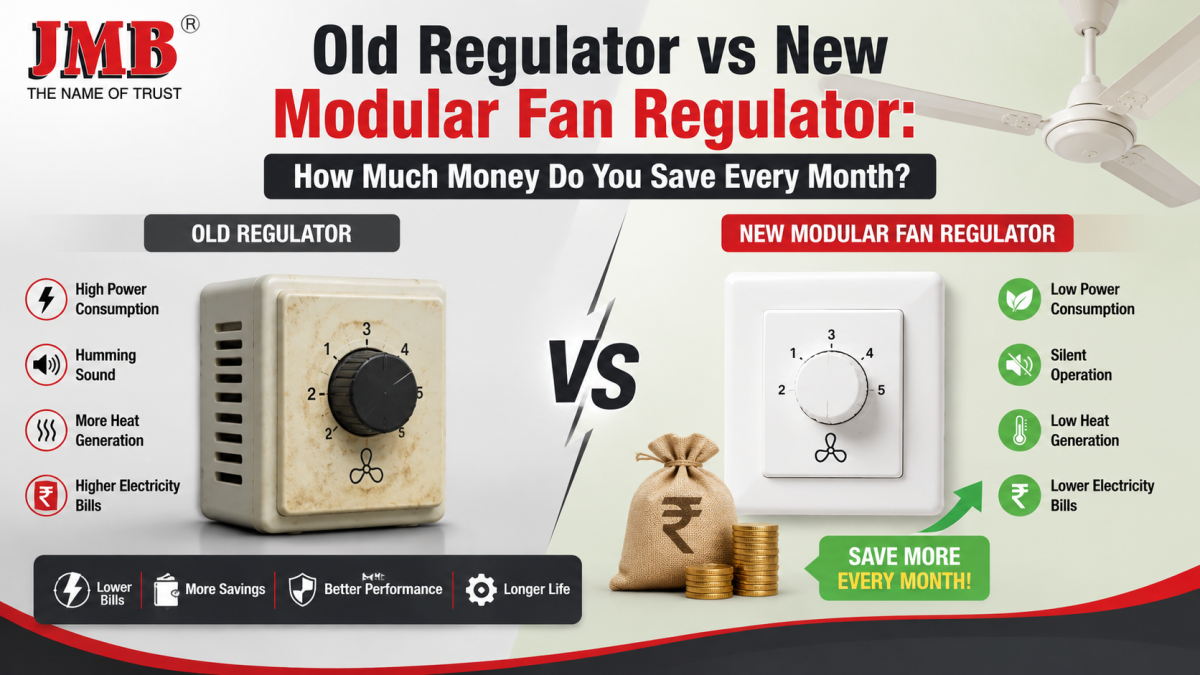
Here is the core idea: a fan running at full speed consumes maximum power. When you reduce the fan speed, the motor requires less current, and power consumption drops. With a traditional resistive regulator, the excess energy is not eliminated — it is converted into heat and wasted. This is why old-style regulators get warm when the fan runs at low speed. You are still paying for the full electricity, but part of it is lost as heat. A modern 7 speed fan regulator works differently. It reduces the voltage supplied to the fan motor at lower steps, which means less power is drawn from the mains in the first place. You genuinely use less electricity at step 3 compared to step 7, rather than just wasting the difference as heat. The savings add up over time. If your fan runs for 10 hours a day and you operate it at step 4 instead of step 7 for half that time, you can expect a measurable reduction in your monthly bill without sacrificing comfort. For a deeper look at how voltage control works inside modern fan regulators, this explanation of voltage control in fan regulators is worth reading before you make a purchase decision.7 Steps vs. 5 Steps: What Is the Difference?
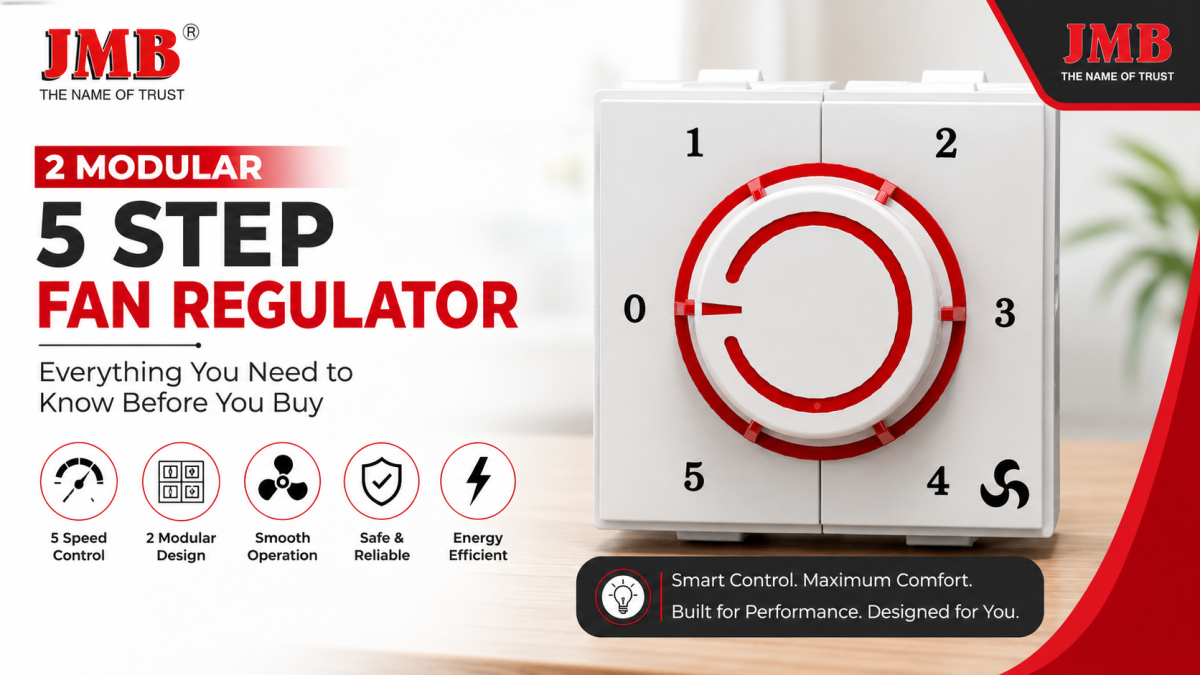
A common question is whether a 7-step regulator is better than a 5-step one. The short answer: more steps means finer control. With a 5-step regulator, you have five speed options. If step 3 feels too slow and step 4 feels too fast, you have no middle ground. A 7-step regulator gives you two additional positions between those extremes, making it easier to find a comfortable speed for different times of the day or weather conditions. For bedrooms and study rooms where you spend long hours, a 7-step option is often preferred. For utility areas or kitchens, a 5 Step Fan Regulator manufacturer product may be sufficient. The 2 modular 5-step fan regulators are good choices for double-slot switchboard panels where space allows a slightly larger fitting.Types of 7 Step Fan Regulators Available
Not all 7-step regulators look or install the same way. Here is a breakdown of the main types you will come across.Modular 7 Step Fan Regulator
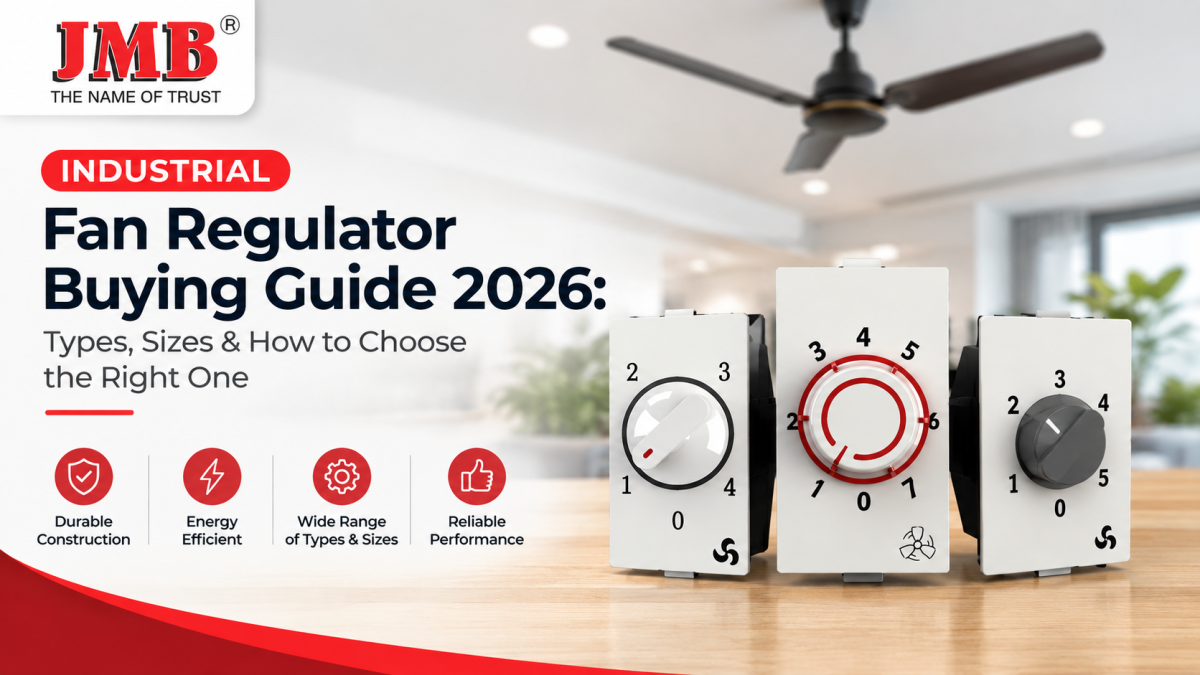
This is the most common type in modern homes. It fits into a standard 1M modular slot in your switchboard panel, just like a switch or socket. The front face shows numbered steps or a stepped rocker design. The 7 step modular fan regulator category covers a range of these fittings in different finishes and form factors. Two popular variants are the 1M 7 REDMI Modular Fan Regulator and the 1M 7 TRINGO Modular Fan Regulator, both designed for Roma-type modular panels and built with consistent step positioning for accurate speed control.Open Body 7 Step Fan Regulator
This type is used in surface-mounted or industrial-style installations where the regulator is housed in a separate enclosure rather than a modular panel. The Open Body 7-Step Fan Speed Regulator is a reliable option for workshops, warehouses, or older homes with non-modular wiring setups.Switch-Style 7 Step Fan Regulator
Some regulators are designed with a switch-style body that integrates cleanly into switchboards with a minimalist aesthetic. The SWITCH 7-Step Croma Fan Regulator is one such option, offering a slim profile and precise step action in a switchboard-friendly format.What Is a 7 Step Resistive Fan Regulator?
A 7-step resistive fan regulator uses a series of resistors wired in steps to reduce voltage to the fan motor. At lower steps, more resistance is introduced into the circuit, which reduces the current and slows the fan. The trade-off with resistive designs is heat generation at lower speeds, since the excess energy dissipates through the resistor coil. However, well-designed resistive regulators keep this within safe limits and are still widely used because of their simplicity, low cost, and reliability in standard home environments. For homes in Gujarat and other high-usage regions, a 7 step ceiling fan regulator with a good-quality resistor winding lasts several years with minimal maintenance.How to Wire a 7 Step Fan Regulator
Wiring is straightforward if you follow the right sequence. Most modular 7-step regulators have three terminals: line in, fan out, and Neutral (or earth in some variants). The basic wiring steps are:- Switch off the circuit at the distribution board.
- Remove the existing regulator from the switchboard.
- Identify the line, fan, and neutral terminals on the new regulator.
- Connect the live wire (line) to the line terminal.
- Connect the outgoing wire to the fan terminal.
- Refit the regulator into the modular frame and secure the panel cover.
- Restore power and test each of the seven steps.
How Much Can You Actually Save?
Real savings depend on your fan model, usage hours, and how often you run at reduced speeds. But here is a rough estimate to put it in perspective. A standard ceiling fan rated at 75W running at full speed (step 7) for 8 hours a day consumes about 0.6 units (kWh) per day. At step 4, the same fan might draw around 45W, consuming approximately 0.36 units per day. That is a 40% reduction for that operating period. Over a month, if your fan runs at medium speed for half its operating hours, the saving is roughly 3.6 units per month per fan. With electricity rates in India ranging from Rs. 5 to Rs. 10 per unit, that adds up to Rs. 18 to Rs. 36 per month per fan. Across a home with three or four fans, the numbers become significant. For a more detailed analysis of how regulators affect your monthly power bill, the article on energy savings with fan regulators and electricity cost breaks this down with real numbers.Choosing a 7 Step Fan Regulator: What to Check
When selecting a regulator, keep these factors in mind: Fan compatibility: Most regulators are designed for fans up to 60W or 75W. Check the wattage rating on the regulator against your fan's rated power. Modular or open body: Choose based on your switchboard type. A modular type fits into standard panels; an open body suits older or industrial installations. Build quality: The quality of the resistor winding and contact points determines how well the regulator holds each speed step over time. Cheap variants lose step accuracy within months. Step feel: A good regulator should have clear, distinct click positions for each step. Mushy or loose steps are a sign of poor-quality internals. Sourcing: If you are sourcing in bulk for a construction project or commercial property, working directly with a 7 Step Fan Regulator manufacturer in Ahmedabad or a 7 Step Fan Regulator supplier in Gujarat ensures you get consistent quality and better pricing than retail.Bulk Orders, Wholesale, and Export
For contractors, builders, and electrical distributors, sourcing from a manufacturer rather than a retailer makes practical and financial sense. A reliable 7 Step Regulator supplier in India can fulfil orders across varying quantities with consistent product specifications. Whether you need a few dozen units for a residential complex or a few thousand for a large commercial project, working with a manufacturer directly gives you control over product variants, packaging, and delivery. For those looking at 7 Step Fan Regulator wholesaler or 7 Step Fan Regulator exporter requirements, Gujarat-based manufacturers are well-positioned to handle both domestic bulk supply and export documentation efficiently. To understand what sets a reliable manufacturing partner apart from a typical distributor, the post on trusted fan regulator companies for bulk orders is a useful reference.Why Source from a Gujarat-Based Manufacturer?
Gujarat has long been a hub for electrical component manufacturing in India. The combination of raw material access, skilled labour, and established supply chains makes fan regulator manufacturer Gujarat Brands competitive in both quality and price. Sai Electronics India operates from Ahmedabad and manufactures a broad range of fan regulators, including the complete 7-step lineup. Their products are used by electricians, contractors, and OEM buyers across India. If you are a distributor or builder looking for a dependable 7 Step Fan Regulator manufacturer, their catalogue covers both modular and open-body formats in standard wattage ratings. For a broader look at fan regulator options across step counts and form factors, fan regulator manufacturers in India give you a starting point for comparing product lines.Frequently Asked Questions
Q: Does a 7 step fan regulator work with all ceiling fans?
A: It works with most standard induction-motor ceiling fans rated between 45W and 75W. It is not compatible with BLDC (brushless DC) fans, which require their own dedicated regulators.Q: What is the 7 step fan regulator price range in India?
A: Retail prices typically range from Rs 80 to Rs 250, depending on the type (modular vs open body), brand, and build quality. Bulk pricing from manufacturers is significantly lower.Q: Can I replace a 5-step regulator with a 7-step one?
A: Yes, as long as the new regulator fits the same modular slot size and the wiring terminals match. The upgrade gives you finer speed control without any other changes needed.Q: Is a 7 step switch fan regulator easy to install yourself?
A: Yes, for someone comfortable with basic electrical work. Always switch off the circuit before working on the wiring. If you are unsure, have a licensed electrician handle it.Q: What is the difference between a 7 step step-type fan regulator and a rotary one?
A: A step-type gives fixed, numbered positions for precise speed control. A rotary type offers continuous adjustment but no clear reference points and is generally less energy-efficient.Final Thoughts
Switching to a quality fan regulator 7 step model is one of the simplest upgrades you can make for better comfort and lower electricity use at home. The difference between a well-made 7-step regulator and a basic knob regulator is not just in the number of options — it is in real energy savings, longer fan life, and better daily comfort. If you are ready to upgrade or need guidance on the right model for your specific switchboard type, feel free to contact us and get direct help from a team that manufactures these products.Blog Categories
- 4 Step Fan Regulator
- 5 Step Fan Regulator
- 5 Step Fan Regulator Manufacturer
- 7 Step Fan Regulator manufacturer
- Blogs
- cooler regulator manufacturer
- fan dimmer manufacturer
- fan plate cover manufacturers
- Fan Regulator Manufacturing
- Fan Sheet manufacturer
- LED Foot Lights manufacturer
- modular blank plate manufacturer
- rotary dimmer manufacturer
- Surface box manufacturing
- USB Socket Manufacturers