Modular, Curve, or Switch Type: How to Choose the Right 4 Step Fan Regulator
Search for a 4 step fan regulator and three different physical types of 4 step fan regulator show up in the results: a flat modular plate, a rounded curve design, and a standalone switch type unit. They all give the same four speed steps, so the part that actually decides which one you need has nothing to do with the fan and everything to do with what is already built into your wall. Getting that wrong usually ends in a return, since a modular plate will not sit inside a conventional switch box and a switch type unit will not snap into a modular cutout. As one of the leading fan regulator manufacturers in india, we see this happen often, but matching your switch board is simple once you know what to look for.
What 4 Step Actually Means, Regardless of the Housing
Every regulator in this range moves through four fixed speed positions instead of a smooth dial, full, three quarter, half, and low. The way that voltage gets stepped down, resistor stack or capacitor bank, changes how much heat the unit gives off at lower speeds, but it does not change which housing fits your board. For a deeper look at how the voltage stepping itself works, this piece on how to connect fan regulator step-by-step wiring guide covers the electrical side in more detail than this guide needs to.
Modular Plate Type: Best for Boards Already Fitted with a Modular Frame
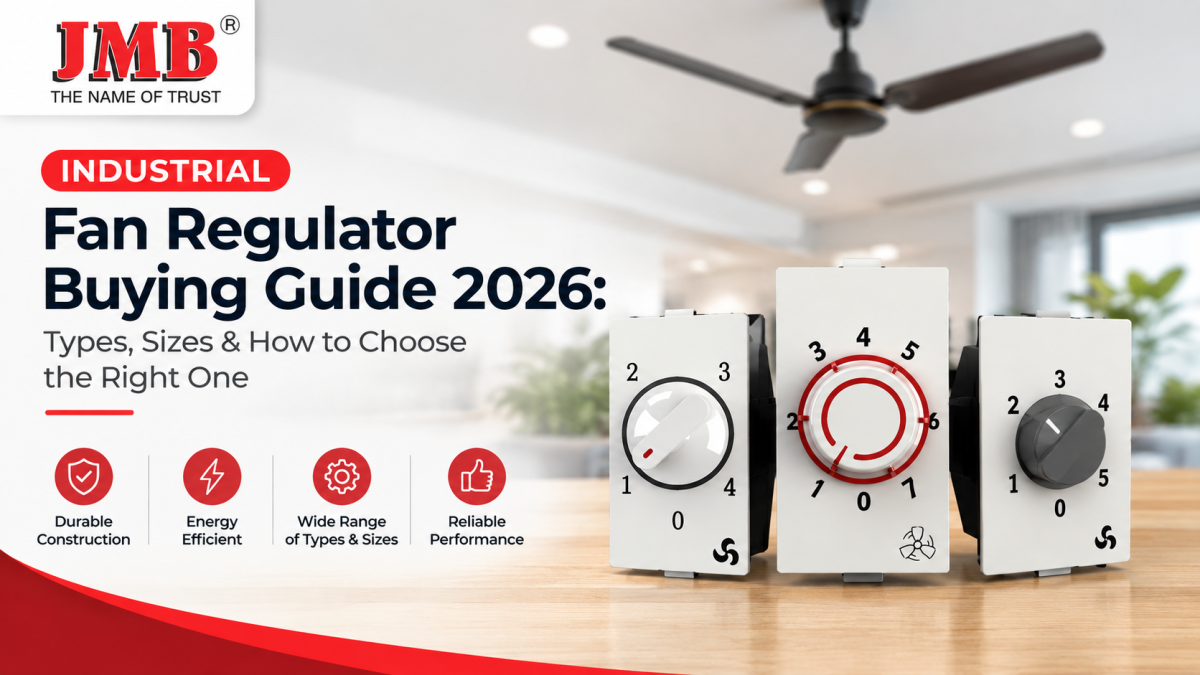
If your switch board already has a modular frame with individual plate slots for each switch, the 1 modular 4 step fan regulator range is built to drop into one of those slots without touching the wiring behind it. It takes up a single module, the same space as a regular light switch, and the flat plate matches the profile of every other switch already on the board. This is the most common pick for newer flats and offices, since modular boards have become the standard in most fresh construction across Indian cities over the past decade.
If you are looking for premium modular models, products like the SWITCH Croma 4-Step Fan Regulator offer a sleek, flush finish that blends perfectly with modern interiors.
Curve Design: The Same Modular Fit with a Rounded Profile
The curve range uses the exact same modular plate cutout and the same four step mechanism, the only difference sits in the cover itself, which carries a rounded edge instead of sharp corners. Buyers usually pick the 1 modular curve 4 step fan regulator line for rooms where the switch board is in plain view, a living room or entrance hallway, rather than a utility area tucked out of sight.
If sharp square plates already feel dated on your board, this is a drop in swap with no wiring changes, since it shares the same fitting as the standard modular type. For a stylish upgrade in this category, options like the SWITCH 4ST SILVER Capacitor Fan Regulator or the distinctive SWITCH 4ST REDMI Capacitor Fan Regulator add a premium aesthetic touch while maintaining smooth multi-step performance.
Switch Type: Best for Older, Non-Modular Switch Boxes
Plenty of buildings across India were wired before modular boards became common, and those still run on a conventional switch box rather than a modular frame. A switch type 4 step fan regulator comes as a complete unit in its own housing, built to fit straight into that existing box without any rewiring or board replacement.
Most of these also run on a capacitor bank rather than a resistor stack, which keeps the unit cooler at low speed, a detail worth checking if your board sees heavy daily use in a shop or shared space. High-durability variants such as the SWITCH 4ST STAR Capacitor Fan Regulator are specifically engineered to provide long-lasting, hum-free speed control for these heavy-duty traditional setups.
A Quick Way to Decide Which One You Need
Open the switch board cover and look at what is already there. A row of separate plate slots with individual switch modules means modular or curve, depending only on whether you want a flat or rounded look. A single solid switch body with no surrounding plate frame means switch type, and matching this detail is the real starting point if you want to choose the right fan regulator rather than guess from a product photo.
There is no in between option, and trying to force one housing into the wrong board usually means an electrician has to redo part of the wiring just to make it physically fit. If the fan itself is also struggling rather than the switch, this piece on why a 4 step regulator fixes a fan running too fast or too slow covers the symptom side of the problem in more depth.
Price and Running Cost Differences Between the Three
Modular and curve units typically run on a resistor stack, which keeps the unit price lower but means the switch body runs warmer at low speed, since the unused voltage gets dissipated as heat rather than stored. Switch type units more often run on a capacitor bank instead, which usually costs a little more per unit but keeps the housing cooler across all four speeds and puts marginally less strain on the internal contacts over years of daily use.
Neither difference is large enough to be the deciding factor on its own, fan regulator switch board compatibility still comes first, but it is worth knowing before you compare two listings that otherwise look identical on the surface. Sai Electronics India lists the housing type clearly on every product page across the 4 step fan regulator category, so you are not left guessing from a photo alone.
Frequently Asked Questions
Q. How many types of 4 step fan regulator are there to choose from?
Three, modular, curve, and switch type, and all three run the same four click speed positions underneath. The difference that actually matters when you are buying is the housing, since only one of the three will physically fit the switch board you already have.
Q. Should I consider a remote control fan instead of any of these?
That depends more on convenience than on switch board fit, since a remote control fan changes how you operate the fan rather than how the switch sits in your wall. This remote control ceiling fans vs traditional regulators comparison walks through the running cost and convenience trade-offs in more detail if that option is still on your shortlist.
Q. Can I mix housing types across one switch board?
Yes, plenty of boards run a flat modular plate for the lights and a curve plate just for the fan regulator, or vice versa, since each module slot is independent of the others. The only rule that matters is that every plate in a modular frame needs to use the modular cutout, switch type units are the one housing that cannot join that mix.
Ready to Choose the Right Fan Regulator?
Once you understand the types of 4 step fan regulator available and match that against what is already on your wall, the choice between the three ranges stops being a guess and becomes a straightforward fit check, which is usually a five minute job before you even open a product page.
If you are planning to upgrade your home switches or need expert guidance on bulk orders for your commercial projects, feel free to contact us today. Our technical team is always ready to help you choose the ideal regulation solutions for your space.
Blog Categories
- 4 Step Fan Regulator
- 5 Step Fan Regulator
- 5 Step Fan Regulator Manufacturer
- 7 Step Fan Regulator manufacturer
- Blogs
- cooler regulator manufacturer
- fan dimmer manufacturer
- fan plate cover manufacturers
- Fan Regulator Manufacturing
- Fan Sheet manufacturer
- LED Foot Lights manufacturer
- modular blank plate manufacturer
- rotary dimmer manufacturer
- Surface box manufacturing
- USB Socket Manufacturers