Fan Running Too Fast or Too Slow? Why a 4 Step Regulator is the Fix You Need
There is a particular frustration that comes with a ceiling fan that simply will not cooperate. Step 1 barely moves the air. Step 2 suddenly feels like a wind tunnel. The old rotary knob sits somewhere in between, vibrating loose every few weeks. If this sounds familiar, the problem is almost certainly not the fan itself. It is the regulator.
A 4 step fan regulator solves this in a clean, straightforward way. Four defined speed positions, each clearly separated, each repeatable. No guessing. No constant readjusting. Just set it once and let it run.
This guide explains how it works, which type suits your home or project, and what to look for before you buy.
Why Your Current Regulator Might Be Letting You Down
Old-style rotary regulators were designed around simplicity. A dial, a resistor coil, and continuous adjustment from minimum to maximum. In theory, that gives you infinite control. In practice, the dial slips, the resistor overheats at low speeds, and you end up using just two or three positions anyway.
The bigger issue with continuous rotary types is energy waste. At low speeds, the resistor dissipates the remaining power as heat. You are not reducing how much electricity your fan consumes — you are just diverting some of it into warming your wall.
Step-type regulators work differently. At each step, the circuit is configured to supply a specific voltage to the fan motor. Lower steps mean genuinely less current drawn from the mains, which translates to real savings on your electricity bill over time.
This is why so many homes and commercial spaces across India are upgrading away from rotary types and moving toward step regulators. A 4 step fan regulator sits in the sweet spot for most rooms — enough options to cover the range from gentle circulation to full cooling, without the added complexity of a 5- or 7-step device.
How a 4 Step Fan Regulator Works
Inside a 4-step regulator is a set of resistors wired in a stepped arrangement. Each position on the regulator selector connects a different combination of resistors in series with the fan motor circuit.
At step 4 (full speed), no extra resistance is added — the fan receives the full rated voltage and runs at maximum speed. At step 1, the highest resistance is introduced, dropping the voltage to the motor and slowing the fan to its minimum operational speed.
The steps are fixed, which means the fan always returns to the same speed at any given position. This repeatability is something a rotary dial simply cannot offer.
Modern versions of the 4 step fan regulator use improved winding materials and contact mechanisms that stay accurate over years of daily use. The step selector should click firmly into each position, with no looseness or drifting between steps.
For readers who want to understand the internal voltage behaviour in more detail, the guide on voltage control in modern fan regulators covers the circuit mechanics clearly.
4 Steps vs 5 Steps vs 7 Steps: Which Is Right for You?
This is a common question, and the honest answer depends on how you actually use your fan.
4 Step Regulator
Four positions cover low, medium-low, medium-high, and full speed. For most living rooms, bedrooms, and office spaces, this range is more than adequate. The compact selector fits into a single modular slot (1M), which makes it ideal for switchboards where space is limited.
If you want a side-by-side comparison of how the 4-step and 5-step options perform in real usage scenarios, the post on 4 step vs 5 step fan regulators in Indian homes gives a practical breakdown.
5 Step Regulator
The 5 Step Fan Regulator manufacturer range adds one more position between medium and high speed. Useful if you frequently feel that step 3 is slightly too slow and step 4 is slightly too fast in a 4-step layout. Bedrooms and study rooms where you spend long hours often benefit from this finer increment.
7 Step Regulator
The 7 Step Fan Regulator manufacturer options provide the finest control, with seven defined positions across the full speed range. The trade-off is a slightly larger selector that takes up more panel space. Best suited for rooms where you want very precise airflow control, such as server rooms, nurseries, or medical facilities.
For most standard Indian households, a 4-step or 5-step regulator covers the full range of practical needs. The 7-step is better suited to commercial or specialist environments.
Types of 4 Step Fan Regulators
The right body type depends on your switchboard style and installation setting.
1 Modular (1M) Panel Type
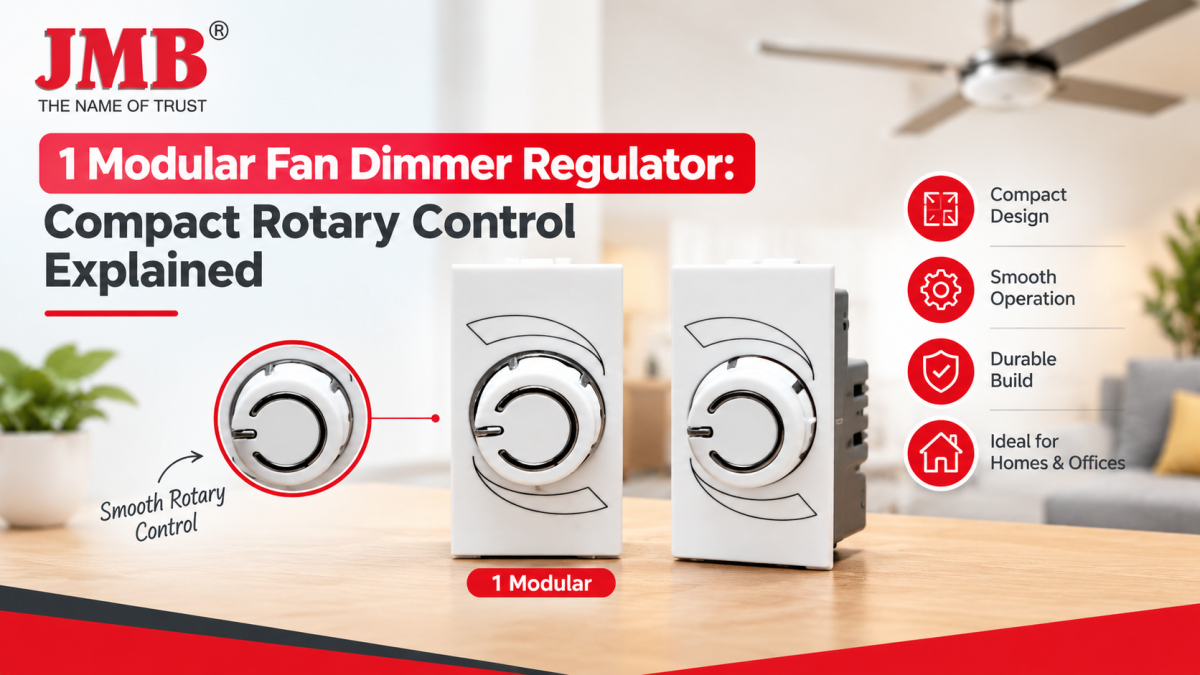
This is the most common format for modern homes. The regulator fits into a single 1M slot in a standard modular switchboard. The compact profile means it takes up minimal space while leaving room for switches, sockets, and other fittings in the same panel.
Several variants are available to match different panel aesthetics:
The 1 M CLASSIC 4-Step Modular Fan Regulator suits standard white or off-white modular panels with a clean, no-frills profile. If your switchboard uses a grey colour scheme, the 1 M CROMA GREY 4-Step Modular Fan Regulator provides a matching finish that blends in neatly.
For homes with updated panel designs, the 1 M NEW 4-Step Modular Fan Regulator offers a contemporary selector style that sits well in modern switchboards with styled frames and matte finishes.
Compact or Mini Format
In some installations, the panel layout is tight, and a standard 1M body is the only option. The Mini Diamond 4 ST Fan Regulator is a compact variant designed for panels where precise fitment in a smaller footprint matters, particularly useful in retrofit projects where you are working around an existing layout.
How to Install a 4 Step Fan Regulator
For anyone comfortable with basic electrical work, fitting a modular 4-step regulator is a straightforward job. Here is the sequence:
- Switch off the relevant MCB at your distribution board before touching anything.
- Remove the existing regulator or the cover plate from the slot you are using.
- Identify the terminals on the new regulator: Line (incoming live), Fan (outgoing to the fan), and Neutral (if applicable).
- Connect the live wire from the wall to the line terminal.
- Connect the wire going to the fan to the fan terminal.
- Press the regulator body into the modular frame until it seats firmly.
- Refit the switchboard cover, restore power, and test all four speed steps.
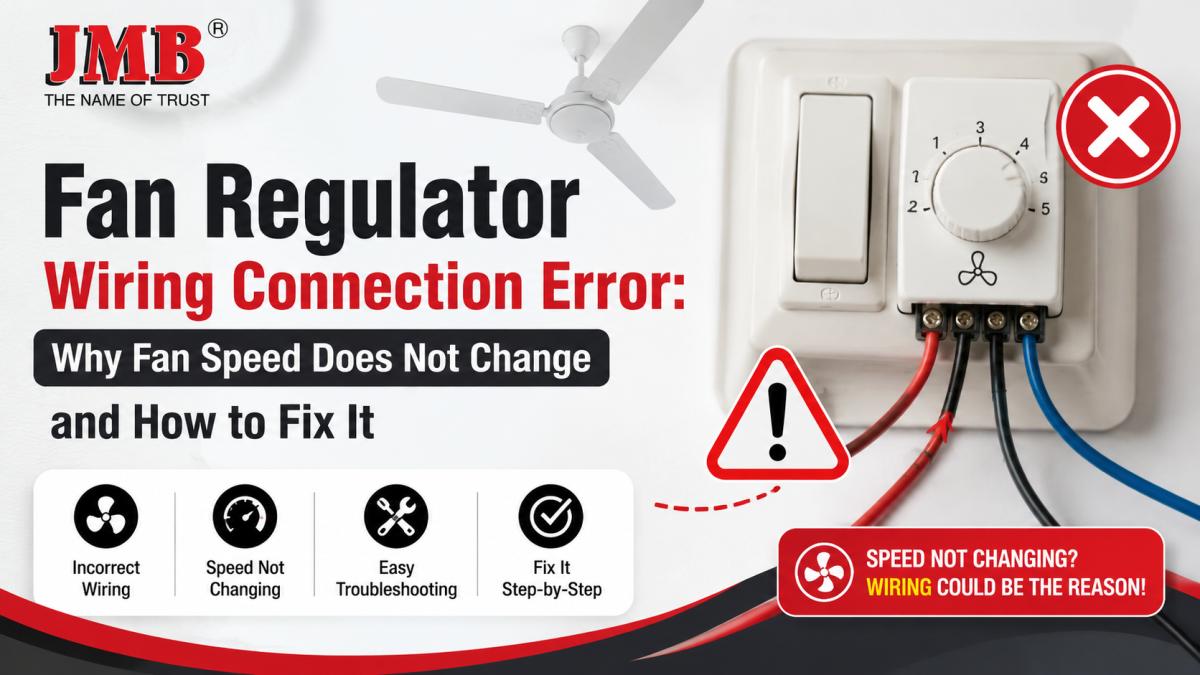
Each step should click into place clearly. If any position feels loose or causes the fan to run at an unexpected speed, check the wiring connections before assuming the unit is faulty.
For a fully illustrated installation reference, including terminal diagrams for different switchboard types, the step-by-step fan regulator wiring guide is a reliable resource to have open while you work.
What to Look for When Buying a 4 Step Fan Regulator
Quality differences between regulators are not always visible from the outside. Here is what actually separates a reliable unit from a cheap one.
Step click quality: Each of the four positions should engage with a firm, tactile click. A mushy or vague step action means the internal contact system is low quality and will likely drift or fail within a year or two.
Fan wattage rating: Most standard ceiling fans are rated between 50W and 75W. Confirm the regulator's maximum wattage rating matches or exceeds your fan's power draw. Using an undersized regulator causes it to overheat at full speed.
Heat at low steps: Some warmth at step 1 is normal for resistive-type regulators. Excessive heat is a sign of poor resistor winding quality and can become a safety concern over time.
Panel compatibility: Measure the slot in your switchboard before ordering. A 1M modular regulator fits a single module slot. A mismatch in size means the unit will not seat correctly in the frame.
Finish and colour match: This sounds minor, but a mismatched regulator face on a clean switchboard panel stands out badly. Choose a variant that matches your panel colour (white, grey, or custom) for a professional result.
For Contractors and Bulk Buyers
If you are managing a construction project, hotel fit-out, housing complex, or commercial building, buying direct from a 4 Step Fan Regulator manufacturer rather than a distributor gives you consistent quality across every unit, better pricing at scale, and access to the full range of variants under one order.
When evaluating suppliers, check for BIS compliance on the products, consistent winding quality across production batches, and the ability to supply different body types – modular, mini, or open body – from the same source. A reliable manufacturer can also accommodate OEM requirements for custom branding or packaging if your business needs it.
Gujarat-based manufacturers supplying across India are well-positioned to handle both domestic bulk orders and export requirements. For a broader view of what the Indian market offers across all step counts and formats, fan regulator manufacturers in India give a useful product-range overview.
If you are also outfitting panels with charging points alongside fan regulators, the USB Socket Manufacturers range covers USB-A and USB-C socket modules that fit standard modular panels and can be combined in the same switchboard as your fan regulator.
Frequently Asked Questions
Q: Will a 4 step regulator work with my existing ceiling fan?
A: Yes, provided your fan is a standard induction-motor ceiling fan rated up to 75W. It will not work with BLDC fans, which need a dedicated electronic controller.
Q: Can I swap a 5-step regulator for a 4-step one?
A: Yes. As long as the new unit fits the same modular slot and the wiring terminals are compatible, the swap is straightforward. You simply lose one speed step, which for most users makes no practical difference.
Q: Why does the regulator feel warm at low speed?
A: At lower steps, the resistors in the circuit absorb the voltage difference and release it as mild heat. This is normal for resistive-type regulators. If the unit feels hot rather than warm, check that the fan wattage does not exceed the regulator's rating.
Q: How long does a modular 4-step regulator last?
A: A well-made unit with quality internal contacts and winding should last 5 to 10 years under normal daily use. Cheap variants with poor contact quality may show step drift or failure within 12 to 18 months.
Q: Is professional installation required?
A: Not necessarily. Anyone with a basic understanding of electrical wiring can install a modular fan regulator safely by following the correct terminal connections and switching off power at the board first. If you are unsure, have a licensed electrician handle it.
Sai Electronics India: A Manufacturer You Can Rely On
Sai Electronics India manufactures a complete range of fan regulators, including the full 4-step modular lineup, from their facility in Ahmedabad. Their products are used by electricians, contractors, builders, and OEM buyers across India.
Whether you need a single unit for a home upgrade or a bulk order for a large construction project, their range covers the full spectrum of body types, finishes, and wattage ratings — all built to consistent tolerances that installers can count on.
If you have specific requirements around panel type, wattage, or order volume, the team is available to help you identify the right product. Feel free to contact us directly for guidance or to discuss a bulk inquiry.
Blog Categories
- 4 Step Fan Regulator
- 5 Step Fan Regulator
- 5 Step Fan Regulator Manufacturer
- 7 Step Fan Regulator manufacturer
- Blogs
- cooler regulator manufacturer
- fan dimmer manufacturer
- fan plate cover manufacturers
- Fan Regulator Manufacturing
- Fan Sheet manufacturer
- LED Foot Lights manufacturer
- modular blank plate manufacturer
- rotary dimmer manufacturer
- Surface box manufacturing
- USB Socket Manufacturers
Related Posts