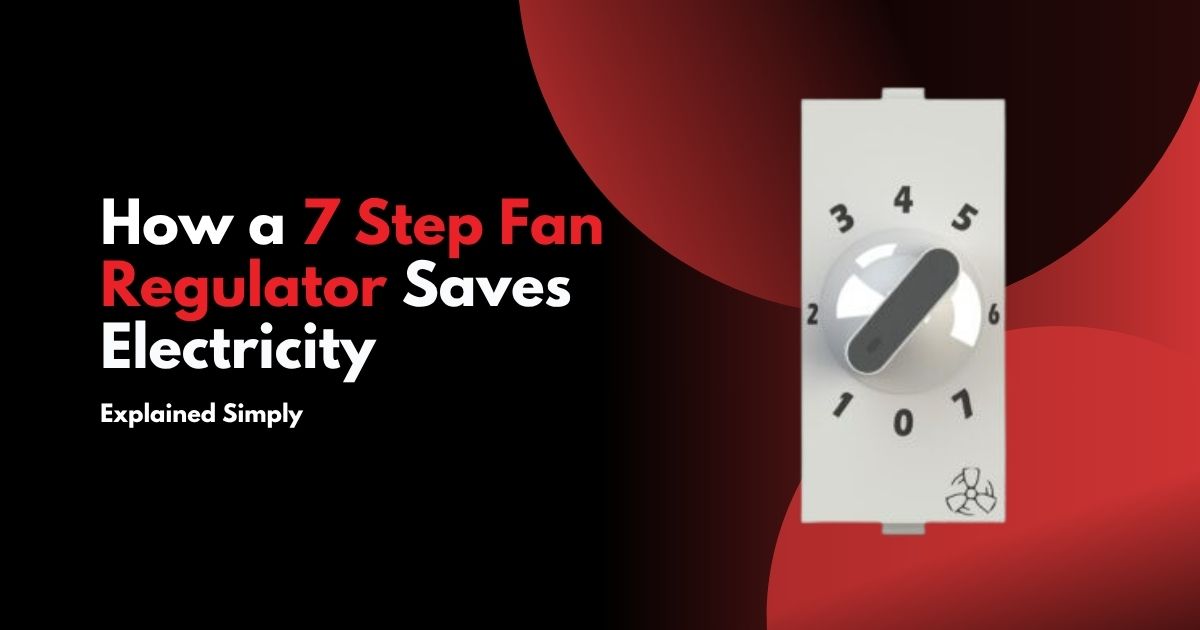
2 Modular 5 Step Fan Regulator: Everything You Need to Know Before You Buy
If you have ever stood in an electrical shop or scrolled through a product list trying to figure out which fan regulator fits your switchboard, you already know the confusion is real. The market has dozens of variants, and the naming conventions are not always intuitive. This guide cuts through that and focuses specifically on the 2 modular 5 step fan regulators: what they are, how they work, who should buy them, and how to pick the right model for your project.
What Exactly Is a 2 Modular 5 Step Fan Regulator?
The name tells you two things. First, "2 modular" tells you the physical size. It occupies two module slots in a standard modular switchboard, the kind with branded plates, switch inserts, and socket modules that click into a grid frame. Second, "5 step" tells you the control range. The regulator gives you five distinct speed positions for your ceiling fan, from a slow, gentle circulation all the way to full operating speed.
The internal mechanism in most modern versions is capacitor-based. A capacitor regulator adjusts the voltage reaching the fan motor without converting the excess energy into heat. That is why capacitor-type units stay cooler during operation, consume less standby power, and tend to last significantly longer than older resistance-based designs that literally warm up as they reduce fan speed.
The "2M" size is not arbitrary. Modular switchboards allocate space in single-module increments. A fan regulator needs slightly more internal room than a simple switch because it houses capacitor components, a rotating knob or slider mechanism, and protective circuitry. Two module slots give manufacturers enough depth and width to build a reliable unit that fits cleanly into a standard panel without protruding or requiring modifications.
Flat Face vs Curve Face: Which Panel Are You Fitting?
Before ordering, confirm what type of modular panel your project uses. This is a step many buyers skip and then regret when the unit arrives.
Flat-face modular panels are the more common type. The face plate of the switch insert sits flush in a flat grid frame. If your switchboard is of this type, models like the TRINGO 2M 5 Step Fan Regulator and the Star 2M 5 Step Fan Regulator are the right fit. These are the standard flat-body 2M variants designed for this panel type.
Curve-face modular panels use a frame with a slightly contoured front. Certain panel brands build their entire switch series around this aesthetic. If your project uses curved modular plates, you need the matching 2 modular curve 5 step fan regulator variant instead. Options like the 2 M C STAR and 2 M C SILVER are built specifically for curved panel systems.
Fitting a flat-face regulator into a curve-frame panel, or vice versa, results in a visible gap, an unstable fit, or difficulty operating the control knob. Getting the face profile right before ordering saves you the hassle of returns or rework.
How the Five Steps Actually Work
The five speed positions on a capacitor-based fan regulator correspond to five different capacitor configurations inside the unit. Each position connects a different capacitor value in series with the fan motor, which changes the effective voltage reaching it and therefore the speed at which the motor runs.
Step one delivers the minimum voltage, producing the slowest fan speed. Step five bypasses most of the capacitor load and allows the fan to run at or near its full rated speed. Steps two through four give you graduated levels between those extremes.
This is meaningfully different from a simpler 3-step or 2-step regulator. In a bedroom where one person wants a gentle overnight breeze and another wants stronger airflow, the ability to pick from five positions rather than three gives you a much more useful range of adjustment. For offices, waiting areas, and rooms used by multiple people throughout the day, this granularity matters more than it might seem on paper.
Installation Basics: What You Need to Know
Installing a 2 modular 5 step fan regulator is a task most qualified electricians can complete in under fifteen minutes per point. Here is a simplified overview of the process.
The regulator sits between the power supply and the fan. The live feed from your fan switch connects to the input terminal of the regulator. The output terminal connects to the fan. Neutral bypasses the regulator entirely and connects directly to the fan.
The unit clicks or screws into the two-module slot in your panel frame. Most modular regulators use the same clip-and-screw mechanism as standard switch inserts. Once wired, the plate is fitted and the unit is ready.
For a detailed walkthrough with diagrams covering both modular and non-modular installations, the complete how to connect fan regulator step-by-step wiring guide covers every connection point in a clear, sequential format.
One important check before switching on: confirm the fan's rated wattage falls within the regulator's load rating. Most standard 2M regulators handle fans in the 50W to 250W range. Going above that limit is a safety and reliability risk.
Explore Our Complete Range of Regulators
Looking for popular models like TRINGO, STAR, or SILVER? Check out our full collection of 2 Modular 5 Step Fan Regulators and pick the right match for your switchboard setup. Browse Shop RangeB2B Sourcing: What Bulk Buyers Should Ask For
If you are sourcing 2M 5 step fan regulators in bulk for a housing project, a distribution network, or an OEM panel assembly operation, the procurement process is slightly different from retail buying.
Consistency across batches: Ask the manufacturer for dimensional specs and confirm they match across production runs. For panel assembly work, even a 1mm variation in depth or mounting hole spacing can cause issues at scale.
Documentation: For commercial projects and government contracts, BIS certification or test reports may be required. Confirm availability before finalizing the order.
Sample order: Before committing to a large quantity, request a sample batch to verify the fit on your specific panel brand and the smoothness of the step mechanism under repeated use.
Lead time: Established manufacturers typically have production slots that need advance booking for large orders. Build lead time into your project schedule rather than treating it as a last-minute sourcing item.
Packaging: For distributors, branded or retail-packed units move faster on shelves. Ask whether retail-ready packaging is available alongside loose bulk packs.
Featured Products
VIEW ALL ➔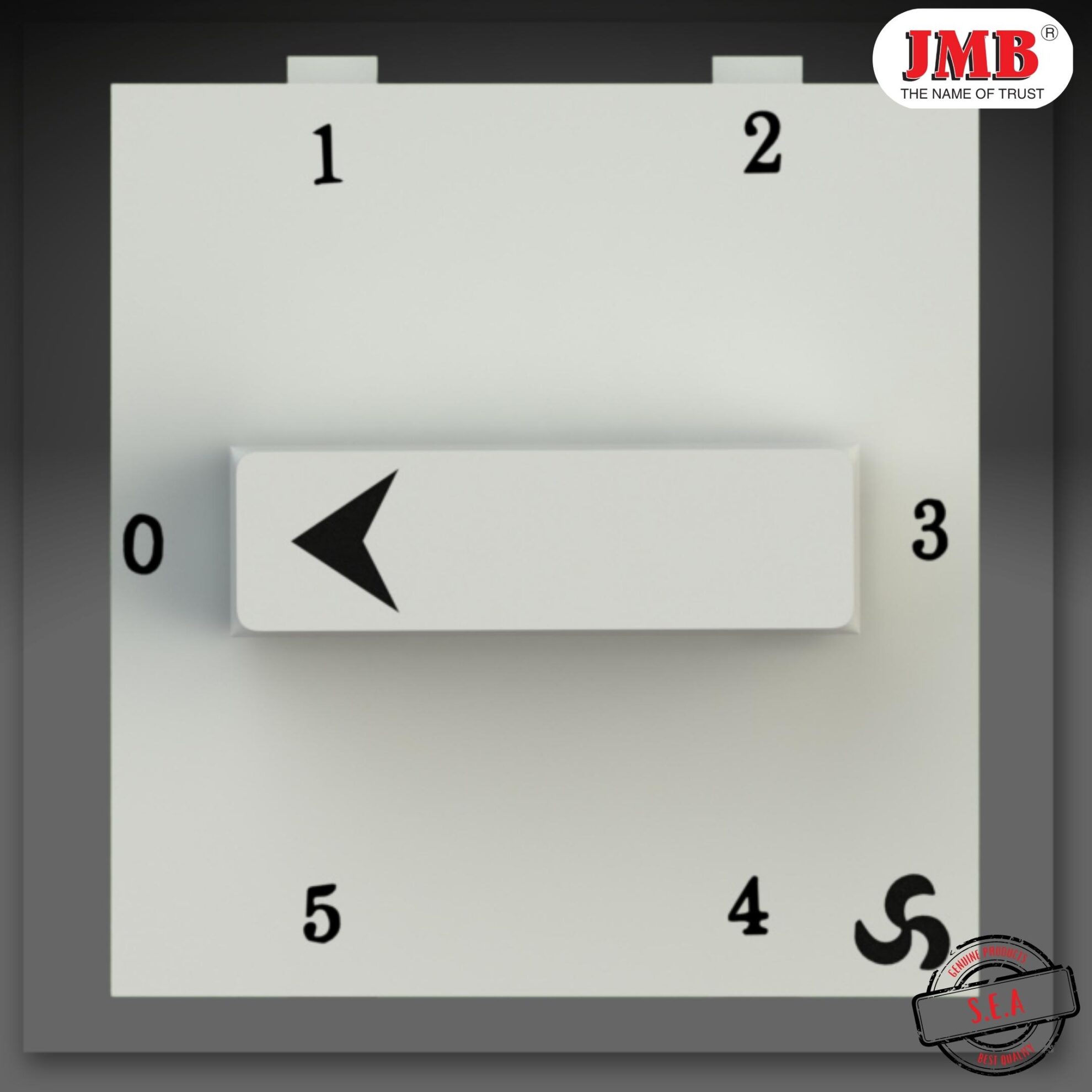


Common Mistakes Buyers Make
A few recurring mistakes show up when buyers source this product for the first time.
Ordering the wrong face profile. As covered above, flat and curve variants are not interchangeable. Always check the panel brand before ordering.
Ignoring the load rating. A fan rated above the regulator's maximum load will run erratically, overheat the unit, or cause early failure. This is the most common field complaint.
Buying on price alone. Very low-cost units often use substandard capacitors that fail within one to two seasons. The regulator cost is small relative to the electrician's revisit cost when a cheap unit dies.
Sourcing mixed batches from multiple suppliers. For large projects, variation in dimensions and finish across suppliers creates visible inconsistency on completed switchboards. Single-source procurement from a verified manufacturer avoids this.
How to Choose Between Models in the Same Category
If you are comparing two models within the flat-face 2M range, or between the STAR and SILVER curve variants, here are the practical differentiators.
Panel series matching: Some modular switchboard brands have their own product series (e.g., STAR, GOLD, SILVER lines). If the rest of your panel uses a specific series, picking the matching regulator keeps the switchboard aesthetically cohesive.
Finish and knob style: Some buyers prefer a rotating knob, others prefer a sliding lever. Both deliver the same five-step function; the difference is purely in how the user interacts with it.
Certification status: For projects that require compliance documentation, confirm which specific models carry relevant certifications and source those.
Where This Fits in the Broader 5 Step Range
The 2M flat range is one part of a wider 5 step product family. If your project spans multiple building types or wiring configurations, you may also need the open-body range for traditional wiring boards. The Open Tringo 5-Step Capacitor Fan Regulator and OPEN STAR 5 ST cover those scenarios.
For an overview of the complete range across all 5 step formats, visiting the page of a dedicated 5 Step Fan Regulator manufacturer gives you a full picture of what is available before you finalize your specification.
Ready to Source the Right 2M Fan Regulator for Your Project?
Whether you need individual units or wholesale bulk supplies for housing projects, distribution networks, or switchboard assembly lines—we've got you covered. Send us your panel design, required quantity, and project timeline for fast quotes and testing samples. Contact Us NowBlog Categories
- 4 Step Fan Regulator
- 5 Step Fan Regulator
- 5 Step Fan Regulator Manufacturer
- 7 Step Fan Regulator manufacturer
- Blogs
- cooler regulator manufacturer
- fan plate cover manufacturers
- Fan Regulator Manufacturing
- Fan Sheet manufacturer
- LED Foot Lights manufacturer
- modular blank plate manufacturer
- rotary dimmer manufacturer
- Surface box manufacturing
- USB Socket Manufacturers