Capacitor vs Resistive Fan Regulator: Which One Actually Saves More Electricity?
A capacitor (electronic/step) fan regulator saves more electricity than an old resistive regulator. Resistive regulators control fan speed by burning off extra power as heat, so you still pay for energy you don't use. Capacitor and step-type regulators reduce the power drawn instead of wasting it, so lower speeds use genuinely less electricity. If you want to cut your fan running cost, a capacitor or step regulator is the clear winner. At Sai Electronics, we manufacture both types in India, and this guide explains the real difference.
Key Takeaways
- Capacitor/step regulators save electricity; resistive ones don't. That's the headline.
- Resistive regulators burn off extra power as heat, so you still pay for it.
- Capacitor types draw less power at lower speeds, giving real savings.
- The savings come with bonuses: less heat, no humming, longer life.
- For any new install or upgrade, choose capacitor or step over old resistive.
Switch to an Energy-Saving Step Regulator
Cut your fan running cost with a modern capacitor or step-type regulator. Browse our 4-step, 5-step and 7-step range built for efficiency.
VISIT SHOPWhat is a resistive fan regulator?
A resistive regulator is the old-style round knob many Indian homes still have. It controls fan speed using a resistor.
Here's how it works. To slow the fan, the regulator adds resistance to the circuit. That resistance drops the voltage reaching the fan, so the fan spins slower.
But there's a catch. The energy removed from the fan doesn't disappear. The resistor turns it into heat. That's why old regulators get warm or hot.
So the fan uses less power, but the regulator wastes the difference as heat. Your total electricity use barely changes. You're paying for energy that warms up a resistor instead of spinning your fan.
This is the core weakness of the resistive design, and it's exactly what capacitor regulators fixed.
What is a capacitor (electronic/step) regulator?
A capacitor regulator controls speed a smarter way. Instead of burning off energy, it limits how much power the fan draws in the first place.
It uses a capacitor (or electronic switching in step types) to reduce the voltage efficiently. Very little energy is lost as heat.
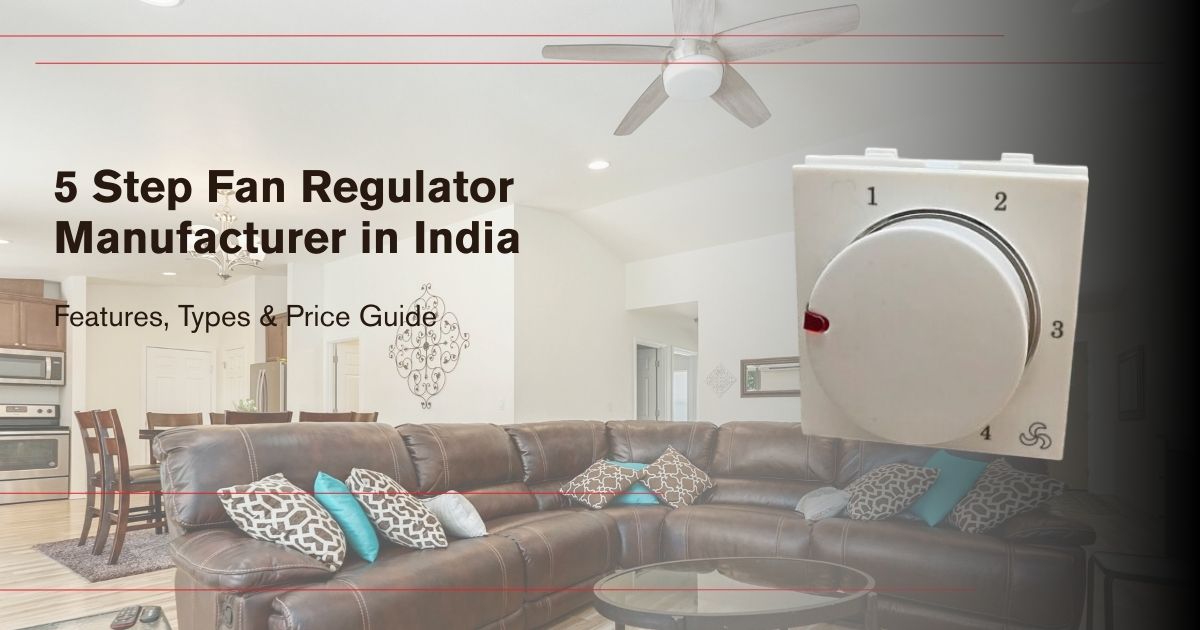
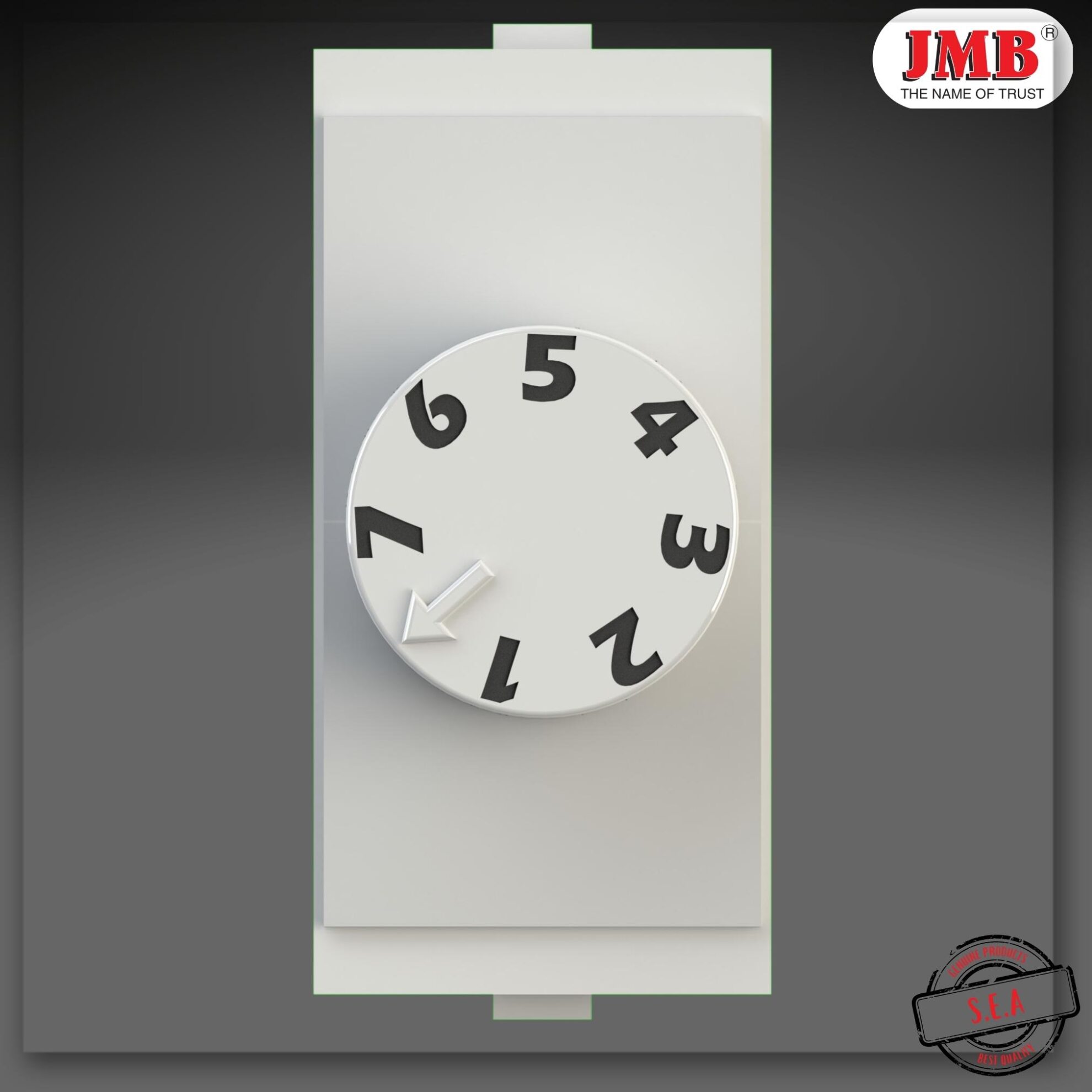
Step regulators are the modular versions you see today, with fixed speed steps (4, 5, or 7). They work on the same efficient principle.
The result: when you lower the speed, the fan genuinely pulls less power from the mains. You're not just slowing the fan; you're actually using less electricity.
This is why these regulators stay cool to the touch. There's no wasted heat, because there's no wasted energy. Efficiency and low heat go hand in hand.
Why resistive regulators waste electricity
This is the heart of the comparison, so let's make it simple.
Imagine your fan needs less power to run slower. With both regulators, the fan itself draws less. The difference is what happens to the leftover power.
- Resistive: the leftover power is burned off as heat inside the regulator. You still pay for it. Net saving: almost none.
- Capacitor/step: the leftover power is never drawn from the mains at all. Net saving: real.
Think of a resistive regulator like slowing a car by pressing the brake while keeping your foot on the accelerator. You slow down, but you're still burning fuel. A capacitor regulator simply eases off the accelerator.
So at low and medium speeds, where fans run most of the time, a capacitor or step regulator genuinely cuts your consumption. A resistive one does not.
Capacitor vs resistive: side by side
Here's the full comparison at a glance.
| Feature | Resistive regulator | Capacitor / step regulator |
| Electricity saving | Almost none | Real saving at low/mid speed |
| Heat | Runs hot | Stays cool |
| Noise | Can hum | Quiet |
| Energy wasted | High (as heat) | Very low |
| Lifespan | Shorter | Longer |
| Look | Old round knob | Modern modular |
| Best for | Legacy boards only | All new installs & upgrades |
The verdict is clear across every row. A capacitor or step regulator wins on savings, heat, noise, and life. The only reason to keep a resistive one is if you simply haven't upgraded yet.
FEATURED PRODUCTS
VIEW ALL ➔

How much can you actually save?
The honest answer: it depends on your fan, how often you run it at lower speeds, and your local electricity rate. Anyone quoting an exact rupee figure for every home is guessing.
Here's what shapes your real saving:
- How much you run at low/mid speed. The lower the speed, the bigger the gap between resistive and capacitor. Most savings happen here.
- Hours of daily use. A fan running 12 hours saves more than one running 2 hours.
- Number of fans. Savings multiply across every fan in the home.
- Your tariff. Higher electricity rates mean larger rupee savings.
The pattern is simple: the more you run fans at reduced speed, the more a capacitor or step regulator pays back. Over a hot season across several fans, the saving is real and adds up, on top of a cooler, quieter, longer-lasting regulator.
For an exact figure, check your fan's wattage and your electricity rate, then compare consumption at your usual speed.
Beyond savings: heat, noise, and lifespan
Electricity is only part of the story. The two types differ in everyday use too.
- Heat. Resistive regulators run hot, especially at mid speed. Capacitor and step types stay cool, which is safer and kinder to your switchboard.
- Noise. Resistive regulators often hum, a low buzz you hear at certain speeds. Step and capacitor regulators run quietly.
- Lifespan. Constant heat shortens a resistive regulator's life. Cooler-running types last longer and fail less.
- Finish. Modern modular regulators look cleaner and fit today's switch plates.
So the choice isn't only about the electricity bill. A capacitor or step regulator is cooler, quieter, and longer-lasting. For a regulator that runs hot, our guide on an overheating regulator covers the risks in more detail, and the solution is usually the same upgrade.
Which should you choose?
For almost everyone, the answer is a capacitor or step regulator. Here's how to pick within that.
- Want fixed, reliable speeds with no humming? A step regulator is ideal. Our 4-step fan regulators and 5-step fan regulators are efficient all-rounders.
- Want more speed options? A 7-step fan regulator gives finer control, still cool and quiet.
- Prefer a smooth rotary knob? A capacitor-based fan dimmer gives continuous control efficiently.
- Running an air cooler? Use a dedicated cooler regulator sized for the motor.
The only time to stick with resistive is if you're not ready to change the unit yet. For any new purchase, capacitor or step is the smarter buy. Explore the full fan regulators collection to compare.
FAQ
Q1. Does a capacitor fan regulator really save electricity?
Yes. It reduces the power the fan draws at lower speeds, instead of burning off the excess as heat like a resistive regulator does. So lower speeds use genuinely less electricity.
Q2. Why doesn't a resistive regulator save power?
It slows the fan by burning off the extra energy as heat in a resistor. You still draw and pay for that energy, so your total use barely drops.
Q3. How do I know if I have a resistive or capacitor regulator?
Old round knob types that get warm are usually resistive. Modern modular step regulators and rotary dimmers that stay cool are capacitor or electronic.
Q4. Is a step regulator the same as a capacitor regulator?
Both are efficient and stay cool. Step regulators switch between fixed speeds electronically; capacitor types use a capacitor. Both beat resistive on savings.
Q5. Will switching regulators lower my electricity bill a lot?
It depends on fan hours, speed, and tariff. The more you run fans at low or mid speed, the bigger the saving, especially across several fans.
Q6. Which fan regulator is most energy efficient?
Capacitor-based and step-type regulators are the most efficient. Old resistive regulators are the least efficient.
Final thoughts
The capacitor vs resistive question has a clear winner. A capacitor or step regulator actually reduces the power your fan draws, while an old resistive regulator just wastes the difference as heat. One saves electricity; the other doesn't.
Add in the cooler running, quieter operation, and longer life, and the upgrade makes sense for almost every home and project.
As a fan regulator manufacturer in India, Sai Electronics builds efficient step, capacitor, and dimmer regulators for homes, dealers, and bulk orders. Contact our team to choose the right energy-saving regulator for your needs.
Source Energy-Saving Regulators in Bulk
Whether you need bulk quantities for a housing project, OEM private labelling, or sample units for testing, our team is ready to help with pricing, specifications, and project-based quotations.
Contact Us NowBlog Categories
- 4 Step Fan Regulator
- 5 Step Fan Regulator
- 5 Step Fan Regulator Manufacturer
- 7 Step Fan Regulator manufacturer
- Blogs
- cooler regulator manufacturer
- fan dimmer manufacturer
- fan plate cover manufacturers
- Fan Regulator Manufacturing
- Fan Sheet manufacturer
- LED Foot Lights manufacturer
- modular blank plate manufacturer
- rotary dimmer manufacturer
- Surface box manufacturing
- USB Socket Manufacturers