Cooler Regulator Complete Guide: Best Speed Control for Air Coolers in 2026
An air cooler works hardest during April to July across most of India, and the small knob controlling its fan speed often decides whether the room feels pleasantly breezy or uncomfortably noisy. Unlike ceiling fan regulators, a cooler regulator handles higher wattage, longer running cycles, and heavier motor loads, which is why using the wrong unit can shorten your cooler's life within a single season. This complete guide walks you through everything that matters in 2026, from wattage ratings and knob types to wiring compatibility and sourcing the right supplier for bulk or domestic needs.
Whether you run a workshop with industrial coolers, operate a hardware shop stocking seasonal electrical goods, or simply want a quieter desert cooler at home, matching the regulator to the motor is the single most important decision you can make.
What a Cooler Regulator Actually Does
A cooler regulator controls the speed of the fan motor inside an air cooler by varying the voltage reaching the windings. Air cooler motors typically draw more current than ceiling fans because they also need to push air through wet pads, which creates additional load. A standard fan regulator rated at 100W would overheat quickly if connected to a 180W cooler motor.
The cooler motor speed regulator you choose directly affects three things:
- Airflow quality across different speed settings
- Energy consumption during long summer afternoons
- Motor temperature during continuous 8 to 12 hour operation
Modern electronic variants replace older resistive coils with triac-based switching, which keeps the regulator cool and extends the life of both the controller and the cooler motor. For most residential buyers in India, a 1000W cooler regulator rating is more than enough, while industrial setups may require higher thresholds.
Why Air Cooler Regulators Differ From Fan Regulators
Many first-time buyers assume any speed controller will work with any motor. That assumption often leads to burnt regulators within weeks. Here is why the two categories are built differently.
Load Capacity
A ceiling fan motor draws roughly 55W to 80W. A desert cooler motor can draw anywhere between 150W and 400W, and industrial coolers push even higher. An air cooler regulator is engineered with heavier internal components, bigger heatsinks, and reinforced terminals to handle this consistent load.
Running Cycle
Ceiling fans typically run intermittently through the day. Coolers often run for 6 to 12 continuous hours during peak summer. The electrical cooler regulator inside your switchboard must dissipate heat efficiently across that entire window without failure.
Starting Current
Cooler motors require a higher starting current to spin the heavier blade assembly. A specialised air cooler voltage regulator handles this inrush without tripping or burning out the triac.
If you are curious about how modern remote-based alternatives compare to manual knobs, this breakdown on wall-based versus remote speed control explains the operational differences clearly.
Explore Our Complete Range of Cooler Regulators
From rotary knobs and step-type controllers to heavy-duty 1000W dimmer units — browse our full collection of cooler fan regulators built for desert coolers, room coolers, and industrial applications.
Visit ShopTypes of Cooler Regulators Available in 2026
The Indian market offers several variants, each suited to a specific use case. Understanding these before you buy prevents mismatched purchases.
Rotary Cooler Regulators
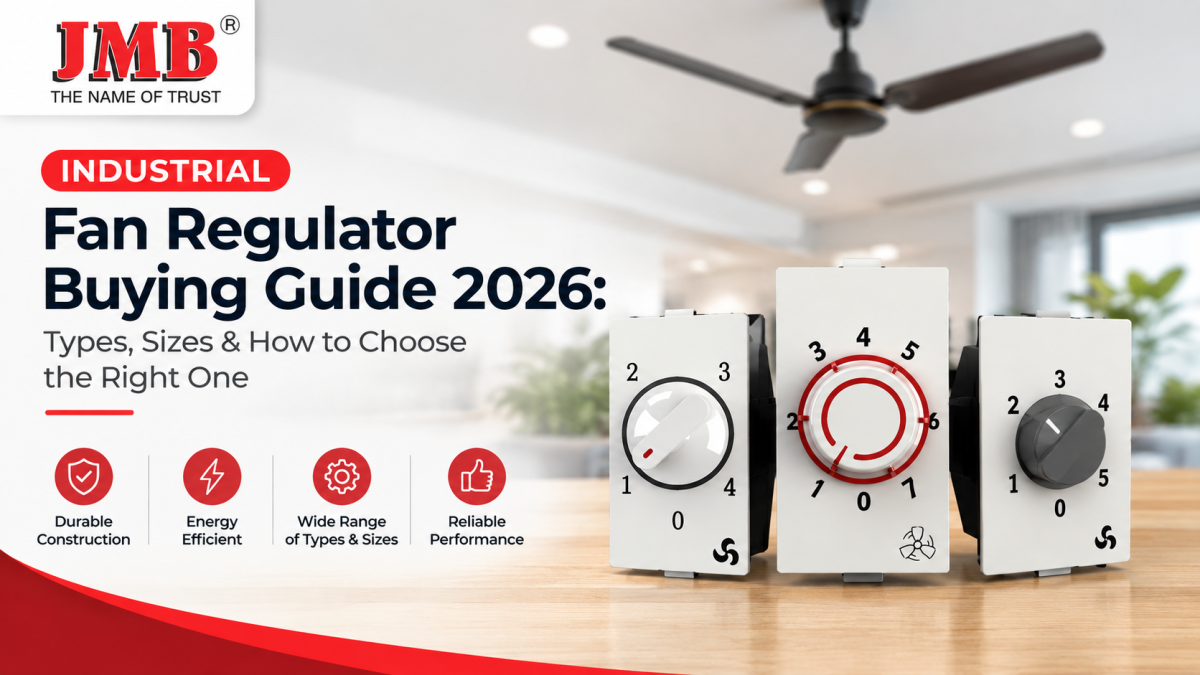
The rotary cooler regulator is the most common type found in Indian homes. A continuous knob adjusts the speed smoothly without clicky steps. Users who prefer gradual airflow tuning tend to choose this style.
Step-Type Cooler Regulators
These offer fixed speeds, usually 4 or 5 steps. They give you clear, repeatable settings so you can match the same comfort level every evening. Many hostels, offices, and rental properties prefer step types for their predictability.
Modular Cooler Regulators
Modular variants fit into standard switchplates alongside sockets and switches. They work well for new homes where the switchboard follows a uniform modular design. If you are expanding your switchboard layout, pairing modular controllers with matching Cooler Regulators keeps the aesthetic consistent.
Industrial Cooler Fan Regulator Units
For workshops, factories, warehouses, and large commercial spaces, an industrial cooler fan regulator is built to handle motors above 500W with reinforced casing and higher ampere ratings. These are rarely sold at retail counters and typically come through a direct cooler fan regulator supplier.
Electronic vs Resistive
Older resistive regulators are cheaper but waste energy as heat, often becoming uncomfortably warm during use. An electric cooler regulator with electronic switching stays cool, uses less power at lower speeds, and lasts significantly longer. In 2026, electronic variants are the default choice for almost every buyer.
How to Choose the Right Cooler Fan Regulator
Picking the correct cooler fan controller comes down to five practical checks. Here is a structured approach that works for both home users and bulk buyers.
1. Match the regulator wattage to your cooler motor.
Check the motor nameplate on your cooler. If it says 180W, pick a controller rated at least 300W to leave safe headroom. For large desert coolers, a 1000 watt cooler regulator variant is often the right choice.
2. Check voltage compatibility.
Indian domestic supply runs at 230V AC, 50Hz. A 220V cooler regulator rated for Indian voltage tolerances works fine across most regions, including areas with mild voltage fluctuations.
3. Decide between knob and step control.
If you want granular tuning, a rotary knob regulator feels more natural. If multiple family members use the same cooler, step types give consistent, memorable settings.
4. Verify terminal quality.
Push-fit or screw terminals both work, but tighter screw connections handle vibration from running coolers better over the long term.
5. Think about placement.
If the regulator sits inside the cooler cabinet, choose a sealed knob variant to protect against water splash. If it sits on the wall, a modular design integrates cleanly with the rest of your switchboard.
For installers running fresh wiring, this detailed step-by-step wiring tutorial covers connection techniques that apply equally to cooler regulator installations.
Wattage and Rating Guide
Here is a quick reference table buyers can use to match a controller to their cooler size.| Cooler Type | Motor Load | Recommended Regulator |
| Personal cooler | 80W to 120W | 200W rotary controller |
| Room cooler | 120W to 180W | 300W to 500W electronic unit |
| Desert cooler | 180W to 350W | 600W to 1000W heavy-duty |
| Industrial cooler | 400W and above | Custom industrial variant |
Featured Products
VIEW ALL ➔


Installation and Wiring Basics
A manual cooler speed regulator may look simple, but incorrect wiring causes most early failures. A few essential practices every installer should follow:- Switch off mains supply before opening any connection
- Confirm live and neutral polarity before wiring the terminals
- Keep the regulator at least 300mm away from the cooler water tank to avoid moisture damage
- Use copper wire of at least 1.5 sq mm cross-section for cooler loads
- Ensure the regulator has enough airflow around it to dissipate heat
- Tighten terminal screws firmly to prevent loose contacts and arcing
Buying from Cooler Regulator Manufacturers and Wholesale Suppliers
For contractors, electrical goods retailers, cooler assemblers, and project buyers, sourcing directly from established Cooler Regulator Manufacturers saves significantly on per-unit cost. Instead of buying boxed retail stock, you can request carton-level packaging, custom labelling, and dispatch aligned with your project timeline. Here is what to evaluate when shortlisting an Air Cooler Regulator Manufacturer or a cooler fan regulator manufacturer India relies on for seasonal stock.- Production capability. Serious suppliers run assembly lines producing 30,000 to 100,000 units monthly during pre-summer months. Ask for current production capacity before placing a bulk order.
- Compliance and certifications. BIS marking, RoHS compliance, and relevant quality certifications matter for both residential retail and commercial supply contracts.
- Range availability. A capable Cooler fan Controller Manufacturers list should include rotary, step, modular, and industrial variants under one roof. Buying across categories from a single source simplifies logistics.
- Sample policy. Reliable air Cooler fan Regulator Manufacturers typically send a free or paid sample batch before confirming large orders. This helps you test real-world performance before committing capital.
- Warranty terms. Standard warranty for cooler regulators ranges from 12 to 24 months. For bulk buyers, the replacement process should be clearly documented.
- Delivery reach. Cooler season demand peaks sharply between February and June. A supplier offering reliable logistics across North, West, and Central India keeps your inventory stocked during the busiest window.
Common Mistakes Buyers Make
A few patterns show up repeatedly in warranty returns and customer complaints. Avoiding these will extend your regulator's life significantly.- Using a 100W fan regulator for a 200W cooler motor
- Installing the regulator inside a humid cooler cabinet without sealing
- Ignoring loose terminal connections during the first week
- Choosing resistive units purely to save a few rupees
- Running the cooler at low speed continuously, which can heat older regulators
Energy Efficiency and Running Cost
A cooler running 8 hours a day at full speed consumes substantial electricity through a season. Choosing an electronic air cooler fan speed controller instead of a resistive one can cut 5 to 10 percent off your monthly cooler energy use, especially when operated at medium or low speeds during cooler nights. Here is a rough estimate for context:- Cooler motor rated 180W, 8 hours daily, 90 days per summer
- Electronic regulator at medium speed: approximately 108 units saved across the season
- Resistive regulator: full-load current regardless of knob setting
Frequently Asked Questions
Q1. Can I use a regular fan regulator with my air cooler?
No. Fan regulators are rated for 80W to 100W loads, while cooler motors draw 150W to 400W. Using a fan regulator causes overheating and early failure. Always use a dedicated cooler fan controller regulator rated for the correct wattage.Q2. What wattage cooler regulator should I buy for a desert cooler?
Most desert coolers in India draw 180W to 350W. A 600W to 1000W cooler regulator provides safe headroom for continuous summer operation.Q3. Are electronic cooler regulators better than resistive ones?
Yes. Electronic units stay cool, waste less energy, and typically last 3 to 5 times longer than older resistive regulators.Q4. Can I install a cooler regulator myself?
Simple replacements are possible if you switch off the mains first and understand basic wiring. For new installations or if you are unsure about live-neutral identification, hiring a certified electrician is safer.Q5. How long does a quality cooler regulator last?
A well-made electronic cooler regulator lasts 5 to 8 years under normal domestic use. Industrial variants running longer cycles may need replacement sooner depending on duty load.Q6. Is there a difference between a rotary and step cooler regulator?
Yes. Rotary types give smooth continuous adjustment through a knob, while step types offer fixed speeds like Low, Medium, and High. Both work well; the choice depends on user preference.Q7. Where can bulk buyers source cooler regulators in India?
Direct manufacturer sourcing from industrial clusters in Gujarat, Delhi NCR, and Maharashtra typically offers the best pricing and consistent year-round supply.Final Thoughts and Next Steps
A cooler regulator may be the smallest component in your summer cooling setup, but it quietly controls comfort, energy use, and the lifespan of a cooler that cost many times more. Choosing the right wattage, verifying the terminal quality, and sourcing from a trusted manufacturer protects both your investment and your evenings through the hottest months.
Whether you need a single rotary unit for a home cooler or carton-level supply for a retail outlet, matching the specification to the actual motor load is the step most buyers overlook. Use the wattage table and installation checklist above as a reference before placing your next order.
Ready to request a product catalogue, sample units, or project-based wholesale pricing? Connect with us today at Sai Electronics India and our team will share the full range of cooler speed controllers, including industrial variants, modular designs, and OEM packaging options tailored to your requirement. For buyers planning seasonal inventory, placing your order ahead of the February demand surge ensures timely dispatch across all major Indian states.
For a broader view of related speed control categories, the full All Fan Regulators catalogue covers every variant you may need alongside your cooler controller purchase.
Ready to Source the Right Cooler Regulator?
Whether you need bulk quantities for a seasonal retail outlet, OEM private labelling, or sample units for testing — our team is ready to assist you with pricing, wattage specifications, and project-based quotations.
Contact Us NowBlog Categories
- 4 Step Fan Regulator
- 5 Step Fan Regulator
- 5 Step Fan Regulator Manufacturer
- 7 Step Fan Regulator manufacturer
- Blogs
- cooler regulator manufacturer
- fan dimmer manufacturer
- fan plate cover manufacturers
- Fan Regulator Manufacturing
- Fan Sheet manufacturer
- LED Foot Lights manufacturer
- modular blank plate manufacturer
- rotary dimmer manufacturer
- Surface box manufacturing
- USB Socket Manufacturers
Related Posts