Fan Dimmer vs Volume Regulator: Which One Is Better for Your Home?
If you have ever stood in front of a switchboard aisle wondering whether to pick a dimmer-style knob or a step-based volume regulator for your ceiling fan, you are not alone. Both look similar from a distance, both control fan speed, and both occupy roughly the same slot on your switchplate. The real difference sits inside the module, and it affects everything from how quietly your fan runs to how long the controller lasts. This comparison walks through fan dimmers and volume regulators side by side, with a specific focus on the popular 1 modular fan dimmer regulator format that dominates Indian switchboards in 2026.
Whether you are renovating a single room or specifying switchgear for an entire building project, understanding the distinction helps you avoid buying something that doesn't quite match your fan or your switchboard style.
Quick Answer: Which One Should You Pick?
For most Indian homes using standard induction-motor ceiling fans, a 1M rotary fan dimmer offers smoother speed control, quieter operation, and a cleaner look on modular switchboards. A volume-type regulator works better for users who want step-based clicks and predictable settings. If you value fine-tuning airflow during varying weather, pick the dimmer. If you share the fan with family members who prefer "set and forget" speeds, pick the volume type.
That short answer covers 80 percent of buyers. The rest of this guide walks through the technical reasoning so you can decide confidently for your specific setup.
What Is a Fan Dimmer?
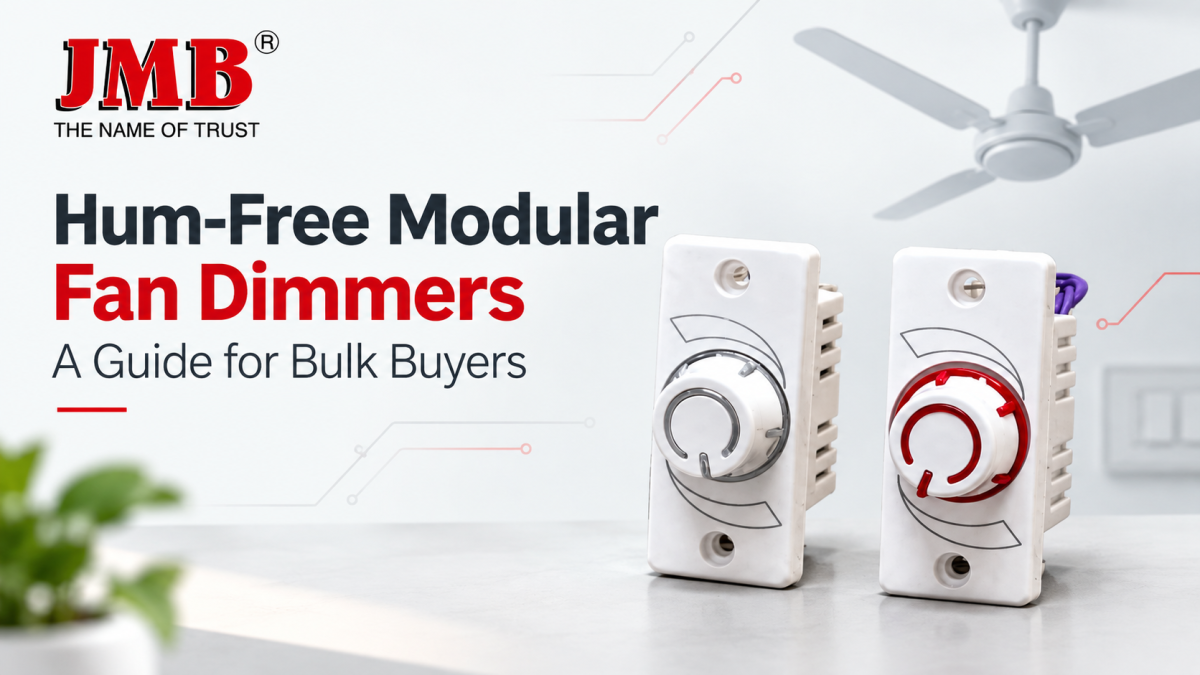
A fan dimmer is an electronic speed controller that adjusts fan voltage smoothly through a continuous rotary knob. Unlike older dimmers used for incandescent bulbs, a modular fan dimmer 1 module is engineered specifically for inductive loads, meaning it accounts for the motor's reactive characteristics without producing hum or vibration.
Inside the module, a triac combined with a snubber circuit handles the switching. The result is a quiet, step-less adjustment where you can tune the fan speed to exactly where you want it rather than jumping between fixed levels.
Key traits of a fan dimmer:
- Continuous rotary adjustment with no clicks
- Electronic triac-based switching
- Compact 1M profile that fits standard modular plates
- Lower energy use at reduced speeds
- Minimal heat generation during long operation
For buyers specifying 1M fan dimmer controller stock for a project, the compact form factor is one of the biggest practical advantages, since it leaves more room on the plate for additional switches or sockets.
Explore Our Complete Range of Fan Dimmers & Volume Regulators
From smooth 1M rotary fan dimmers to step-based volume regulators — browse our full collection of modular fan speed controllers and find the perfect fit for your switchboard.
Visit ShopWhat Is a Volume Regulator?
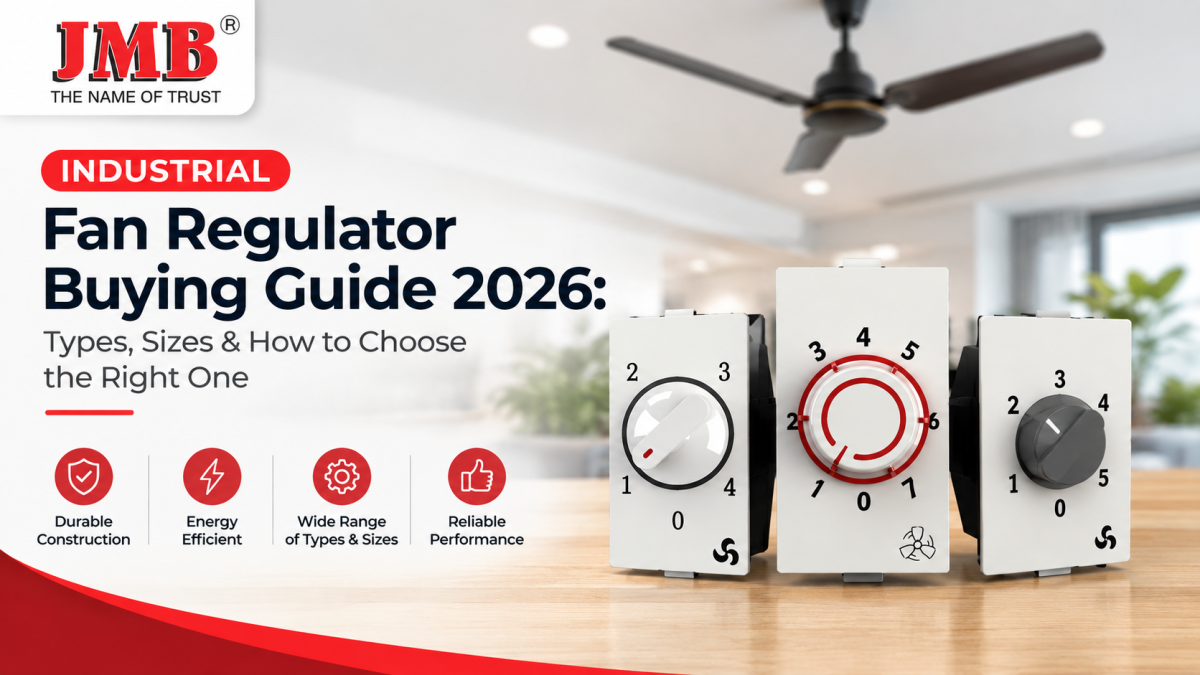
A volume regulator, often called a step-type regulator, controls fan speed through fixed settings arranged like the volume dial on an old radio. Each click moves the fan through a defined speed level, usually marked 0 through 4 or 0 through 5.
Volume regulators rely on tapped inductors or capacitor networks that switch distinct voltage levels to the motor. The settings are repeatable, which many users find comforting because the same number always produces the same airflow.
Common characteristics:
- Fixed step positions with audible or tactile clicks
- Capacitor or inductor-based speed control
- Available in 1M and 2M sizes for modular switchboards
- Clear speed indication through numbered dial
- Longer track record in Indian wiring systems
The complete Volume Fan Regulators range covers both 1M and 2M formats along with switch-type variants for different installation needs.
Side-by-Side Comparison
Here is a direct comparison across the factors that matter most when choosing between the two.
| Feature | Fan Dimmer | Volume Regulator |
| Control style | Smooth rotary | Fixed clicks or steps |
| Speed precision | Infinite adjustment | 4 or 5 fixed levels |
| Noise level | Very quiet | May click audibly |
| Module size | 1M standard | 1M or 2M options |
| Energy efficiency | High at low speeds | Moderate |
| Repeatability | User memory needed | Exact position marked |
| Typical cost | Slightly higher | Entry-level affordable |
| Best suited for | Bedrooms, studies, hotels | Family rooms, rentals, offices |
Each product serves a specific preference. Neither is universally better; the right choice depends on how you use the fan daily.
When a Fan Dimmer Makes More Sense
A 1 modular rotary dimmer regulator is the better pick in several common scenarios.
Bedrooms and Nurseries
Smooth speed adjustment matters when you want to reduce airflow by a tiny amount in the middle of the night without a loud click waking anyone. A hum free modular fan dimmer handles this cleanly.
Hotels and Hospitality
Guest rooms benefit from continuous dimmer-style tuning because preferences vary widely between guests. A 1 module fan speed dimmer gives housekeeping a reliable, quiet controller that handles frequent setting changes.
Studies and Reading Spaces
If you work at a desk for long hours, being able to adjust airflow by small increments keeps you comfortable through shifting ambient temperatures. The electronic fan dimmer modular format is ideal here.
Compact Switchboards
If your switchplate already carries multiple switches, a 1M fan dimmer manufacturer typically offers slimmer modules that fit alongside USB chargers and sockets without crowding. For buyers aligning dimmers with ceiling fan setups, this comparison on remote fans versus wall regulators adds useful context on manual control preferences.
Featured Products
VIEW ALL ➔


When a Volume Regulator Fits Better
Volume regulators remain the default choice for several practical reasons.
Shared Family Rooms
When multiple family members adjust the same fan, having fixed speed settings prevents the "who changed it" problem. Everyone can agree that "setting 3" means a specific airflow.
Rental Properties
Landlords and property managers prefer volume regulators because tenants find them familiar and intuitive. Replacement is straightforward, and the 1 Modular Volume Regulator format fits standard plates without needing custom wiring.
Older Wiring Systems
Homes with older wiring sometimes exhibit voltage fluctuations that confuse electronic dimmers. A capacitor-based volume unit tolerates these variations more consistently.
Larger Switchplates
For boards with ample space, a 2 Modular Volume Regulator gives a bigger, more tactile knob that older users find easier to grip and turn.
Workshop and Utility Rooms
A Switch Type Volume Regulator combines on-off switching with speed control in one module, which saves space on compact utility boards.
Technical Considerations
Beyond daily use, there are specific technical details worth checking before buying.
Voltage Rating
Both categories typically operate at 220V to 230V AC, 50Hz. A 220V modular fan dimmer 1M handles standard Indian supply conditions, but if your area experiences frequent voltage swings, a volume regulator with capacitor-based control tends to behave more predictably.
Load Capacity
Most ceiling fans in India draw 55W to 80W. A rotary fan dimmer 1 modular rated at 100W handles this comfortably. For heavy-sweep fans drawing 100W or more, verify the module's rated load before purchase.
Build Material
A polycarbonate 1M fan dimmer regulator offers better heat resistance than ABS alternatives and typically lasts longer in warmer rooms. Material quality directly affects the lifespan of the module.
Terminal Design
Push-fit terminals speed up installation, while screw terminals offer better long-term contact under vibration. Both are acceptable; the choice depends on installer preference.
Compatibility with Modular Plates
Most 1M units from reputable brands follow Indian modular standards and fit cleanly into standard plates. If you are using a specific wall plate 1M fan dimmer design, confirm the module clip style matches your existing frame.
For installers handling fresh wiring, the detailed fan regulator connection tutorial walks through step-by-step wiring that applies to both dimmers and volume regulators.
Installation and Replacement
Swapping between dimmer and volume regulator formats is usually straightforward because both follow the same 1M modular footprint. A few practical pointers:
- Switch off the mains supply before opening the switchbox
- Note the existing wire connections before disconnecting
- Match live and neutral correctly, as some dimmers are polarity sensitive
- Leave at least 15mm clearance behind the module for ventilation
- Tighten terminals firmly to avoid arcing and heat buildup
For homes with mixed room needs, many buyers install dimmers in bedrooms and volume regulators in living areas. This gives each space the control style that matches its usage pattern.
If you plan to upgrade the complete switchboard, pairing your regulator choice with a complete catalogue from established fan regulator manufacturers in india simplifies procurement since you can source dimmers, volume units, switches, and sockets together.
Pricing and Bulk Buying Context
Retail buyers usually choose between dimmers and volume regulators based on preference. Contractors and project managers, however, factor in volume pricing, warranty terms, and supplier reliability.
A reliable modular fan dimmer manufacturer India should offer:
- Carton-level pricing with clear per-unit cost tiers
- 12 to 24 month replacement warranty
- Consistent production throughout the year
- OEM packaging for private-label buyers
- Sample batches before large orders
Bulk 1 modular fan dimmer supplier contracts typically run quarterly, with pricing adjusted for copper and polycarbonate input costs. For procurement across Gujarat, Maharashtra, Delhi NCR, and South India, local manufacturer networks reduce shipping lead time and simplify warranty handling.
Retailers stocking both ceiling fan dimmer 1 module and volume variants benefit from one-stop sourcing. Catalogues from the broader Fan Regulators range typically cover both formats alongside step-type and cooler variants.
Common Buyer Confusions Cleared
A few questions come up repeatedly when buyers compare dimmers and volume regulators. Here are the clarifications.
"Isn't a dimmer the same as a light dimmer?"
No. Light dimmers handle resistive loads, while a 1 module fan regulator dimmer is engineered for inductive motor loads. Using a light dimmer on a fan causes humming and may damage the motor over time.
"Will a dimmer save me more electricity?"
Yes, especially at lower speeds. Electronic dimmers reduce actual power draw rather than simply resisting current, so you see real savings when the fan runs at reduced speed for long hours.
"Can I use any brand's module in my plate?"
Most Indian modular plates follow standard dimensions, so 1M modules from reputable brands fit interchangeably. Confirm the clip mechanism matches your frame before purchase.
"Which lasts longer?"
Both categories offer similar 5 to 10 year lifespans when quality units are used. Build material and operating conditions matter more than category.
"Does step control reduce motor life?"
No. A properly designed modular rotary dimmer fan regulator and a well-made volume unit both protect the motor equally. Poor quality units of either type can shorten motor life through voltage spikes.
Frequently Asked Questions
Q1. Is a fan dimmer better than a volume regulator for a bedroom?
Yes. Smooth adjustment and silent operation make the modular fan regulator dimmer format well suited for bedrooms where you may change speed subtly through the night.
Q2. Can I use a 1M fan dimmer with a BLDC fan?
Most BLDC fans have built-in electronic speed control and do not require an external dimmer. Check your fan's manual before buying any external controller.
Q3. What is the main benefit of a 1 module format?
Compact footprint. A 1M volume fan regulator or dimmer frees up switchplate space for other modules like sockets, USB chargers, and switches.
Q4. Do dimmers hum when the fan runs?
Quality dimmers do not hum. If you experience humming, the dimmer is likely a light dimmer being used on a fan, or a low-quality unit without proper snubber filtering.
Q5. Which type is cheaper?
Volume regulators are typically slightly cheaper at retail. For bulk procurement, the price difference narrows significantly.
Q6. Can I replace a volume regulator with a dimmer in the same slot?
Yes, as long as both follow the 1M modular footprint. The wiring terminals are also typically similar, making the swap straightforward.
Q7. Where can I buy these in bulk in India?
Direct sourcing from manufacturers in Gujarat, Delhi NCR, or Maharashtra typically offers the best pricing. Established suppliers also offer OEM packaging and project-based delivery timelines.
Final Thoughts and Next Steps
Choosing between a fan dimmer and a volume regulator comes down to how you prefer to interact with your fan every day. If you want infinite speed control, silent operation, and a modern feel, the dimmer wins. If you want fixed, predictable settings that everyone in the house can agree on, the volume regulator remains the practical pick. Both categories have matured significantly in the Indian market, and quality units from reliable manufacturers now last for years without issue.
For buyers planning a renovation or stocking inventory, consider mixing both types across different rooms rather than committing to one format throughout the home. Bedrooms benefit from dimmers, while shared family spaces work better with volume units.
Ready to request a product catalogue, compare specifications, or get pricing for your project? Get in touch with our team at Sai Electronics India and we will share detailed datasheets, sample units, and bulk procurement terms for both dimmer and volume regulator ranges. Our specialists can help match the right module to your switchboard setup and recommend configurations suited to your specific installation.
Ready to Source the Right Fan Dimmer or Volume Regulator?
Whether you need bulk quantities for a housing project, OEM private labelling, or sample units for testing — our team is ready to assist you with pricing, specifications, and project-based quotations.
Contact Us NowBlog Categories
- 4 Step Fan Regulator
- 5 Step Fan Regulator
- 5 Step Fan Regulator Manufacturer
- 7 Step Fan Regulator manufacturer
- Blogs
- cooler regulator manufacturer
- fan dimmer manufacturer
- fan plate cover manufacturers
- Fan Regulator Manufacturing
- Fan Sheet manufacturer
- LED Foot Lights manufacturer
- modular blank plate manufacturer
- rotary dimmer manufacturer
- Surface box manufacturing
- USB Socket Manufacturers
Related Posts