
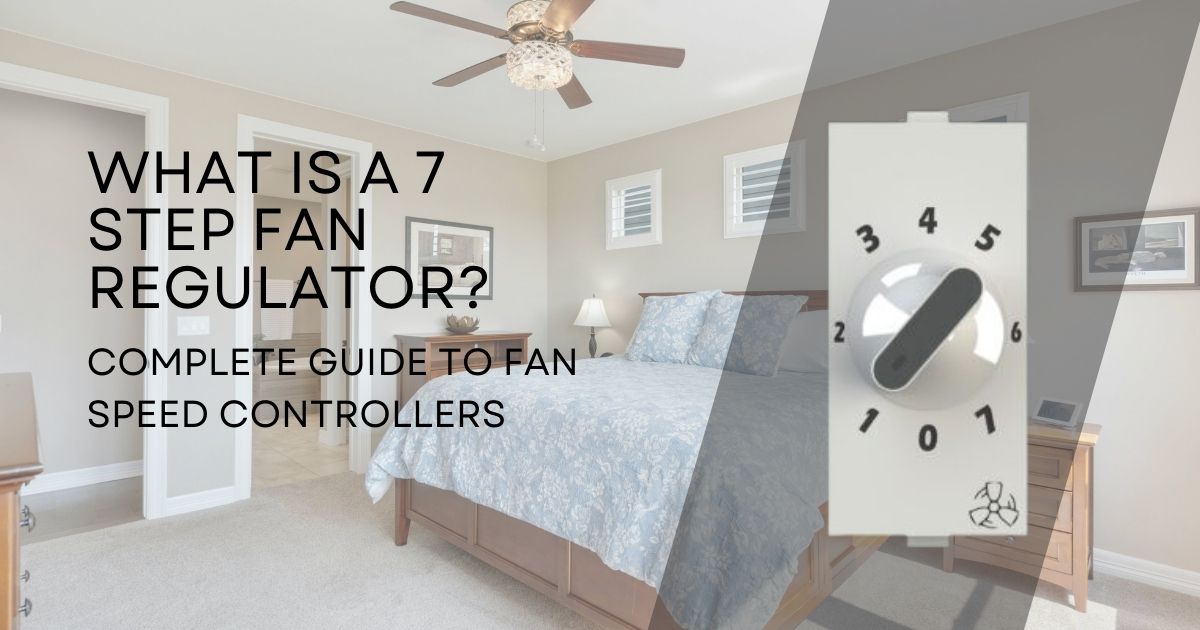
Every ceiling fan needs a reliable speed control mechanism, and the type of regulator you use directly affects how comfortable, efficient, and long-lasting your fan system is. A 7 step fan regulator gives you seven distinct speed levels, offering far greater control than standard 3 or 5 step variants. Whether you are setting up a home, office, or commercial space, this level of precision makes a real difference in daily use.
A 7 speed fan regulator is increasingly the preferred choice in both residential and commercial electrical systems across India. From compact modular panels to traditional switch-based setups, the fan regulator 7 step format suits a wide range of installation needs. This guide covers everything you need to know, from how it works to how to pick the right type.
You can check the full product range from trusted fan regulator manufacturers in india to understand what is available across different specifications.
What Is a 7 Step Fan Regulator?
A 7 step fan regulator is an electrical device that controls the speed of a ceiling fan by dividing its operating range into seven distinct levels. Each level corresponds to a specific voltage or resistance setting that determines how fast the fan motor runs.
A 7 step ceiling fan regulator gives you more granular control compared to 5 step models. Instead of jumping between a few broad speed ranges, you can fine-tune airflow to match the exact comfort level you need at any given time. This makes it especially useful in spaces where temperature and airflow requirements change throughout the day.
As a 7 step fan speed controller, it manages the electrical input to the fan motor precisely at each step, reducing wear caused by abrupt speed transitions. The result is smoother operation and a longer motor lifespan.
How a 7 Step Fan Regulator Works
The core function of any step regulator is to alter the electrical supply reaching the fan motor. Depending on the selected speed level, the regulator either restricts or allows more current to flow, which changes the motor speed accordingly.
Resistive Speed Control Mechanism
In a 7 step resistive fan regulator, the speed control works through a series of resistors arranged in a stepped configuration. When you turn the knob or switch to a lower speed, more resistance is introduced into the circuit, which reduces the voltage across the fan motor and slows it down. Moving to a higher step reduces the resistance in the path, allowing more voltage through and increasing fan speed.
Each of the seven steps corresponds to a pre-set resistance value. This design is straightforward, mechanically simple, and has been used reliably in Indian electrical systems for decades. While it does generate some heat at lower speed settings, modern versions are built with heat-dissipating materials that manage this effectively.
Types of 7 Step Fan Regulators
Different installation environments call for different regulator formats. Here are the three main types available in the market:
Modular 7 Step Fan Regulator
A modular 7 step fan regulator is designed to fit into standard modular switchboards. It occupies one or two modular slots and integrates cleanly with other switches, sockets, and dimmers in the same panel.
The 7 step modular fan regulator format is the go-to choice for modern residential and commercial interiors where clean panel aesthetics matter. It requires no separate housing and mounts directly into the switchboard frame, making installation quick and tidy.
Electrical contractors and builders sourcing for modular projects often rely on 7 Step 1 Modular fan regulator manufacturers for consistent sizing and finish quality.
Switch Type 7 Step Fan Regulator
A 7 step switch fan regulator uses a traditional rotary or lever-based switching mechanism. The user manually moves through each of the seven speed positions using a physical switch, and each position creates a distinct circuit configuration.
This step type fan regulator format is common in older building wiring setups and in areas where modular panels are not used. It is robust, easy to service, and does not require any special switchboard compatibility. The manual switching action is tactile and clear, which many users find easier to operate than rotary knobs.
Buyers working on traditional electrical systems often source from a reliable 7 Step Switch Type Fan Regulator Manufacturer to get units built for long-term manual use.
Open Body 7 Step Fan Regulator
Open body regulators are built for internal mounting inside electrical panels, junction enclosures, or OEM equipment. They are not fitted with a consumer-facing faceplate and are instead installed within a protected housing as part of a larger electrical assembly.
This type also functions as a 7 step resistive fan regulator in many configurations, making it suitable for industrial environments where robust, heat-tolerant construction is necessary. Project contractors and panel builders frequently source from an established 7 Step Open Body Fan Regulator Manufacturer for bulk panel installations.
Benefits of Using a 7 Speed Fan Regulator
- Precise fan speed control: Seven levels give you far more adjustment range than 3 or 5 step regulators, letting you match airflow exactly to your comfort needs.
- Smoother motor operation: Gradual speed transitions reduce mechanical stress on the fan motor, preventing premature wear.
- Energy efficiency: Running a 7 step ceiling fan regulator at lower speeds during mild weather reduces power consumption compared to running at full speed.
- Durable design: Quality-built regulators use heat-resistant materials and reliable switching components that last through years of daily use.
- Long lifespan: Proper voltage management at each step extends both the regulator’s own life and that of the fan motor.
- Stable fan performance: A good 7 speed fan regulator maintains consistent speed at each selected level without fluctuation, even during minor voltage variations.
Applications of 7 Step Ceiling Fan Regulators
The 7 step format is versatile enough to serve a wide range of settings:
Homes: Used in bedrooms, living rooms, and kitchens where comfort levels change across the day and night. Seven speed levels make it easy to dial in the right airflow for sleeping, working, or relaxing.
Offices: Open-plan offices benefit from the precise control that prevents fans from running unnecessarily at full speed during cooler hours, reducing noise and energy use.
Hotels and Guest Houses: Room comfort is a priority, and the wider speed range of a 7 step regulator lets guests adjust airflow without the fan being either too powerful or too weak.
Commercial Buildings: Retail spaces, showrooms, and lobbies with large ceiling fans benefit from granular speed control that balances airflow with noise levels.
Industrial Electrical Panels: Open body regulators are used inside panel boards and control assemblies where fan speed control is part of a larger ventilation system.
7 Step Fan Regulator Price in India
The 7 step fan regulator price in India varies based on several factors:
Regulator Type: Modular types tend to cost slightly more than open body variants due to their finished housing and switchboard-compatible design. Switch type regulators are generally mid-range in pricing.
Build Quality: Regulators made with high-grade resistors, heat-dissipating casings, and ISI-certified components are priced higher than basic alternatives, but they deliver far better long-term value.
Manufacturer: Established manufacturers with quality testing processes price their products to reflect the reliability they offer. Generic unbranded units cost less but carry higher replacement risk.
Material Quality: Flame-retardant plastic housings, copper contacts, and quality resistive elements all contribute to a higher unit price, but they reduce the risk of overheating and electrical failure.
For bulk orders, OEM supply, and wholesale pricing, direct sourcing from the manufacturer consistently brings the unit price down significantly.
How to Choose the Best 7 Step Fan Regulator
Here is what to check before placing an order:
Ceiling Fan Compatibility: Confirm the regulator’s wattage rating matches or exceeds your ceiling fan’s motor rating. Undersized regulators overheat quickly.
Modular vs Switch Type: If your switchboard is a modular panel, go with a modular 7 step unit. For older wiring setups with traditional boards, the switch type is the practical fit.
Component Quality: Check whether the unit uses quality resistors and heat-tolerant materials. These details determine how long the regulator lasts under daily use.
Manufacturer Credibility: Sourcing from a recognized fan regulator manufacturer Gujarat with documented production standards reduces the risk of early product failure. Gujarat-based manufacturers have a strong presence in India’s electrical component supply chain and are well-positioned for both domestic and export markets.
Trusted 7 Step Fan Regulator Manufacturer in India
Sai Electronics India operates as an established 7 Step Fan Regulator manufacturer with production based in Ahmedabad, Gujarat. As a 7 Step Fan Regulator manufacturer Ahmedabad, the company supplies regulators across product types including modular, switch type, and open body formats.
As a 7 Step Regulator supplier India and active 7 Step Fan Regulator supplier Gujarat, the company serves retail dealers, electrical distributors, and large project buyers. Bulk orders are handled efficiently, making it a practical choice for those who need consistent supply without delays.
For international buyers, the company also operates as a 7 Step Fan Regulator exporter, supplying to markets that require quality-tested Indian-made electrical components. Distributors and 7 Step Fan Regulator wholesaler networks across India source regularly from the Ahmedabad facility due to the consistent product quality and reliable dispatch timelines.
Browse the complete product line from reliable 7 Step fan regulator manufacturers to compare types and specifications before placing your order.
Frequently Asked Questions (FAQ)
What is the difference between a 5 step and 7 step fan regulator?
A 5 step regulator gives you five speed levels while a 7 step model offers seven. The additional steps in a 7 step unit allow finer speed adjustments, making it better suited for spaces where airflow needs to be tuned precisely rather than switched between broad ranges.
Is a 7 step fan regulator better for ceiling fans?
For most applications, yes. More speed levels mean the fan motor spends more time running at an optimal speed rather than being forced between extremes. This reduces motor wear and gives users more comfort control throughout the day.
What is the price of a 7 step fan regulator in India?
Prices vary based on type, build quality, and order quantity. Modular types generally cost more than open body variants. Bulk buyers and distributors sourcing directly from manufacturers get significantly lower per-unit pricing compared to retail.
Which is better: modular or switch type fan regulator?
It depends on your switchboard. Modular types are built for modern modular panels and offer a cleaner finish. Switch type regulators suit traditional wiring setups and are easier to service manually. Both deliver the same seven-speed control; the difference is in form factor and installation environment.
Conclusion
A well-chosen fan regulator does more than control speed. It protects your fan motor, reduces energy waste, and improves comfort across every season. The 7 step format stands out for its precision, giving you more usable control levels than standard regulators in a compact and reliable package.
Whether you need a modular unit for a residential switchboard, a switch type for a traditional panel, or an open body version for an industrial enclosure, matching the regulator type to your installation is the key to long-term performance. Always source from a manufacturer with verified quality standards and consistent supply capability.
For product details, bulk pricing, or OEM supply enquiries, contact us and the team at Sai Electronics India will assist you with specifications and order terms.
