How to Choose the Best Fan Regulator for Your Home: Types, Price & Savings
The best fan regulator for your home is one that controls fan speed smoothly, saves electricity, and doesn't get hot. Today, step-type regulators (4, 5, or 7 step) and capacitor-based regulators are considered the best, because they stay cool and cut your running cost. Old resistive round regulators get hot and waste electricity. This guide walks you through the types, price, and savings in simple terms. Sai Electronics is a fan regulator manufacturer in India, and these are the exact tips we give dealers and homeowners every day.
Key Takeaways
- Step and capacitor regulators are the best — they stay cool and save electricity.
- Avoid old resistive round regulators — they run hot and waste power.
- Match the rating to your fan's wattage — an undersized regulator overheats.
- Modular designs fit today's switchboards and look clean.
- Buy from a quality brand — cheap units fail fast.
Explore Our Complete Fan Regulator Range
From 4-step, 5-step, and 7-step modular regulators to rotary dimmers — choose the perfect fan speed controller for your switchboard.
VISIT SHOPWhat is a fan regulator?
A fan regulator is a small device that controls your ceiling fan's speed. It raises or lowers the voltage reaching the fan.
When you reduce the speed, the regulator sends less power to the fan, so it spins slower. Simple enough.
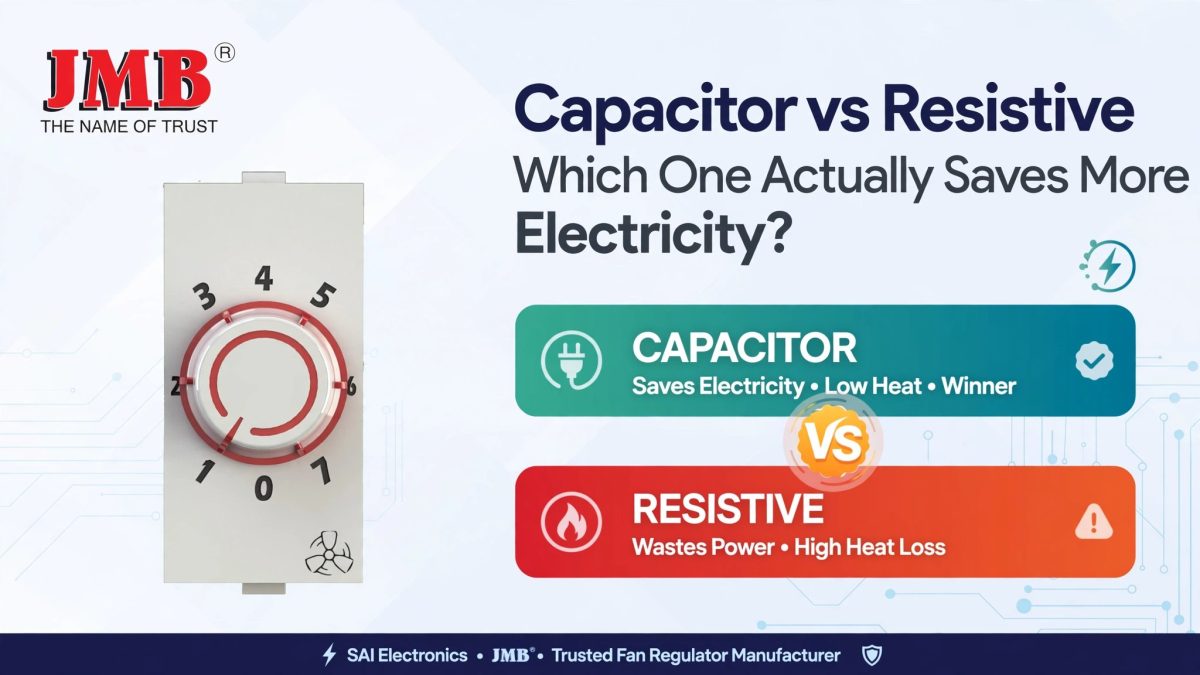
But not all regulators work the same way. Old resistive regulators turn the extra energy into heat. Modern step and capacitor regulators reduce the power directly, without wasting it.
That's why newer regulators stay cool and save electricity. Choosing the right regulator isn't only about speed; it matters for savings and safety too.
For the full range, see our fan regulators collection.
Types of fan regulators
Several types are sold in the market. For the home, these are the main ones to know.
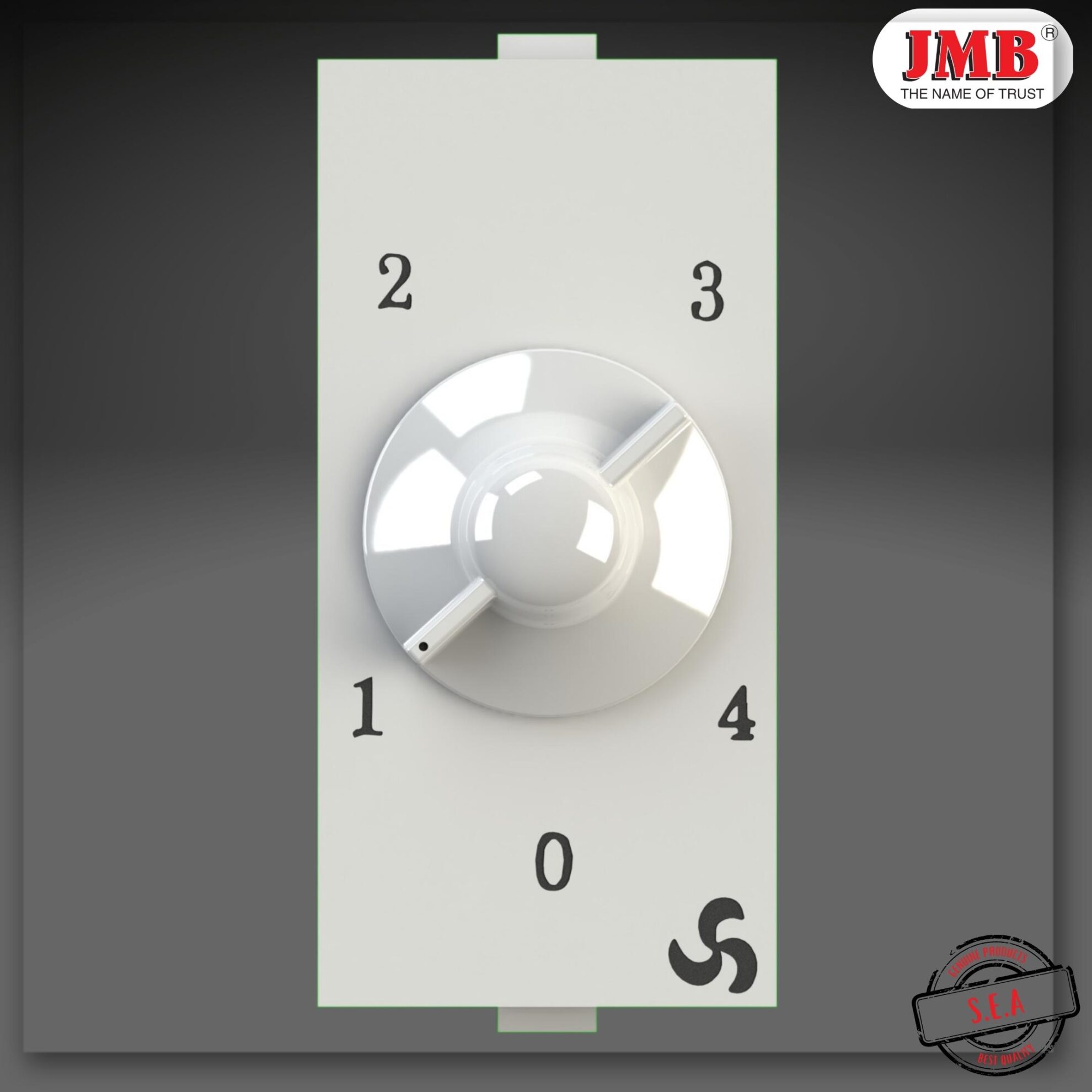
- Step regulator (4, 5, 7 step). Fixed speed steps, no humming, long life. The most reliable option. A 7-step fan regulator gives more speed options.
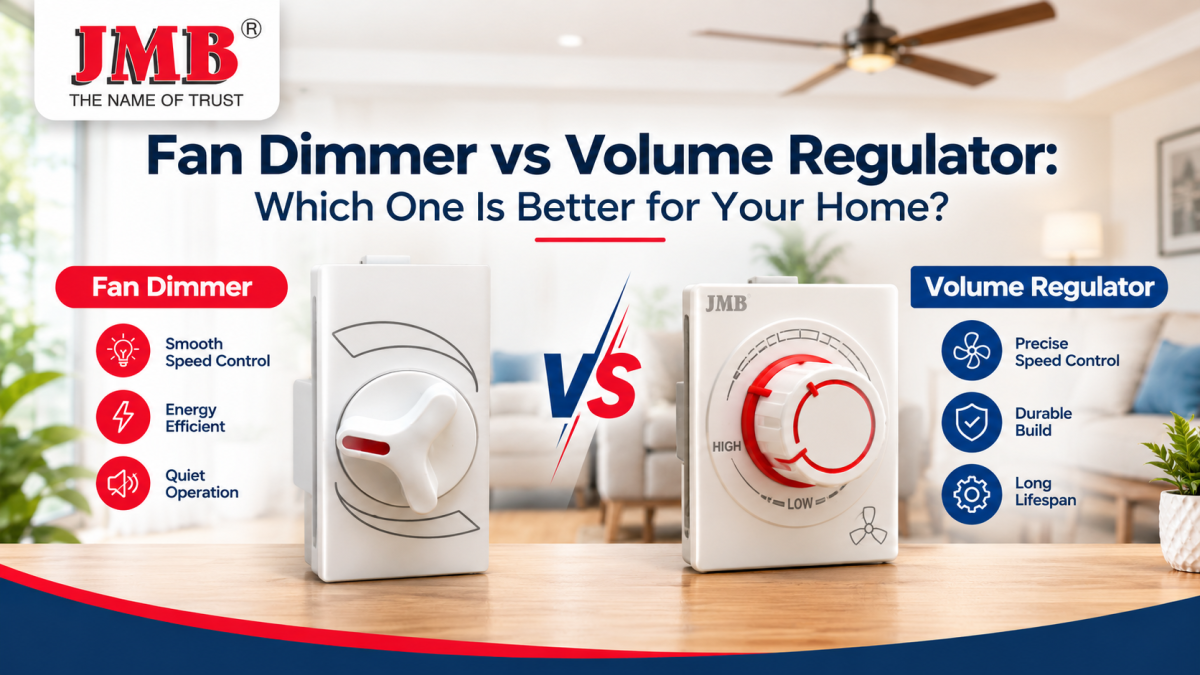
- Rotary dimmer (volume type). Smooth speed control with a knob. Compact and modern. See the fan dimmer range.
- Cooler regulator. Built for air cooler motors, not just fans. See our cooler regulators.
- Old resistive round regulator. Runs hot and wastes electricity. No longer recommended.
For today's homes, a step regulator or rotary dimmer is the best fit. Both run cool and last long.
Which regulator is right for you? (Comparison)
Here's a quick look at which type suits your needs.
| Type | Speed control | Key trait | Best for |
| 4 Step | 4 fixed speeds | Simple, cool, affordable | Everyday home fans |
| 5 Step | 5 fixed speeds | A bit more control | Want more speed options |
| 7 Step | 7 fixed speeds | Smoothest stepping | Want fine control |
| Rotary dimmer | Smooth, knob-based | Compact, modern look | Stylish switchboards |
| Cooler regulator | For cooler motors | Heavy-load ready | Air coolers |
If you're unsure, a 4-step or 5-step regulator is perfect for most homes. For smoother control, choose a 7-step or a rotary dimmer.
How to choose the right fan regulator
Keep these points in mind before you buy. They'll steer you to the right choice.
- Type. Pick a step or capacitor regulator, not an old resistive one. They stay cool and save electricity.
- Wattage rating. Check your fan's wattage and choose a regulator rated for it. An undersized one runs hot.
- Quality and brand. Buy from a good manufacturer. Cheap regulators fail quickly.
- Design and fitting. Match the regulator to the plate on your switchboard (modular, curve, or switch type).
- Humming and heat. Step regulators run quiet and stay cool. That's the best sign of quality.
- BIS / ISI mark. Choose a certified product for safety.
Keep these six points in mind and you'll never pick the wrong regulator.
FEATURED PRODUCTS
VIEW ALL ➔

Price and electricity savings
A regulator's price depends on its type and quality. Step and modular regulators cost a little more than basic resistive ones, but they're worth it.
How much you save depends on a few things:
- How long it runs at low/mid speed. The lower the speed, the bigger the saving with a capacitor or step regulator.
- Daily hours of use. More hours means more saving.
- Number of fans in the home. Savings add up across every fan.
- Your electricity rate. Higher tariffs mean larger rupee savings.
No one can quote an exact rupee figure for every home, because all these factors differ. But this much is certain: the more you run fans at lower speed, the more a step or capacitor regulator saves.
The upfront price may be slightly higher, but with cooler running, less noise, and a longer life, it works out cheaper in the long run.
Modular, curve, or switch type: which to pick?
Step regulators come in different designs. Choose based on your switchboard.
- Modular (1M / 2M). Fits today's modular switch plates. Clean, modern look. The most common choice. See a 4-step modular regulator.
- Curve design. Similar to modular, but with a curved finish. For a premium look.
- Switch type. For older or traditional switchboards that don't use modular plates. See a switch type regulator.
If your home has a modular switch plate, choose a modular or curve regulator. For an older board, a switch type is right. Matching the fitting matters, or the regulator won't sit properly in the plate.
Mistakes to avoid when buying
People often make a few common mistakes when buying a regulator. Avoid these.
- Looking only at price. The cheapest regulator often fails fast and runs hot. Check quality.
- Buying old resistive type. The old round-knob type wastes electricity. Choose a step regulator.
- Ignoring wattage. A regulator rated below your fan will overload and overheat.
- Not matching the fitting. A switch type in a modular board (or vice versa) is the wrong choice.
- Buying without an ISI/BIS mark. Only choose certified products for safety.
- Not checking the brand. A trusted manufacturer's product lasts far longer.
These are small details, but they make a big difference. Choose thoughtfully.
FAQ
Q1. Which is the best fan regulator for a home?
A step-type (4, 5, or 7 step) or capacitor regulator is best. It stays cool, saves electricity, and doesn't hum.
Q2. Does a fan regulator save electricity?
Step and capacitor regulators do, because they reduce the power drawn. An old resistive regulator wastes electricity, so it doesn't save.
Q3. Why does a regulator get hot?
Old resistive regulators get hot by design. Loose wiring or an overload can also cause it. Step regulators stay cool.
Q4. What's the difference between modular and switch-type regulators?
Modular fits today's modular switch plates. Switch type is for older or traditional boards that don't use modular plates.
Q5. Is 4-step or 7-step better?
4-step is simple and affordable, enough for most homes. 7-step gives more and smoother speed control. Choose by your need.
Q6. What should I check when buying a regulator?
Type (step/capacitor), fan wattage, quality/brand, fitting (modular/switch), and the ISI/BIS mark, check these five things.
Final thoughts
Choosing the right fan regulator for your home isn't hard. Just remember: pick a step or capacitor type, match the rating to your fan's wattage, buy a good brand, and choose the design that fits your switchboard.
Do that, and you'll get a cool, quiet, electricity-saving regulator that lasts for years.
Sai Electronics is a trusted fan regulator manufacturer in India, making step, dimmer, and cooler regulators for homes, dealers, and bulk orders. Talk to our team to choose the right model, or for bulk and OEM orders.
Need Fan Regulators in Bulk?
Whether you need bulk quantities for a housing project, OEM private labelling, or sample units for testing — our team is ready to help you with pricing, specifications, and project-based quotes.
Contact Us NowBlog Categories
- 4 Step Fan Regulator
- 5 Step Fan Regulator
- 5 Step Fan Regulator Manufacturer
- 7 Step Fan Regulator manufacturer
- Blogs
- cooler regulator manufacturer
- fan dimmer manufacturer
- fan plate cover manufacturers
- Fan Regulator Manufacturing
- Fan Sheet manufacturer
- LED Foot Lights manufacturer
- modular blank plate manufacturer
- rotary dimmer manufacturer
- Surface box manufacturing
- USB Socket Manufacturers