Switch Type Fan Dimmers: Reliable Speed Control Guide
Not everyone wants a rotary dial on their switchboard, and for good reason. Some households simply prefer the tactile click of a toggle, the kind of control that's been part of Indian homes for decades. A switch-type fan dimmer regulator delivers exactly that: familiar operation, stepped speed settings, and wiring that matches what's already behind most boards. This guide breaks down how these regulators work, where they outperform rotary designs, and what to look for before buying one.
What Is a Switch-Type Fan Dimmer Regulator?
A switch type fan regulator dimmer controls fan speed through a series of fixed positions rather than a continuous dial. Flip it once for low, again for medium, and again for high, in the same motion you'd use on a standard light switch. This stepped approach is what separates a switch fan dimmer regulator from its rotary counterpart, and it's precisely why so many electricians recommend it for straightforward replacements or repairs. Sai Electronics India, counted among established fan regulator manufacturers in India, builds this line to the same standard as its rotary range.
Unlike newer rotary units that need a twisting motion, this design uses the same physical action as every other switch on the board, which matters more than people expect when a household has elderly residents or young children who find a flick more intuitive than a turn.
How Stepped Speed Control Works
Inside a switch type rotary fan dimmer, a set of internal contacts corresponds to different resistance or voltage levels. Each flick moves the mechanism to the next contact point, delivering a fixed fan speed rather than the infinite adjustment a rotary dimmer allows. For most households, three or four speed steps cover every practical need, from a gentle breeze at night to full airflow during peak summer heat.
This is a meaningfully different mechanism from continuous dimming, and it directly answers a common buyer question: a switch-type volume fan regulator won't give you the exact same fine-tuned airflow as a rotary version, but it gives you dependable, repeatable settings every single time you use it.
Explore Our Traditional Fan Dimmers
Looking for familiar toggle controls and stepped speed settings? Browse our collection of reliable Switch Type Fan Dimmers designed for traditional non-modular switchboards.
Visit ShopWhy Households Still Choose Switch Type Over Rotary
Preference plays a bigger role here than most buying guides admit. A fan dimmer switch type unit tends to appeal to anyone replacing an older regulator without wanting to relearn how their switchboard behaves. If your family has always used a flick-style control, swapping to a manual switch fan dimmer regulator keeps that habit intact rather than forcing an adjustment period.
There's also a practical angle. Fixed speed steps mean less guesswork. You don't have to eyeball where the dial sits; you simply flick until the fan feels right, and that setting stays exactly where you left it every time you turn the fan back on.
Build Quality and Durability
Reliability in this category comes down to contact quality inside the housing. A switch-type fan speed controller with well-finished internal contacts avoids the sticking or intermittent connection issues that cheaper units develop after a year or two of daily use. Look closely at the toggle action itself, the way you would when comparing a model like the M V Classic Fan Dimmer Switch, since it's the crispness of the flick that tells you the most about build quality rather than the surface finish alone.
Materials matter just as much on the visible plate. A wallboard switch fan dimmer with a solid, non-flexing faceplate resists cracking over years of daily use, and a properly sealed housing keeps dust from settling into the internal contacts, which is often the real cause of a regulator that stops working smoothly after a couple of seasons.
Featured Products
VIEW ALL ➔


Switch Type vs Rotary vs Modular Options
Buyers comparing categories should know the trade-offs clearly. A traditional switch fan dimmer regulator suits anyone prioritising familiar operation and simple wiring over fine control.
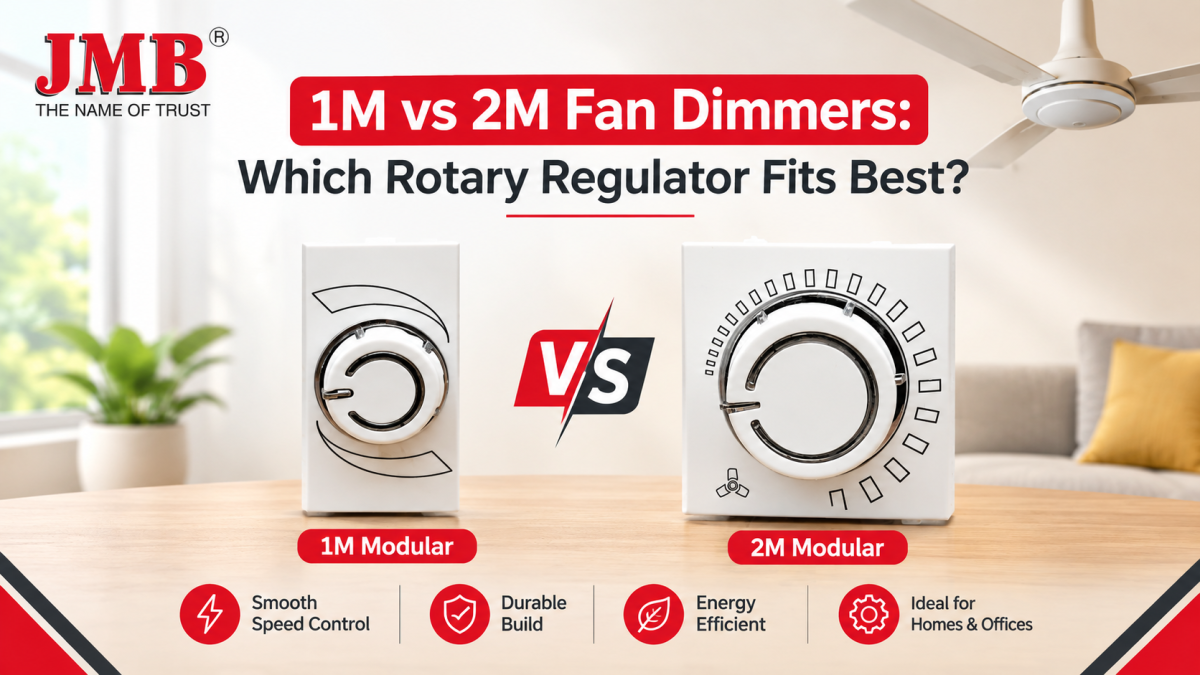
If instead you want a continuous range of speeds in a compact footprint, a 1 modular fan dimmer regulator offers that flexibility.
For larger fans or boards needing extra module space, a 2 modular fan dimmer regulator handles that instead. Each design serves a genuinely different use case rather than one being a straightforward upgrade over the other, and choosing between them usually comes down to habit and board layout more than performance alone.
Non modular switch type fan dimmer units in particular remain popular in older buildings where the switchboard wasn't originally designed around modern modular plate standards, since they can often be fitted without altering the existing board layout at all.
Voltage, Load and Installation Notes
Most 220V switch type fan dimmer units are rated for standard single-phase household supply and typical ceiling or table fan loads. Installation follows the same basic principle as any other regulator: live in, load out to the fan, and no neutral connection required at the switch itself. That said, wiring specifics can vary slightly between manufacturers, so a step-by-step wiring guide is worth reviewing before attempting a DIY swap, particularly if you're replacing a very old mechanical unit with different terminal spacing.
Electrical switch type fan regulator installations should always begin with the main supply switched off at the board, and a qualified electrician should confirm earthing is intact before the new unit goes live, especially in older homes where board wiring may not meet current standards.
Budget Considerations for Switch Type Units
Cost is often the deciding factor for buyers comparing regulator types. A budget switch type fan dimmer typically costs less than an equivalent rotary or modular unit because the internal mechanism is simpler to manufacture. For rental properties, hostels, or large residential projects where dozens of units need fitting at once, that price difference adds up quickly without compromising on daily reliability.
That said, cheaper doesn't have to mean lower quality. Sourcing from a switch type fan dimmer manufacturer India relies on for consistent ISI compliance means you get dependable contacts and stable voltage ratings even at accessible price points, rather than the flimsier off-brand alternatives that fail within months.
Sourcing in Bulk for Projects
Contractors and retailers managing multiple installations need consistency across every unit they fit. A bulk switch type fan dimmer supplier that maintains tight quality control across production batches saves callbacks and warranty headaches down the line. Buyers wanting a broader look at build options can also compare toggle models against the M V CROMA Fan Dimmer for a slightly different finish and knob action. Sai Electronics India manufactures its fan regulator dimmer switch type India range with batch consistency in mind, so units sourced for a fifty-flat project perform identically to a single unit bought for a home repair.
Comparing to Remote-Controlled Alternatives
Some buyers weigh a switch type unit against fully remote-controlled fans before deciding. A traditional switch fan dimmer regulator costs less upfront, needs no batteries, and keeps working even during a remote's dead battery moment, which is a real advantage in daily use. This remote control ceiling fans vs traditional regulators comparison walks through the running costs and convenience trade-offs in more detail if you're still weighing the two approaches.
Frequently Asked Questions
Can a switch type fan dimmer regulator replace any old mechanical regulator?
In most cases yes, since the wiring terminals typically match standard live-in, load-out connections, though it's worth checking your existing board depth before purchase to confirm a clean fit.
Does a switch type dimmer wear out faster than a rotary one?
Not necessarily. Wear depends more on contact quality and daily usage frequency than on whether the mechanism is a toggle or a dial, and well built units of either type last for years under normal household use.
How many speed steps does a typical switch type regulator offer?
Most units offer three to four fixed speeds, covering the practical range most households need without the added complexity of a continuous dial.
Is a switch type regulator suitable for larger fans?
Yes, as long as the unit's load rating matches your fan's wattage. Checking the rated load before installation avoids overheating or premature failure.
Why choose switch type over modular rotary designs?
It largely comes down to familiarity and board layout. Households used to flick-style controls, or boards not built around modular plate standards, often find switch type units a simpler fit.
Final Thoughts
A dependable toggle control still has a firm place in Indian homes, especially where familiarity and straightforward wiring matter more than fine-tuned dimming. Whether you're replacing a single unit or fitting out an entire project, reach out through Contact us for current stock, pricing, and load specifications.
Ready to Source the Right Switch-Type Dimmer?
Whether you need a single unit to replace an old mechanical regulator or bulk quantities for a residential project, our team is ready to assist you with pricing and load specifications.
Contact Us NowBlog Categories
- 4 Step Fan Regulator
- 5 Step Fan Regulator
- 5 Step Fan Regulator Manufacturer
- 7 Step Fan Regulator manufacturer
- Blogs
- cooler regulator manufacturer
- fan dimmer manufacturer
- fan plate cover manufacturers
- Fan Regulator Manufacturing
- Fan Sheet manufacturer
- LED Foot Lights manufacturer
- modular blank plate manufacturer
- rotary dimmer manufacturer
- Surface box manufacturing
- USB Socket Manufacturers
Related Posts