Categories
7 Step Fan Regulato Blogs

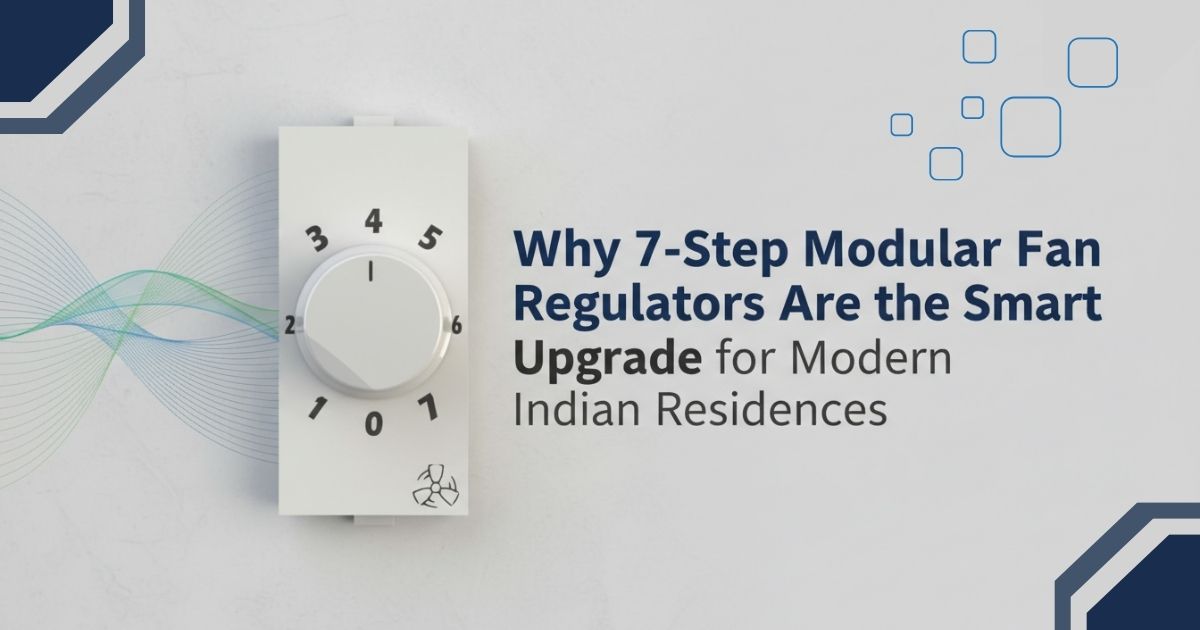
Why 7-Step Modular Fan Regulators Are the Smart Upgrade for Modern Indian Residences

Indian homes are rapidly changing. As temperatures climb and energy bills soar, homeowners across the country are rethinking how they cool their living spaces. Traditional fan controls no longer meet the needs of families seeking precise comfort, stylish interiors, and meaningful savings on electricity. The solution lies in upgrading to a 7 step fan regulator that combines advanced speed control with contemporary design.

Understanding What Makes These Regulators Different

A 7 speed fan regulator offers something older controls simply cannot match: granular control over airflow. Unlike basic 5-step or rotary dial models, this technology provides seven distinct speed levels, allowing you to fine-tune your ceiling fan’s performance to match exact comfort requirements. Whether you need gentle circulation during cool monsoon evenings or maximum airflow on sweltering summer afternoons, you have the precision to dial in exactly what you need.

The modular aspect takes this further. A 7 step modular fan regulator integrates seamlessly with your existing switch panels, creating a unified, contemporary look throughout your home. Gone are the days of mismatched, protruding controls that clash with your carefully chosen décor. These units sit flush with your wall, matching the aesthetic of modern electrical fittings while delivering superior functionality.

Seven Steps to Perfect Comfort

Why does the number of steps matter? Each additional level of control means better adaptation to your environment. With seven options instead of three or five, you can respond to subtle changes in temperature, humidity, and personal preference throughout the day. Morning hours might call for step three, providing gentle air movement as you prepare for work. Afternoon heat demands step six or seven for robust cooling. Evening relaxation finds its sweet spot at step four or five.

This precision translates directly into energy efficiency. Running your fan at the lowest comfortable speed rather than defaulting to high saves electricity without sacrificing comfort. Over months and years, these savings accumulate significantly. Many households report 15-20% reductions in fan-related energy consumption simply by having access to more refined speed control through a modular 7 step fan regulator.

Aesthetic Integration for Contemporary Homes

Modern Indian residences prioritize clean lines, minimalist design, and cohesive visual themes. A 7 step ceiling fan regulator respects these priorities when designed with modularity in mind. Unlike bulky older models that protrude awkwardly from walls, modular units integrate into standard electrical boxes, sitting perfectly aligned with adjacent switches and sockets.

The design flexibility extends beyond mere appearance. Modular systems allow homeowners to coordinate all controls in a room or throughout an entire home. Whether you prefer white, ivory, metallic finishes, or textured surfaces, you can select units that complement your chosen aesthetic. This attention to detail matters when building or renovating spaces where every element contributes to the overall ambiance.

Energy Efficiency That Protects Your Budget and the Planet

Electricity costs continue rising across Indian cities and towns. Every appliance, every light, every fan contributes to monthly bills that strain household budgets. A 7 step fan speed controller addresses this reality by giving you control over one of the most frequently used electrical devices in your home.

The mathematics are straightforward. Fans consume less power at lower speeds. When you can select from seven options rather than three, you’re far more likely to find a setting that provides adequate comfort at reduced power draw. This isn’t about sacrificing cooling; it’s about eliminating waste. Why run your fan at 100% when 70% achieves the same comfort level?

Environmental benefits accompany financial ones. Reduced energy consumption means lower carbon emissions from power generation. As more Indian households adopt efficient cooling practices, the cumulative impact becomes substantial. Individual choices to upgrade regulators contribute to broader sustainability goals that  Indian cities are embracing with locally made fan regulators.

Beyond Basic Cooling: Holistic Comfort Benefits

Optimal air circulation affects more than just perceived temperature. Proper fan speed influences sleep quality, indoor air quality, and overall wellbeing. A 7 step switch fan regulator helps you create ideal conditions for different activities and times of day.

Bedroom environments particularly benefit from precise control. Research shows that excessive air movement can disrupt sleep, while insufficient circulation leads to discomfort and restlessness. The ability to select exactly the right speed creates conditions conducive to deep, restorative rest. Similarly, in living areas where conversation, reading, or entertainment occur, you can adjust airflow to avoid the noise and distraction of unnecessarily high fan speeds.

Air quality considerations also come into play. Gentle, consistent circulation helps distribute air throughout rooms, reducing stagnant pockets where allergens and pollutants concentrate. This matters especially for families with children, elderly members, or individuals with respiratory sensitivities.

Installation and Compatibility: A Hassle-Free Transition

Concerns about installation complexity often prevent homeowners from upgrading their electrical controls. The good news: a 7 step resistive fan regulator fits standard Indian electrical boxes and wiring configurations. Licensed electricians can typically complete installation in minutes per unit, making this one of the most straightforward home improvements available.

Compatibility extends to virtually all ceiling fan models currently installed in Indian homes. The regulator works by controlling voltage supplied to the fan motor, a universal principle that applies regardless of fan brand or age. Whether your fans are decades old or recently purchased, they’ll respond effectively to the improved control system.

For those building new homes or undertaking renovations, specifying modular regulators from the outset ensures perfect integration. Coordinate with your electrical contractor to position controls at convenient heights and locations, creating an intuitive, user-friendly layout throughout your residence.

Choosing Quality for Long-Term Performance

Not all electrical controls are created equal. When investing in upgraded fan regulation, quality matters. Components, build standards, and manufacturing precision determine whether your new controls deliver years of reliable service or require frequent replacement.

Working with established fan regulator manufacturers in India ensures access to products tested under real-world Indian conditions. Temperature extremes, voltage fluctuations, and heavy daily use characterize the environment these devices must withstand. Companies like Sai Electronics India bring decades of experience in producing durable, efficient electrical controls specifically designed for these demanding circumstances.

Consider features like heat dissipation, switch mechanism quality, and warranty coverage when evaluating options. A slightly higher upfront investment in superior components pays dividends through extended lifespan and consistent performance. For insights into identifying reliable manufacturers, understanding how to spot top fan regulator manufacturers before you shop offers valuable criteria for evaluation.

Specific Product Options to Consider

When you’re ready to upgrade, examining specific models helps clarify the practical differences between options. The 1 M 7 Diamond Modular Ceiling Fan Regulator combines elegant aesthetics with robust functionality, ideal for living rooms and master bedrooms where design matters most.

Alternatively, the 1 M 7 Dio Modular Regulator offers a different visual approach while maintaining the same seven-step control precision. For those seeking premium finishes, the 1 M 7 Foil Modular Regulator provides distinctive texture and appearance that elevates interior spaces.

Each model shares the core advantages of modular installation and seven-step control while allowing personalization based on individual aesthetic preferences. You can view the complete range of 7-step regulators to find the perfect match for your home’s unique requirements. Additionally, browsing the full product collection reveals even more finishes, styles, and configurations available to match your home’s unique character.

Making the Upgrade Decision

Transitioning to advanced fan control represents a meaningful investment in home comfort, efficiency, and aesthetics. The decision involves weighing upfront costs against long-term benefits: lower energy bills, improved comfort, enhanced interior design coherence, and the satisfaction of making an environmentally responsible choice.

Start by assessing which rooms would benefit most from upgraded control. Bedrooms, living areas, and home offices typically see the greatest impact. Calculate potential energy savings based on current fan usage patterns and electricity rates in your area. Factor in the aesthetic improvements and their contribution to your home’s overall appeal.

For those uncertain about technical specifications or installation requirements, reaching out to experienced suppliers clarifies options and ensures you select controls perfectly matched to your needs. Professional guidance helps navigate choices around finishes, features, and quantities, streamlining the upgrade process.

Conclusion: Investing in Lasting Comfort

Home comfort technology continues advancing, but few upgrades offer the combination of immediate impact, long-term savings, and aesthetic improvement provided by modern fan regulator 7 step systems. As Indian homes evolve to meet contemporary standards of efficiency and design, these controls represent a smart, forward-thinking choice.

The modular approach eliminates the compromise between functionality and appearance that characterized older electrical controls. Seven-step precision delivers comfort customization impossible with basic systems. Energy efficiency protects budgets and supports environmental goals. Compatibility with existing fans and electrical infrastructure makes installation straightforward.

Whether building a new residence, renovating an existing one, or simply seeking meaningful improvements to daily comfort, upgrading to advanced fan regulation deserves serious consideration. The technology exists, the benefits are proven, and the investment pays returns in comfort, savings, and satisfaction for years to come. Your home cooling deserves the precision, efficiency, and style that only a quality seven-step modular system can provide.

Categories
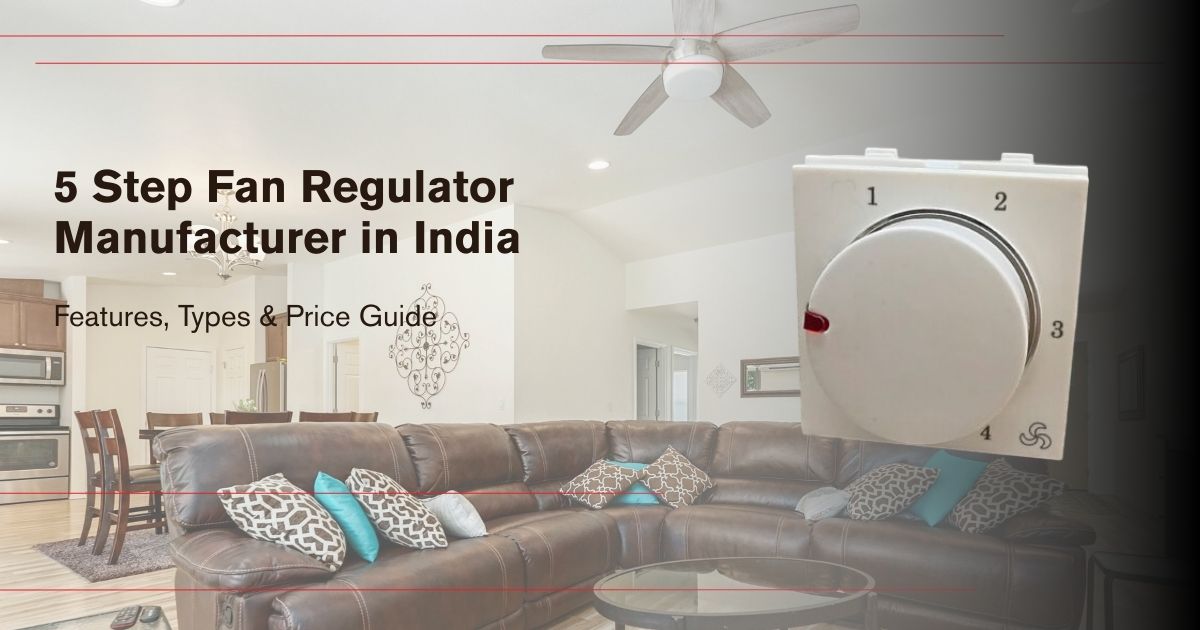
5 Step Fan Regulator Blogs

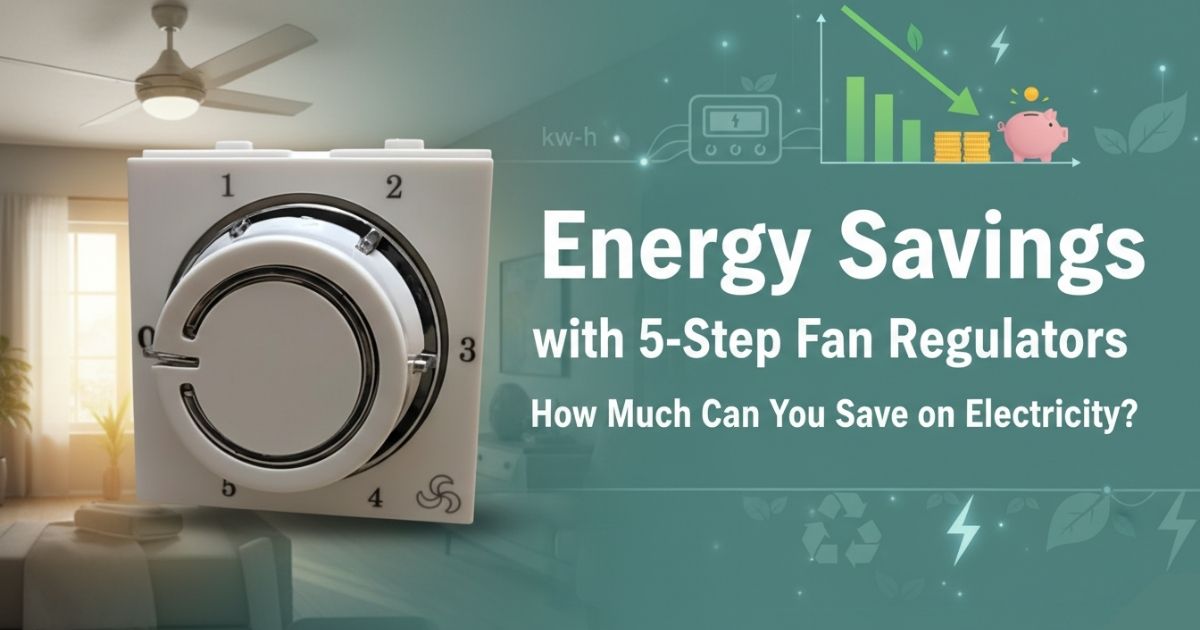
Energy Savings with 5-Step Fan Regulators: How Much Can You Save on Electricity?

Introduction – Why Fan Speed Control Impacts Your Electricity Bill

Rising power costs in Indian homes and commercial buildings have made energy-conscious decisions more important than ever. With electricity tariffs increasing steadily across states, every appliance in your space contributes to the final bill. Ceiling fans, which run for 8-12 hours daily in most Indian households, are among the top consumers.

This is where a 5 step fan regulator becomes a practical energy-saving tool. Unlike outdated single-speed systems, a modern fan regulator has 5 steps allows you to adjust airflow based on actual comfort needs rather than running at maximum capacity all day. This blog will break down the real numbers how much power you consume at each speed level, what your monthly and yearly savings look like, and why choosing the right 5 Step Fan Regulator manufacturer can make a measurable difference to your electricity expenses.

How a 5 Step Fan Regulator Controls Power Consumption

A 5 speed fan regulator works by controlling the voltage supplied to your ceiling fan motor. At full capacity, the motor receives complete voltage and consumes maximum wattage. When you dial down using a 5 step fan speed controller, the regulator reduces the voltage in controlled increments, lowering both speed and power draw.

Each step corresponds to a specific voltage level. For instance, Step 1 might deliver 40% of full voltage, Step 3 around 70%, and Step 5 at 100%. This proportional reduction in voltage translates directly into reduced wattage consumption. The fan motor uses less electrical energy while still providing adequate airflow for comfort.

The key advantage over running your fan at full speed constantly is simple: you only use the power you actually need. On cooler evenings or during monsoon months, lower speeds are sufficient and they cost significantly less to operate.

Power Consumption at Each Speed Level (With Real Numbers)

Typical Ceiling Fan Wattage

A standard ceiling fan in India consumes approximately 75 watts when running at full speed. This varies slightly depending on motor quality, blade size, and design efficiency, but 75W serves as a reliable benchmark for calculations.

Watt Usage by Step

Here’s how power consumption typically breaks down across a 5 step ceiling fan regulator:

  • Step 1 – 30W (minimal airflow, quiet operation)
  • Step 2 – 40W (gentle breeze, suitable for night use)
  • Step 3 – 50W (moderate speed, ideal for spring or autumn)
  • Step 4 – 60W (strong airflow, comfortable during warm days)
  • Step 5 – 75W (maximum speed for peak summer heat)

These figures show that operating at Step 2 instead of Step 5 cuts your consumption nearly in half. Over months of usage, this difference compounds into substantial savings. A 5 step modular fan regulator maintains these efficiency levels consistently, unlike older resistive models that may waste energy as heat.

Monthly & Yearly Electricity Savings Calculation

Daily Usage Scenario (10 hours/day)

Let’s assume your fan runs for 10 hours daily—a realistic figure for most Indian homes during summer months.

At full speed (Step 5):
75W × 10 hours = 750 watt-hours = 0.75 units per day

At moderate speed (Step 3):
50W × 10 hours = 500 watt-hours = 0.5 units per day

Daily savings: 0.25 units

Monthly Unit Consumption Comparison

Full speed usage: 0.75 units/day × 30 days = 22.5 units/month
Controlled usage (Step 3 average): 0.5 units/day × 30 days = 15 units/month

Monthly savings: 7.5 units per fan

Annual Savings in ₹ (Indian tariff based example)

Assuming an average electricity rate of ₹7 per unit (varies by state and slab):

Monthly savings: 7.5 units × ₹7 = ₹52.50 per fan
Annual savings: ₹52.50 × 12 = ₹630 per fan

For a home with four ceiling fans, that’s ₹2,520 saved annually just by using your 5 step fan regulator intelligently. These calculations demonstrate why speed control isn’t just about comfort—it’s a financial decision that pays off consistently.

Seasonal Savings – Summer vs Monsoon vs Winter

Summer: Peak usage months from April to June see fans running at Steps 4-5 for extended hours. Even here, switching to Step 4 during early mornings or late evenings can trim 15-20% off your consumption compared to constant full-speed operation. Maximum savings potential exists during this period.

Monsoon: Cooler temperatures and higher humidity mean Steps 2-3 become sufficient for air circulation. Your consumption drops by 30-40% automatically. The beauty of a quality fan regulator 5 step is that it maintains smooth performance even at lower speeds without irritating humming sounds.

Winter: October through February requires minimal airflow mostly for air circulation rather than cooling. Step 1 or 2 suffices, reducing consumption to just 30-40W. While individual savings seem small, they add up over the four-month winter stretch. Consistent efficiency across seasons is what makes the investment worthwhile.

5 Step Fan Regulator vs Running Fan Always at Full Speed

Running your fan at maximum speed regardless of weather wastes significant energy. A fan motor operating at full capacity generates more heat, causes faster wear on bearings and windings, and stresses the capacitor unnecessarily.

Balanced consumption through speed control extends motor life by reducing thermal stress. Lower speeds also mean quieter operation and less vibration—benefits that improve your living environment beyond just the electricity bill.

The comfort-to-consumption ratio improves dramatically. You can maintain adequate airflow for 70-80% less cost during cooler months. Full speed should be reserved for genuinely hot conditions, not used as a default setting. Modern designs like the 2M Slim 5-Step Modular Fan Regulator are built specifically to optimize this balance with precision voltage control.

Modular vs Conventional 5 Step Fan Regulators – Which Saves More?

Older resistive regulators waste energy by converting excess voltage into heat. You’ve probably noticed traditional regulators becoming warm during operation that warmth represents electricity you’re paying for but not using productively.

A 5 step modular fan regulator uses solid-state components that switch voltage cleanly without resistance-based losses. Efficiency improves by 10-15% compared to conventional designs. Heat generation drops significantly, and voltage steps are more precise, giving you consistent speed control.

For anyone serious about long-term savings, upgrading to modular technology makes sense. Products like the 2M Tringo 5-Step Modular Fan Regulator incorporate these efficiency improvements while maintaining durability. The initial cost difference is recovered within 2-3 years through reduced electricity consumption and longer service life.

Why Quality Matters: Choosing the Right Manufacturer

Not all fan regulators deliver the same performance. Poorly manufactured units may have inconsistent voltage steps, causing fans to hum annoyingly at lower speeds or fail to provide adequate power reduction.

Buying from an established 5 Step Regulator manufacturer in India ensures proper calibration, quality components, and adherence to safety standards. OEM 5 Step Fan Regulators undergo rigorous testing for temperature tolerance, voltage stability, and durability under continuous operation.

Consistency in speed steps directly impacts your energy savings. If Step 2 consumes 50W instead of the intended 40W due to poor manufacturing, your savings calculations fall apart. Similarly, regulators that develop issues within 1-2 years force you into replacement costs that negate any initial price advantage.

Sai Electronics India focuses on precision manufacturing to ensure each speed step performs exactly as designed. For anyone comparing options, reading our guide on How to Spot Top Fan Regulator Manufacturers Before You Shop provides useful criteria for making informed choices.

Bulk & Project Buyers – How Much Can You Save at Scale?

The savings math becomes even more compelling for commercial and residential projects. Consider an apartment complex with 200 units, each having three ceiling fans. That’s 600 fans total.

Annual savings per building:
600 fans × ₹630 = ₹3,78,000

Hotels, hostels, offices, and educational institutions see similar multiplication effects. For facility managers, investing in quality regulators from a reliable 5 Step Fan Regulator supplier becomes a strategic decision that improves operational expenses year after year.

Working with a trusted wholesaler in India ensures consistent quality across bulk orders. Export-grade standards matter even for domestic installation because they guarantee performance under varying voltage conditions common in Indian electrical infrastructure. Commercial buyers should verify certifications and request performance data before finalizing large orders. The article on How Indian Cities Are Powering Up with Locally Made Fan Regulators discusses the growing trend toward domestic manufacturing that meets international quality benchmarks.

5 Step Fan Regulator Price vs Lifetime Energy Savings

A quality 5 step fan regulator price typically ranges from ₹150 to ₹400 depending on design and features. Taking the higher end at ₹400 per unit, let’s calculate the payback period.

Annual savings per fan: ₹630
Regulator cost: ₹400
Payback period: 400 ÷ 630 = 7.6 months

Within eight months, the regulator pays for itself. For the remaining 9-10 years of its service life, you’re enjoying pure savings. Even with conservative estimates, the return on investment exceeds 1500% over a decade.

This calculation doesn’t include secondary benefits like extended fan motor life or reduced maintenance costs from operating at lower heat levels. For budget-conscious buyers, focusing solely on upfront price misses the complete financial picture. A slightly more expensive unit from a certified manufacturer delivers better long-term value through consistent performance and durability.

Whether you’re purchasing from our shop or ordering in bulk, comparing lifetime costs rather than just sticker price leads to smarter decisions.

Conclusion – Small Dial, Big Savings

A simple rotary dial or switch panel can reduce your household electricity consumption by 20-40% on ceiling fan operation alone. The 5 step fan regulator remains the most cost-effective solution for Indian homes and commercial spaces because it balances comfort, control, and efficiency without requiring expensive smart home integration.

Real-world calculations show that even a single fan controlled intelligently saves ₹600+ annually. Multiply that across multiple rooms and years of service, and the impact becomes substantial. Seasonal adjustments, proper speed selection, and quality manufacturing all contribute to maximizing these savings.

For anyone looking to reduce electricity bills without sacrificing comfort, upgrading to modern modular regulators from a certified 5 Step Fan Regulator manufacturer & exporter like Sai Electronics India ensures you get precision control, durability, and measurable efficiency improvements. The technology is proven, the savings are real, and the payback period is measured in months, not years.

Make the switch, dial down when possible, and watch your electricity bills reflect the difference. For more information or bulk inquiries, feel free to contact us directly.

Categories
4 Step Fan Regulator Blogs

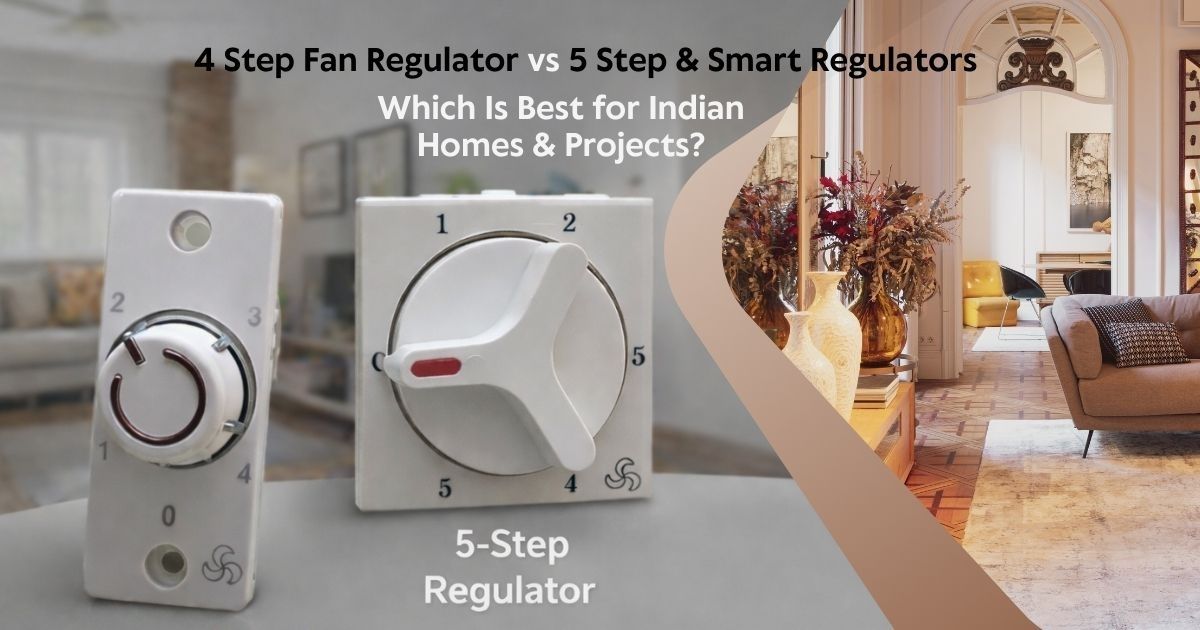
4 Step Fan Regulator vs 5 Step & Smart Regulators: Which Is Best for Indian Homes & Projects?

Choosing the right fan speed controller can make a real difference in comfort, energy bills, and long-term reliability. In 2026, Indian buyers face three main options: traditional 4 step models, 5 step variants, and modern smart controllers. Each has distinct advantages depending on your specific needs, budget, and installation environment.

What Is a 4 Step Fan Regulator?

A 4 Step Fan Regulator uses a rotary switch mechanism to offer four distinct speed settings for ceiling fans. Unlike older resistance-based dimmers, modern step regulators use capacitor-based circuits that reduce energy waste while delivering consistent performance across different voltage conditions.

How Step-Based Speed Control Works

The technology relies on switching different capacitor values into the fan motor circuit. Each position on the dial connects a specific capacitor rating, which alters the phase angle of the current supplied to the fan. This creates distinct speed levels without generating excessive heat, making these controllers safer and more energy-efficient than outdated resistance models.

Typical Applications in Indian Homes, Offices & Projects

These controllers fit seamlessly into residential bedrooms, living rooms, and office spaces where straightforward operation matters most. Builders prefer them for apartment complexes and housing projects because residents find the tactile knob interface intuitive. The 1 M C CLASSIC Modular Regulator works well in standard modular switch plates, giving architects flexibility in design planning.

What Is a 5 Step Fan Regulator?

The 5 step variant adds one additional speed setting between the existing levels. This means you get five distinct fan speeds instead of four, theoretically offering finer control over airflow.

Extra Speed Level – Is It Really Needed?

For most Indian users, the difference between four and five speeds is barely noticeable in daily use. The middle speed on a 5 step unit sits between what would be speeds 2 and 3 on a 4 step model. In practice, people tend to stick with three main settings: low for sleeping, medium for normal use, and high for hot afternoons. The extra granularity rarely justifies the added cost.

Price Difference vs Performance

Five step models typically cost 15-25% more than their four step counterparts. Unless you’re extremely particular about finding that perfect airflow sweet spot, the performance gain doesn’t match the price increase. Most electricians and contractors stick with four step options for better value.

What Are Smart Fan Regulators?

Smart controllers let you adjust fan speed through smartphone apps, voice assistants, or remote controls. They often include features like scheduling, timer functions, and integration with home automation systems.

App & Remote Control Features

Modern smart regulators connect via Wi-Fi or Bluetooth, allowing you to change speeds without getting up. Some models support Google Assistant or Alexa voice commands. You can program them to automatically adjust speeds based on time of day or room temperature sensors.

Compatibility with Old Wiring Systems

Here’s where many Indian homes face challenges. Smart regulators often require a neutral wire connection, which isn’t present in older wiring setups common in buildings constructed before 2010. Retrofitting neutral wires means breaking walls and rewiring, adding significant installation costs. Traditional step regulators work with existing two-wire systems, making them plug-and-play replacements.

4 Step vs 5 Step vs Smart – Feature Comparison

Speed Control Precision

Four step units provide adequate speed variation for typical ceiling fans. Five step models add marginal precision that most users won’t notice. Smart controllers offer theoretically infinite speed adjustment through dimming circuits, but this smoothness comes at the cost of complexity and potential compatibility issues with older fan motors.

Power Consumption

Modern capacitor-based step regulators are highly efficient, wasting minimal energy as heat. The 1 M C INDICO Modular Regulator uses quality components that maintain efficiency across all speed settings. Smart controllers add their own power draw for the wireless circuitry, even when the fan is off. This standby consumption can add up over time, though it’s usually minimal.

Installation & Maintenance

Step-based controllers install in minutes using standard electrical connections. Any electrician can handle the job without special training. Smart units require app setup, network configuration, and occasional firmware updates. If your Wi-Fi goes down or the manufacturer stops supporting the app, you might lose control features. Physical step switches have no such dependencies.

Cost & Long-Term Value

A quality 4 Step Fan Regulator Manufacturer in India offers products ranging from ₹150 to ₹400 depending on finish and features. Five step models cost ₹200 to ₹500. Smart regulators start around ₹800 and can exceed ₹2,000 for feature-rich versions. Over a 10-year lifespan, step regulators require virtually no maintenance, while smart devices may need replacement if technology standards change.

Why 4 Step Fan Regulators Still Lead the Indian Market

Reliability in Voltage Fluctuations

Indian power grids experience frequent voltage variations, especially in tier 2 and tier 3 cities. Capacitor-based step controllers handle these fluctuations gracefully without damage. The electronic circuits in smart regulators are more sensitive to voltage spikes and brownouts, potentially failing without proper stabilization.

Budget-Friendly for Mass Housing

Developers building 500-unit apartment complexes need cost-effective solutions that won’t burden homebuyers. When you multiply ₹300 versus ₹1,500 across hundreds of units, the savings become substantial. The 1 M C RED Modular Regulator offers excellent value for such projects without compromising quality.

Easy Availability from Indian Manufacturers

Cities like Ahmedabad and other industrial hubs in Gujarat produce millions of step regulators annually. As a 4 Step Regulator Manufacturer in India, Sai Electronics India maintains ready stock and can fulfill orders within days. This local manufacturing ecosystem ensures quick replacement availability and better after-sales support compared to imported smart devices.

Which Regulator Should You Choose?

Best for Homes

For single-family homes and apartments, four step controllers offer the best balance of functionality, reliability, and cost. They work with existing wiring, need no technical knowledge to operate, and last for years without issues. The 1 M CROMA BLACK Modular Regulator provides a sleek aesthetic that complements modern interior designs.

Best for Builders & Electricians

Construction professionals should stick with four step models for residential projects. They’re easier to install in bulk, have fewer failure points, and residents of all ages can use them without confusion. When sourcing from reliable Fan Regulator Manufacturers in India, you ensure consistent quality across all units in your project.

Best for Commercial Projects

Offices, showrooms, and commercial spaces benefit from four step regulators due to their durability under frequent use. For high-end commercial buildings where automation is a priority, smart regulators make sense, but ensure your electrical contractor includes proper surge protection and network infrastructure.

Why Buy from a Trusted 4 Step Fan Regulator Manufacturer in India

BIS Certification & Quality Testing

Reputable manufacturers comply with Bureau of Indian Standards safety requirements. BIS-marked products undergo rigorous testing for electrical safety, fire resistance, and performance consistency. Choosing certified 4 Step Fan Regulator Supplier ensures you’re not compromising on safety standards. Understanding what makes top manufacturers stand out helps you make informed purchasing decisions.

Benefits of Local Manufacturing in Gujarat & Ahmedabad

Gujarat’s industrial infrastructure supports efficient production with quality control at every stage. As a 4 Step Fan Regulator Manufacturer in Ahmedabad, local producers reduce transportation costs and carbon footprint while supporting regional employment. The 1 M CROMA GREY Modular Regulator exemplifies how local manufacturing can deliver international quality standards.

Bulk Supply, OEM & Export Advantages

Working with a 4 Step Fan Regulator Wholesaler gives contractors access to volume pricing and customization options. Many Indian manufacturers offer OEM services for branded housing projects and export to markets in Africa, Middle East, and Southeast Asia. The impact of locally made products extends beyond individual projects to support national manufacturing goals.

Final Verdict – Is 4 Step Fan Regulator Still the Smartest Choice in 2026?

For the vast majority of Indian buyers, yes. The 4 Step Regulator Manufacturer in India continues to serve market needs effectively because these products deliver reliable performance at accessible prices. While smart home technology has its place in premium projects, traditional step controllers remain unbeatable for mass-market applications.

If you’re building a tech-forward home with comprehensive automation, smart regulators make sense as part of a broader ecosystem. For everyone else, including builders, electricians, and homeowners who value simplicity and longevity, the four step option remains the practical choice.

The key is selecting products from established manufacturers who stand behind their quality. Whether you need single units for home renovation or bulk quantities for construction projects, partnering with a dependable 4 Step Regulator Exporter ensures you get products that perform consistently for years.

Ready to make your purchase decision? Check out the complete range of reliable regulators or get in touch to discuss your specific project requirements.

FAQs

Q. Is a 4 step fan regulator better than a 5 step regulator?

A. For most users, yes. The four step model provides sufficient speed variation for comfortable airflow control while costing less. The extra speed level in five step units rarely provides noticeable improvement in daily use. Four step regulators also have a proven track record of reliability and wider availability from manufacturers across India.

Q. Do smart fan regulators save more electricity than step regulators?

A. Not significantly. Modern capacitor-based step regulators are already highly efficient. Smart controllers add convenience features but consume standby power for their wireless connectivity. The energy savings from optimized scheduling might offset this, but the difference is minimal in practical terms for a typical household.

Q. Which fan regulator is best for Indian voltage conditions?

A. Capacitor-based step regulators handle voltage fluctuations better than electronic smart controllers. Indian power grids often experience variations that can damage sensitive electronics. Four step models from quality manufacturers include components rated for these conditions, making them more reliable across different regions.

Q. Are 4 step fan regulators suitable for modular switches?

A. Absolutely. Modern step regulators are specifically designed to fit standard modular switch plates. They’re available in various colors and finishes to match different interior styles. The modular format makes installation straightforward and allows easy replacement without changing the entire switch plate.

Q. Where can I buy bulk 4 step fan regulators in India?

A. Contact manufacturers and wholesalers directly for bulk orders. Gujarat and Ahmedabad have numerous established producers who supply to contractors, builders, and exporters. For consistent quality and competitive pricing on large orders, working directly with a 4 Step Fan Regulator Manufacturer in Gujarat ensures better terms and reliable delivery schedules.

Chat With Us