Every ceiling fan in your home has a regulator. Yet most people give it almost no thought — until the fan runs too fast or too slow or the old knob stops working. If you are replacing a regulator or fitting one in a new home, the 5-step fan regulator is one of the most practical choices available in the Indian market today.
This guide covers exactly how it works, what makes it different from other types, how to choose the right one for your space, and what to look for when sourcing in bulk. Whether you are a homeowner, electrician, or contractor, you will get clear answers here.
What Is a 5 Step Fan Regulator?
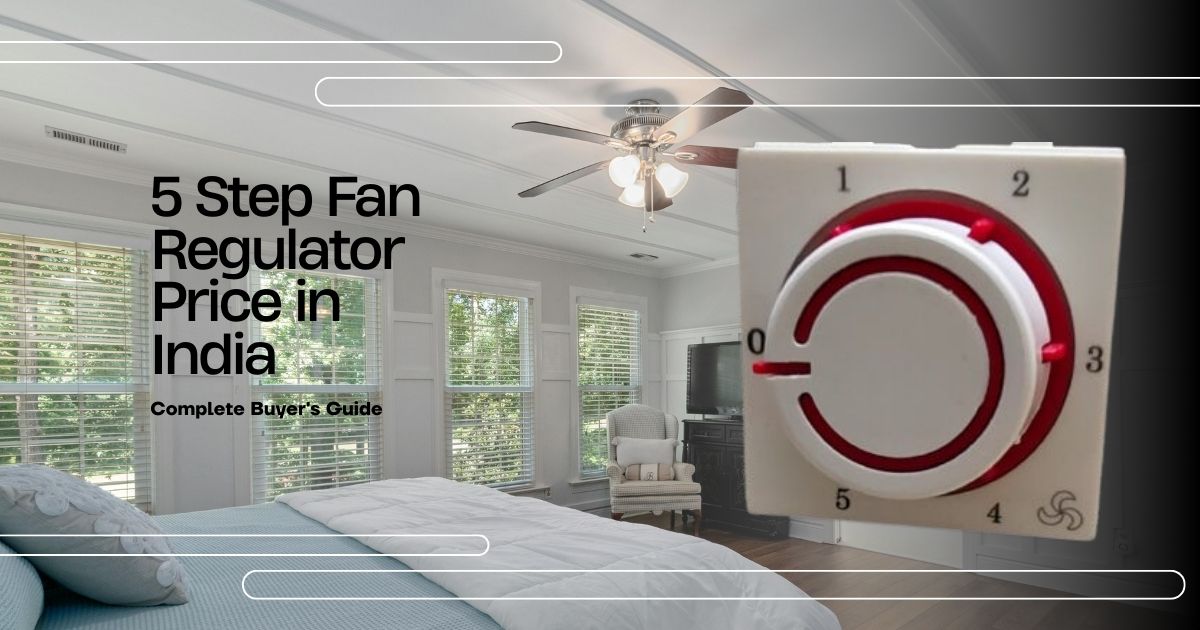
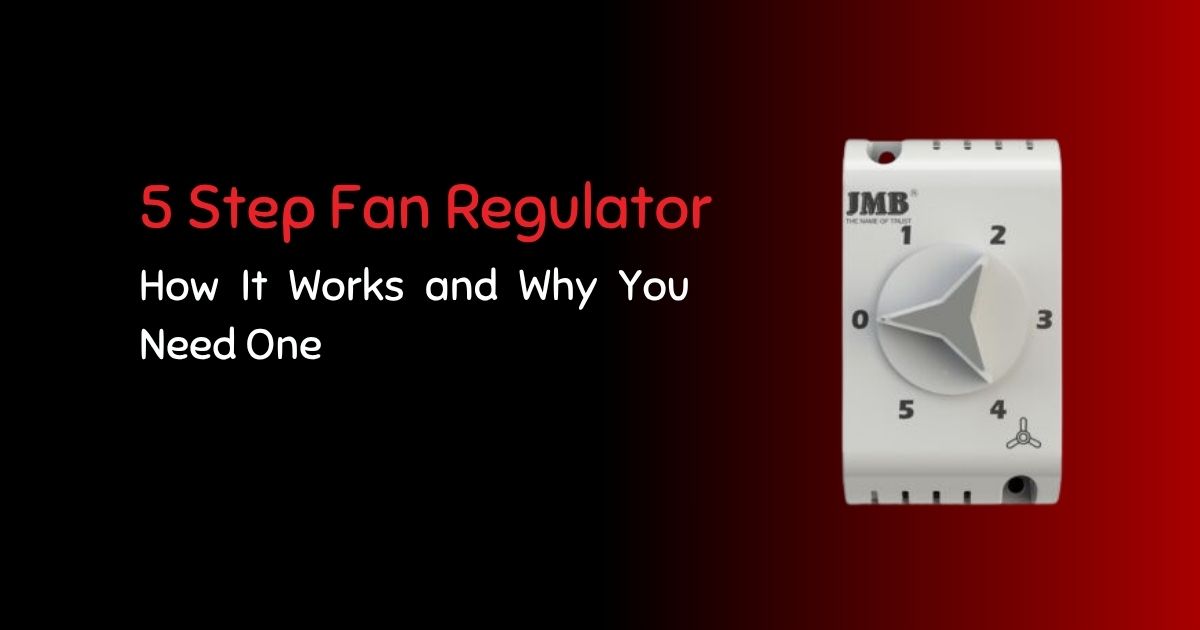
A 5 step fan regulator is a speed control device that adjusts your ceiling fan to one of five fixed speed settings. Each step corresponds to a specific voltage level delivered to the fan motor. Step 1 is the slowest; step 5 is full speed.
Unlike a rotary regulator that offers a continuous dial with no clear positions, a step-type regulator gives you defined, repeatable settings. You can return to the same speed every time without guessing. This consistency is especially useful in bedrooms, offices, and classrooms where you prefer the same comfort setting daily.
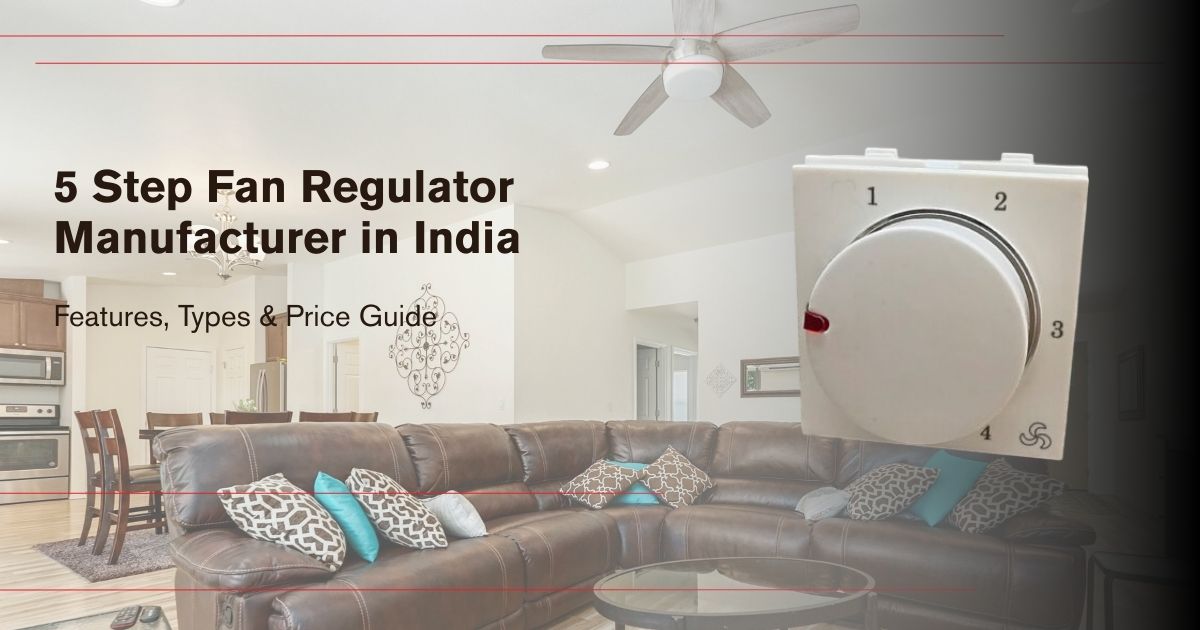
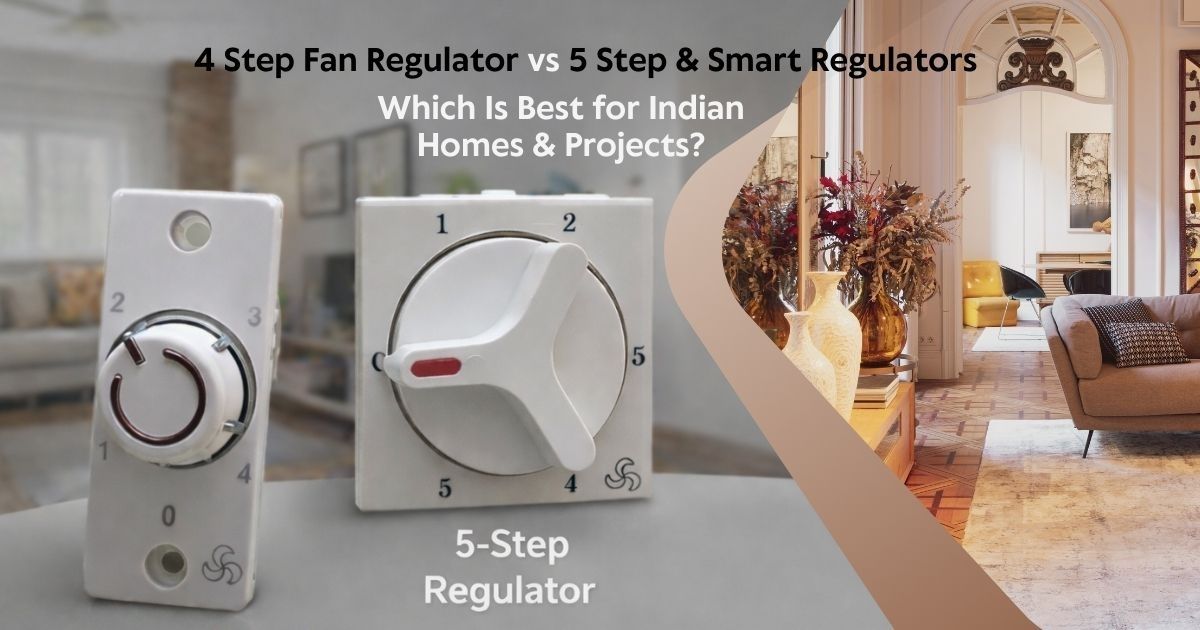
The device fits into a standard modular switchboard slot and is available in various body styles — modular flat, modular curve, and open body — to match different installation setups.
How Does a 5 Step Fan Regulator Work?
The working principle is straightforward. Inside the regulator is a set of resistors or electronic components arranged in a stepped configuration. When you move to a lower step, more resistance is introduced into the circuit. This reduces the voltage reaching the fan motor, which in turn reduces the motor speed.
At step 5, no resistance is added — the fan runs at full rated voltage and maximum speed. At step 1, the highest resistance is in the circuit, so the fan motor receives the least voltage and turns at its slowest rate.
Modern versions of the fan regulator’s 5 steps use improved winding and contact materials that keep heat generation minimal even at lower speed settings. This is a notable improvement over older resistive regulators that would get noticeably warm at low speeds, wasting energy as heat.
For a more technical breakdown of how voltage control operates inside fan regulators, the article on voltage control in modern fan regulators covers the internal circuit behaviour in detail.
Why a 5 Step Regulator Over Other Types?
Better Control Than 3-Step or Continuous Rotary
A 3-step regulator gives you only three positions: low, medium, and high. For many users, the jump between steps feels too abrupt. A 5-step model splits that range into finer increments, giving you more comfort options without the complication of a 7-step device.
A continuous rotary regulator, meanwhile, has no fixed positions. While it seems like more flexibility, in practice most people use just two or three positions repeatedly. Without clear stops, you end up adjusting it by feel every time, which is less consistent and less efficient.
Energy Saving at Every Step
One of the core benefits of a step-type regulator is genuine power reduction at each lower step. The fan motor draws less current at reduced speeds, so your electricity consumption drops proportionally. Over a month of regular use at medium speed, this adds up to a real reduction on your power bill.
For a detailed look at how much you can save with step-type regulators, the post on energy savings with 5 step fan regulators includes actual consumption comparisons.
Simpler Wiring Than Electronic Regulators
Electronic fan regulators (capacitor-based or TRIAC-based) offer smooth speed control but require more careful wiring and can interfere with certain fan types. A 5 step ceiling fan regulator using resistive technology is compatible with virtually all standard induction-motor ceiling fans and involves simple three-terminal wiring that any qualified electrician can handle without specialist tools.
Types of 5 Step Fan Regulators
Choosing the right variant depends on your switchboard type, aesthetics, and the installation environment.
2 Modular Flat Panel
The flat modular type is the standard choice for modern homes with flush-mounted switchboards. It occupies two module slots and has a clean, level face that sits flush with the panel cover.
The 2M Slim 5-Step Modular Fan Regulator is a slim-profile option designed for contemporary modular panels where a low-projection finish is preferred. The Classic 2M 5 Step Fan Regulator offers a more traditional look with the same reliable step mechanism — a practical choice for standard residential switchboards.
2 Modular Curve Panel
Some modular panels use a curved or contoured design for their front face. Using a flat regulator on these panels creates a mismatch in profile. The 2 modular curve 5 step fan regulator range is built specifically for these curved panel systems, ensuring a flush, aligned finish.
For panels that use a diamond-faceted or textured front design, the Diamond 2M 5 Step Fan Regulator matches that aesthetic precisely. Similarly, the N CLASSIC 2M 5 Step Fan Regulator suits switchboards with the N-Classic modular format.
Open Body
An open-body regulator is mounted in a surface box or standalone enclosure rather than a modular switchboard. It is the standard choice for older homes with non-modular wiring, workshops, warehouses, and utility rooms.
The 5 step open-body fan regulator category includes variants suited to both residential and light commercial use, with robust construction for environments where the fitting sees more handling.
How to Install a 5-Step Fan Regulator
Installation is a task any trained electrician can complete in under 20 minutes. Here is the general process for a modular type:
- Switch off the power at the distribution board for the relevant circuit.
- Remove the existing regulator or the blank plate from the designated slot.
- Check the terminal markings on the new regulator: Line (L), Fan (F), and sometimes Neutral (N).
- Connect the incoming live wire to the line terminal.
- Connect the outgoing wire going to the fan to the fan terminal.
- Fit the regulator body into the modular frame and secure it.
- Replace the switchboard cover, restore power, and test each of the five speed steps.
For a complete wiring walkthrough with terminal diagrams, the step-by-step fan regulator wiring guide is a reliable reference to have on hand during installation.
5 Step Fan Regulator Price: What to Expect
The 5 step fan regulator price in India varies based on body type, build quality, and whether you are buying retail or wholesale.
At retail, a standard 2-modular flat type typically costs between Rs. 90 and Rs. 280. Open-body variants are slightly lower in cost. Curve and designer variants may be priced higher due to the specialised panel fitment.
At wholesale, prices drop considerably for bulk quantities. A 5-step fan regulator wholesaler in India or direct manufacturer pricing can bring per-unit costs down by 30 to 50 per cent depending on order volume. For construction projects, hotel fitouts, or multi-unit residential buildings, this difference is significant.
For a full buyer’s guide to pricing tiers and what affects the cost, the article on 5 step fan regulator price in India breaks down the variables clearly.
Buying in Bulk: What Contractors and Distributors Should Know
If you are managing a construction project, running an electrical contracting business, or distributing electrical fittings, sourcing directly from a 5-step fan regulator manufacturer rather than a distributor gives you three clear advantages: better per-unit pricing, direct quality control, and consistent stock availability.
A 5-step fan regulator supplier operating from a factory can accommodate OEM orders with custom branding or packaging if needed. For export buyers, a Gujarat-based manufacturer with export documentation experience simplifies the process significantly.
When evaluating a 5-step fan regulator exporter, check for product compliance with BIS standards, consistent winding quality across batches, and the ability to supply multiple variants (flat, curve, open body) under one order.
The post on 5 step fan regulator manufacturers in India covers what to look for when selecting a manufacturing partner, including key quality checks and documentation requirements.
Why Gujarat Is a Leading Hub for Fan Regulator Manufacturing
Gujarat accounts for a significant share of electrical component manufacturing in India. Proximity to raw material suppliers, a well-developed industrial infrastructure, and established export networks make 5 Step Fan Regulator manufacturer Ahmedabad and 5 Step Fan Regulator supplier Gujarat options highly competitive in both quality and price.
For buyers across India and international importers, sourcing from a 5 Step Regulator factory in India, based in Gujarat, typically means faster turnaround, lower freight costs to major ports, and access to a wider product range under one roof.
Sai Electronics India, based in Ahmedabad, manufactures a full range of step-type fan regulators covering both residential and commercial specifications. Their 5-step fan regulator manufacturer catalogue spans modular, curve, and open-body variants, all built to consistent dimensional and performance standards.
For a broader overview of fan regulator options across step counts and formats, fan regulator manufacturers in India is a useful starting point when comparing product lines.
What to Check Before Buying
Not all 5-step regulators perform equally. Here are the key things to verify before making a purchase:
Fan wattage compatibility: Most standard regulators handle fans up to 60W or 75W. Confirm the rating matches your fan’s power draw.
Panel fit: Measure your switchboard slot type — flat or curved — and number of modules before ordering. A mismatched body will not seat correctly.
Step feel: Each of the five positions should click firmly and stay in place. Loose or sliding steps indicate poor contact quality and will cause speed drift over time.
Heat at low speeds: A small amount of warmth at step 1 or 2 is normal for resistive types. Excessive heat indicates a poorly designed resistor winding.
Brand and batch consistency: For bulk orders, verify that unit-to-unit variation in step positions and wattage handling is within acceptable tolerance. This matters for large projects where consistency across all installed units is expected.
OEM options: If you need your brand name or logo on the product, confirm whether the manufacturer offers OEM 5 Step Fan Regulators with custom marking.
Frequently Asked Questions
Q: Is a 5 step fan regulator compatible with all ceiling fans?
A: It works with standard induction-motor ceiling fans rated up to 75W. It is not suitable for BLDC fans, which require a dedicated electronic controller.
Q: Can a 5 step regulator replace an old rotary regulator?
Yes, as long as the wiring terminals match and the new modular body fits the existing switchboard slot. The wiring is usually straightforward.
Q: Does the regulator affect fan lifespan?
A: Running a fan at lower speeds for extended periods does not damage a standard induction motor. In fact, reduced-speed operation often results in less motor heat, which can extend motor life.
Q: What is the difference between a modular 5 step regulator and an open-body one?
A: The modular type fits into a standard switchboard panel. The open-body type is mounted in a separate surface box. The internal mechanism is similar; the difference is in how they are housed and installed.
Q: How do I know which curve variant fits my switchboard?
A: Check your switchboard brand and panel design. Curve-type regulators are designed for specific modular systems. When in doubt, take a photo of the existing panel and share it with your supplier before ordering.
Final Thoughts
A quality 5 step fan regulator is a small investment that pays off in daily comfort, lower electricity use, and a cleaner switchboard layout. Whether you are fitting out a single room or managing a bulk installation across a large building, getting the right type and size matters more than most people realise.
If you are unsure which variant suits your specific panel type or need help with a bulk order, feel free to contact us for direct guidance from a team that builds these products.