Categories
Blogs Fan Regulator Manufacturing

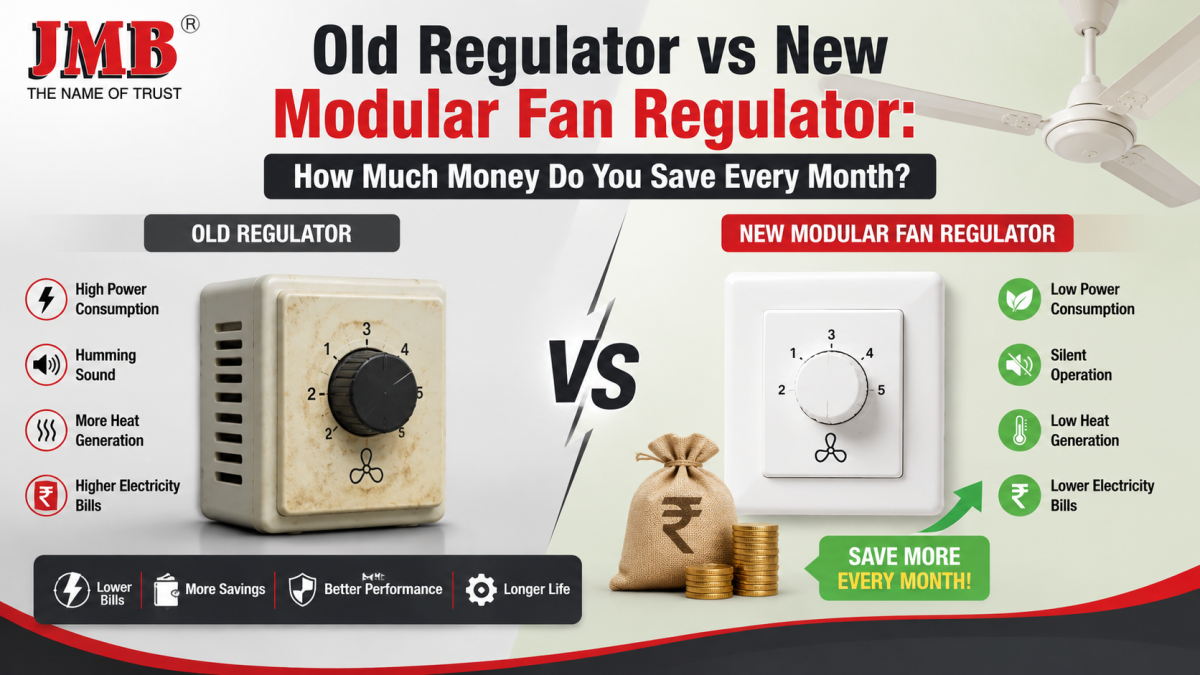
Old Regulator vs New Modular Fan Regulator: How Much Money Do You Save Every Month?

If you have an older ceiling fan setup at home or in your office, there is a decent chance the regulator attached to it is wasting electricity quietly every single day. Not by a dramatic amount per fan, but across multiple rooms and over twelve months, that waste adds up to real money.

This article breaks down exactly how different regulator technologies affect your electricity bill, uses a practical monthly calculation to show the difference, and helps you decide whether upgrading to a modular fan regulator makes financial sense for your situation.

All figures used here are illustrative estimates based on typical operating conditions. Actual savings will vary depending on your specific fan, regulator model, daily usage hours, and the electricity tariff applicable in your state.

Why Does Regulator Type Affect Electricity Consumption?

To answer this, you need a basic understanding of how different regulator designs work.

Resistance-type regulators (the old wire-wound type commonly found in older homes) work by converting excess electrical energy into heat. When you set the fan to a lower speed, the regulator wastes the unused power as heat rather than sending it back to the circuit. You are paying for that wasted energy on your electricity bill every month.

Capacitor-type step regulators, including modern modular variants, work differently. Instead of burning off the unused power as heat, they use a capacitor to shift the electrical phase supplied to the fan motor. This approach wastes significantly less power at lower speed settings, meaning more of what you pay for actually goes toward running the fan.

The article on do fan regulators consume electricity at low speeds covers this mechanism in more detail if you want to go deeper into the technical side.

Understanding Regulator Power Consumption: The Numbers Behind It

Here is a simplified breakdown of how power consumption differs between regulator types under typical conditions.

A standard ceiling fan rated at 75W running continuously draws 75W at full speed. At lower speeds, the actual power drawn by the fan motor drops. However, a resistance-type regulator consumes additional wattage of its own, which does not go to the fan at all. That extra consumption is pure waste.

Typical self-consumption estimates by regulator type:

Regulator Type Estimated Self-Consumption at Low Speed
Old resistance / wire-wound regulator 15W to 25W wasted as heat
Electronic dimmer / triac-type regulator 5W to 12W
Capacitor step-type modular regulator 1W to 3W

These figures vary by product and usage pattern. But the direction is clear: older resistance-type regulators waste more power than modern capacitor-based modular units, particularly at low and medium speed settings where fans operate for the majority of their daily running hours.

Monthly Savings Calculation: Old Regulator vs Modular Regulator

Let us work through a realistic scenario.

Assumptions:

  • Fan motor rated at 75W
  • Fan runs for 10 hours per day
  • Electricity tariff: Rs. 7 per unit (1 unit = 1 kWh)
  • Fan operates at low or medium speed for 6 of those 10 hours
  • Old resistance regulator wastes approximately 20W at low/medium speed
  • Modular capacitor regulator wastes approximately 2W at low/medium speed

Old Resistance Regulator:

Parameter Value
Fan motor consumption (low speed) ~45W
Regulator self-consumption (wasted) ~20W
Total draw at low speed ~65W
Hours at low/medium speed per day 6 hours
Daily units consumed (low speed only) 0.39 kWh
Monthly units (low speed portion) ~11.7 kWh
Monthly cost (low speed portion) Rs. 81.90

Modular Capacitor Regulator:

Parameter Value
Fan motor consumption (low speed) ~45W
Regulator self-consumption (wasted) ~2W
Total draw at low speed ~47W
Hours at low/medium speed per day 6 hours
Daily units consumed (low speed only) 0.282 kWh
Monthly units (low speed portion) ~8.46 kWh
Monthly cost (low speed portion) Rs. 59.22

Estimated monthly saving per fan: approximately Rs. 22 to Rs. 25

For a home or office with four ceiling fans running on old resistance regulators, the combined monthly saving from switching to modular capacitor regulators could reach Rs. 88 to Rs. 100. Over a full year, that is Rs. 1,000 to Rs. 1,200 per installation of four fans, which typically covers the cost of the regulators themselves within the first year.

Again, these are estimates based on the assumptions listed above. Your actual figure depends on your fan’s rated wattage, daily running hours, the specific regulator models involved, and your local electricity tariff.

For a more detailed breakdown of how step-based regulators affect your bill, the article on electricity cost savings with 5-step regulators walks through additional scenarios with different usage patterns.

Old Regulator vs Modular Regulator: Full Comparison Table

Feature Old Resistance Regulator Modular Capacitor Regulator
Speed control method Resistive (heat dissipation) Capacitor phase shift
Power wasted at low speed High (15W to 25W typical) Low (1W to 3W typical)
Heat generated during use Noticeable, warm to touch Minimal
Fan motor noise at low speed Often produces hum Generally quieter
Physical form Rotary knob, older format Modular, fits standard switchboards
Lifespan Degrades as wire wound ages Longer service life typical
BIS certification availability Rare in older units Available in certified products
Monthly electricity cost Higher Lower

How Many Speed Steps Do You Actually Need?

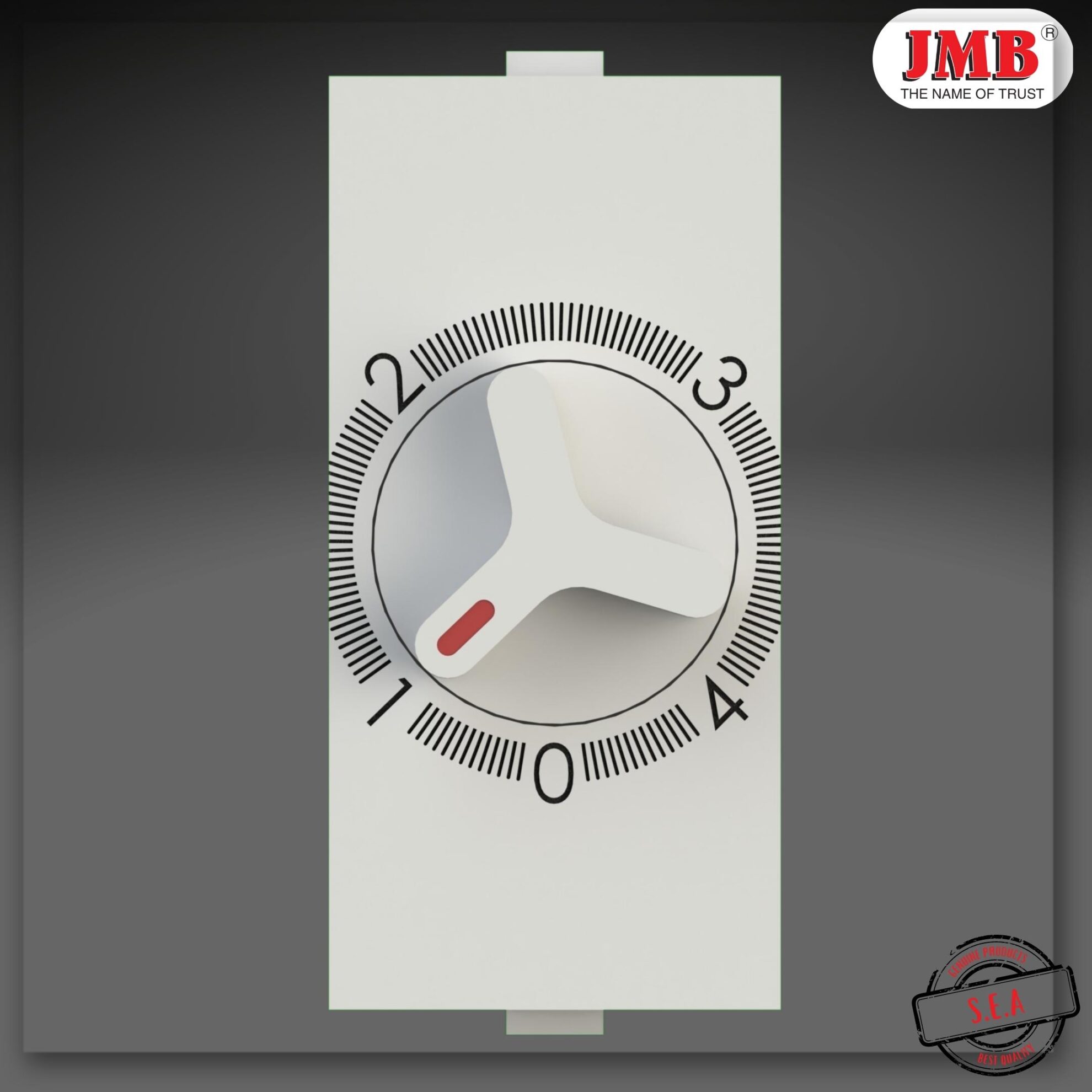
The number of steps matters more than most buyers realise. An older resistance regulator typically offers continuous or poorly defined speed adjustment. Modern modular options come in 4-step, 5-step, and 7-step configurations, each giving a distinct and repeatable speed level.

For most residential rooms, a 4-step or 5-step modular regulator provides enough granularity. If you want more precise control, particularly in bedrooms where low-speed comfort matters, a 7-step option gives finer adjustment.

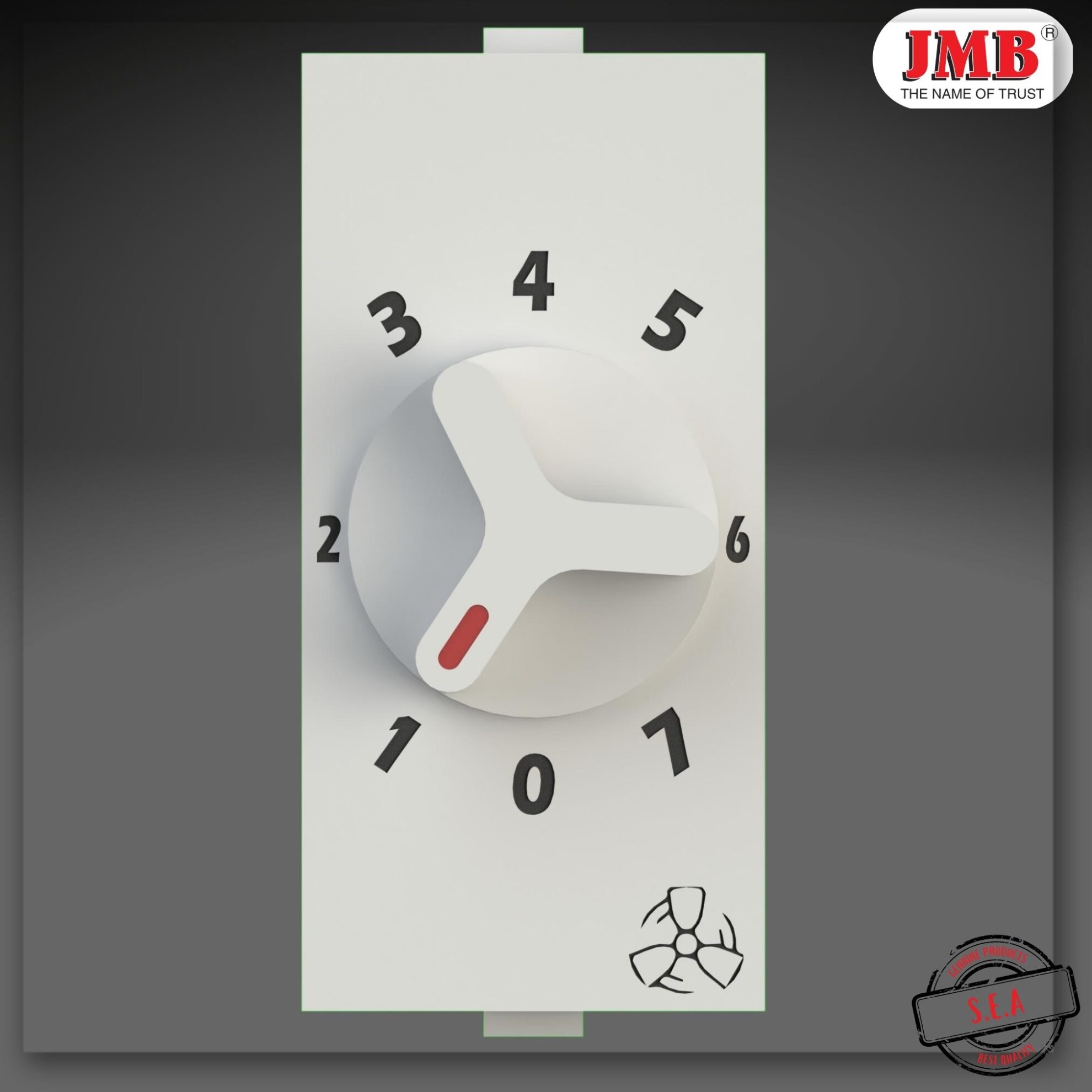
The energy-saving 1-module 7-step regulator fits a standard single-module switchboard space and delivers seven distinct speed levels with the low self-consumption typical of capacitor-type designs.

For those comparing 7-step products, the 7-step modular fan regulator is another option worth putting side by side before making a decision.

Compare the Right 7 Step Modular Fan Regulator Options

Choose the most energy-efficient regulator for your setup. Compare 1-module and 2-module 7 step modular fan regulator options designed to reduce electricity waste across residential, commercial, and bulk installations.

VIEW RANGE

Which Modular Regulator Is Right for Your Setup?

The right choice depends on your switchboard configuration, the number of modules available, and whether you prefer 5-step or 7-step speed control.

For a compact single-module space with 5-step control: The 2-module 5-step energy efficient regulator fits two-module openings and provides reliable step-based control with minimal self-consumption.

For a modern switchboard with space for a wider unit: The smart 2-module 5-step fan regulator offers the same capacitor-type performance in a contemporary design suitable for newer modular switchboard setups.

For users comparing 7-step options across brands: The 1-modular 7-step regulators category page lists the full range with specifications, which makes side-by-side comparison straightforward.

The complete product catalogue is available at the Sai Electronics product store for dealers, distributors and contractors placing bulk enquiries.

What Happens to an Old Resistance Regulator Over Time?

This is something many people overlook. A wire-wound resistance regulator does not perform consistently over its lifespan. The resistance wire inside the unit degrades with repeated heating and cooling cycles. Over time, the stated speed settings shift, the regulator runs hotter, and the wasted power increases beyond the original specification.

This means an old regulator that was already inefficient when new becomes progressively worse over the years. The electricity waste shown in the calculations above could be higher for a regulator that has been in service for five or more years without replacement.

Replacing it with a certified modular unit resets that efficiency curve from day one.

Is the Upgrade Cost Justified?

Here is a simple payback estimate based on the figures used earlier.

A quality BIS-certified modular fan regulator is typically available in the Rs. 150 to Rs. 350 range depending on the step count and module size. At an estimated monthly saving of Rs. 22 to Rs. 25 per fan, the payback period is roughly six to fifteen months per unit.

After payback, every additional month of operation represents a net saving on your electricity bill. For households, offices, hotels, and commercial spaces running multiple fans year-round, the cumulative saving over three to five years is significant.

For electricians and contractors specifying regulators for new installations or retrofits, choosing capacitor-type modular units from the outset eliminates the recurring inefficiency that resistance regulators introduce over time.

A Word on Accuracy and Real-World Variation

The calculations in this article use representative figures to illustrate the direction and approximate scale of potential savings. Your actual monthly saving from switching to a modular fan regulator will depend on:

  • The rated wattage of your specific ceiling fan model
  • The actual self-consumption of the regulator you are replacing
  • The daily hours your fan operates and at which speed setting
  • Your state electricity tariff, which varies significantly across India

The point of this exercise is not to give you a precise rupee figure to hold a manufacturer to. It is to show that the energy difference between regulator types is real, measurable, and financially meaningful when calculated across multiple fans and a full year of operation.

For Dealers, Distributors and Electrical Contractors

If you supply or install ceiling fans and regulators at scale, the product choice you make on behalf of your clients directly affects their long-term electricity costs. Sai Electronics India supplies BIS-certified modular capacitor regulators that are both a better technical recommendation and a stronger commercial proposition for repeat business compared to uncertified or resistance-type alternatives.

For bulk order enquiries, product specifications, or trade pricing, contact Sai Electronics for technical support and the team will assist with your requirements.

Summary

The financial case for switching from an old resistance regulator to a modern modular fan regulator is straightforward. Old wire-wound regulators waste between 15W and 25W as heat at low speed settings. Capacitor-type modular regulators waste 1W to 3W under the same conditions. Over a year, with multiple fans running daily, that gap adds up to a meaningful reduction in electricity costs.

The upgrade cost is modest, the payback period is short, and the performance benefit, quieter operation, consistent speed steps, and lower heat generation, makes the switch worthwhile independent of the electricity saving alone. If your home or commercial space still has wire-wound rotary regulators on the wall, replacing them one room at a time is one of the easiest efficiency improvements available without any major electrical work.

Frequently Asked Questions (FAQs)

Q1. Do all modern modular fan regulators save electricity?

Not all of them. Only capacitor-type step regulators (5-step or 7-step) save electricity at lower speed settings by shifting the electrical phase. If a modular regulator uses triac/dimmer-based electronics or older resistive wiring internally, it will still waste power and generate heat at low speeds. Always look for capacitor-based step regulators.

Q2. How much electricity does a fan regulator waste at full speed (Speed 5)?

Virtually zero. At full speed (Speed 5 or 7), the regulator bypasses the internal resistance or capacitor, supplying direct AC voltage to the fan motor. Power wastage only happens at lower speed settings (Speed 1 to 4) where the regulator has to drop or alter the voltage.

Q3. Will replacing an old regulator with a modular regulator reduce fan hum?

Yes! Old resistive or triac-based dimmer regulators chop the AC voltage waveform, which causes magnetic vibrations inside the fan motor—heard as a persistent humming sound. Capacitor-based modular regulators deliver a clean waveform, allowing the fan to run much quieter at low speeds.

Q4. Is a 7-step modular fan regulator better than a 5-step regulator for energy savings?

A 7-step regulator offers finer speed control, allowing you to run the fan at the exact comfort level you need without over-cooling the room. Since lower speed settings draw significantly less power, having more precise low-speed options can help you save a bit more electricity compared to jumping between broader 5-step speed gaps.

Q5. Can I install a modular fan regulator on a standard non-modular switchboard?

Standard modular regulators are designed to snap directly into modular switchboard plates. However, socket-type modular regulators or retrofit adapters are available that allow you to fit modern capacitor regulators into traditional wooden or non-modular switchboards without changing the entire board.

GET IN TOUCH

Not Sure Which Modular Regulator Saves the Most on Your Electricity Bill?

Whether you need a 5-step or 7-step modular unit, a single replacement, or bulk stock for a dealership or contracting business, our team can help you select the right model based on your fan wattage, usage pattern, and quantity requirements.
Contact Us

Categories
Blogs Fan Regulator Manufacturing

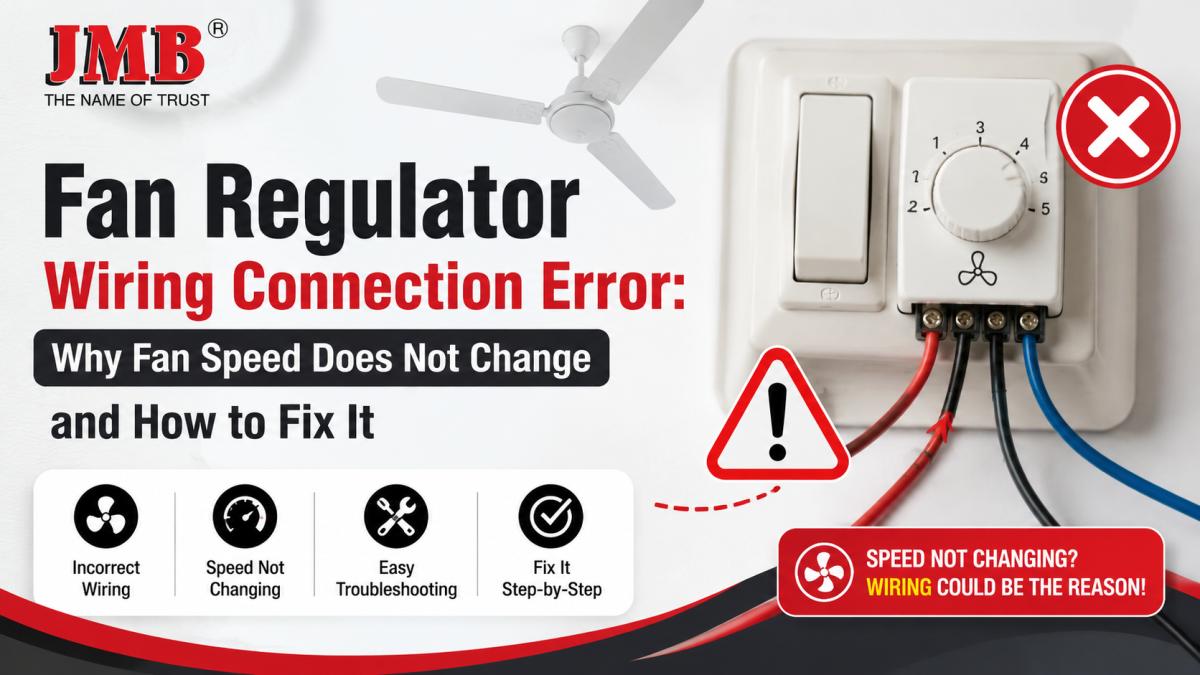
Fan Regulator Wiring Connection Error: Why Fan Speed Does Not Change and How to Fix It

You installed a new fan regulator, turned it on, and the fan just runs at one speed regardless of how you adjust the knob or switch. No variation. No control. Frustrating? Absolutely. But before you assume the regulator is defective, the problem is almost always a fan regulator wiring connection error that you can identify and correct without replacing the unit.

This guide walks you through the most common mistakes made during regulator wiring, how to check each one, and when the issue actually points to a failed component rather than a wiring fault.

Why Does Fan Speed Stay Fixed After Installing a Regulator?

When a ceiling fan runs at a constant speed after a regulator is installed, one of these three scenarios is usually responsible:

  1. The line and load wires are swapped or incorrectly connected to the regulator terminals.
  2. A wire is making partial contact inside a terminal block, causing inconsistent control.
  3. The regulator itself has a capacitor fault or internal damage that prevents it from delivering stepped speed control.

Understanding which of these applies to your situation is the first step toward fixing it.

Common Fan Regulator Wiring Mistakes and How to Identify Them

1. Swapped Line and Load Wires

This is the most frequent cause of fan speed not changing after installation. Every fan speed controller has two sets of connections: an input side (line) that receives power from the mains, and an output side (load) that sends controlled power to the fan.

If these are reversed, the fan still receives power directly and runs at full speed regardless of the regulator position. The regulator effectively gets bypassed in the circuit.

How to check: Switch off the circuit and use a phase tester to identify which incoming wire carries the live phase. That wire must connect to the line input terminal of your regulator. The wire going from the regulator to the fan motor connects to the load terminal.

If you need a clear reference for this, the step-by-step fan regulator wiring guide shows exactly how line and load terminals are identified for standard modular regulators.

2. Loose Wire Connections Inside Terminal Blocks

Even if the wires are on the correct terminals, a connection that is not fully tightened creates a high-resistance point in the circuit. At high resistance, the speed control function becomes erratic or stops responding altogether. In some cases, the fan runs at full speed permanently because the loose connection is bypassing the regulator’s internal resistance components.

How to check:

  • Switch off the circuit at the main board before touching any wiring.
  • Press each wire gently to check whether it shifts inside the terminal block.
  • Unscrew, re-insert the wire so the conductor makes full contact, and retighten firmly.
  • Make sure no wire strand is folded back or making contact with an adjacent terminal.

This sounds basic, but loose connections are responsible for a significant share of speed-control failures reported after new installations.

3. Incorrect Neutral Connection

Many older switchboard installations route the neutral directly to the fan without passing through the regulator. This is correct. The regulator controls only the live (phase) wire. However, if neutral is incorrectly routed through the regulator’s terminals, the speed control circuit does not function as intended.

Check that the neutral wire from the ceiling fan connects directly to the neutral bus and not through any regulator terminal.

4. Wrong Common Terminal in Multi-Gang Switchboards

In switchboards that include both a fan switch and a regulator, a shared common terminal is often used. If the common connection is feeding the wrong terminal, the regulator may receive power without being in the active speed-control path.

Before assuming a fault, draw out or photograph your existing switchboard wiring before disconnecting anything. Reconnect each wire according to the manufacturer’s terminal diagram.

Capacitor Problems in Step-Type Regulators

If your wiring checks out and the fan speed still does not change, the capacitor inside a switch-type 4-step capacitor regulator is the next thing to check.

Capacitor-type regulators control fan speed by modifying the voltage and phase supplied to the fan motor. Each step corresponds to a specific capacitance value. When the capacitor degrades or fails:

  • The fan may only run at one speed, typically full speed.
  • The fan may stop at lower speed settings but run normally at the highest.
  • In some cases, the regulator makes a buzzing sound at certain positions.

A capacitor test requires a multimeter with capacitance measurement. If the measured value falls significantly below the rated value printed on the capacitor body, the capacitor needs replacement. This is usually more cost-effective than buying a new regulator.

For a broader view of what might be causing control failure, the article on troubleshooting common fan regulator issues covers both wiring-related and component-related causes in detail.

Regulator Compatibility: Does Your Regulator Match Your Fan?

Not all regulators are compatible with all ceiling fans. Using a regulator designed for a lower wattage with a higher-capacity fan motor, or using a resistance-type regulator with a BLDC motor, can result in incomplete speed control.

Key compatibility points to verify:

  • Wattage rating: The regulator’s rated wattage must meet or exceed the fan motor’s wattage. Most standard ceiling fans draw between 50W and 75W. Check the fan’s rating plate.
  • Motor type: BLDC (brushless DC) fans require a regulator specifically designed for them. Standard capacitor or resistance-type regulators will not give correct speed steps on a BLDC fan.
  • Step configuration: A 4-step regulator will not provide 5 or 7 distinct speeds. Match the step count to what the installation requires.

The switch-type fan regulators category covers multiple wattage and step configurations if you are selecting a replacement.

Compare the Right 4 Step Fan Regulator Options

Choose the correct regulator type for your switchboard requirements. Compare flat modular, classic modular, and switch-type 4 step fan regulator options designed for residential, commercial, and rental property installations.

Visit Shop

How to Diagnose Whether the Regulator Itself Is Faulty

Once wiring errors and capacitor issues have been ruled out, you can confirm whether the regulator unit itself has failed by doing a simple substitution test:

  1. Temporarily connect a known working regulator of the same type in place of the suspect unit, using the same wiring.
  2. If the fan responds correctly to speed adjustments, the original regulator has an internal fault and should be replaced.
  3. If the fan still does not respond, the fault lies outside the regulator, most likely in the fan motor, wiring, or switchboard.

This method saves time and avoids unnecessary purchases.

Choosing a Replacement: What to Look for

When a regulator does need replacing, the choice of replacement matters. Low-quality regulators sold without any certification often fail prematurely, produce heat even at idle, and offer inconsistent speed steps.

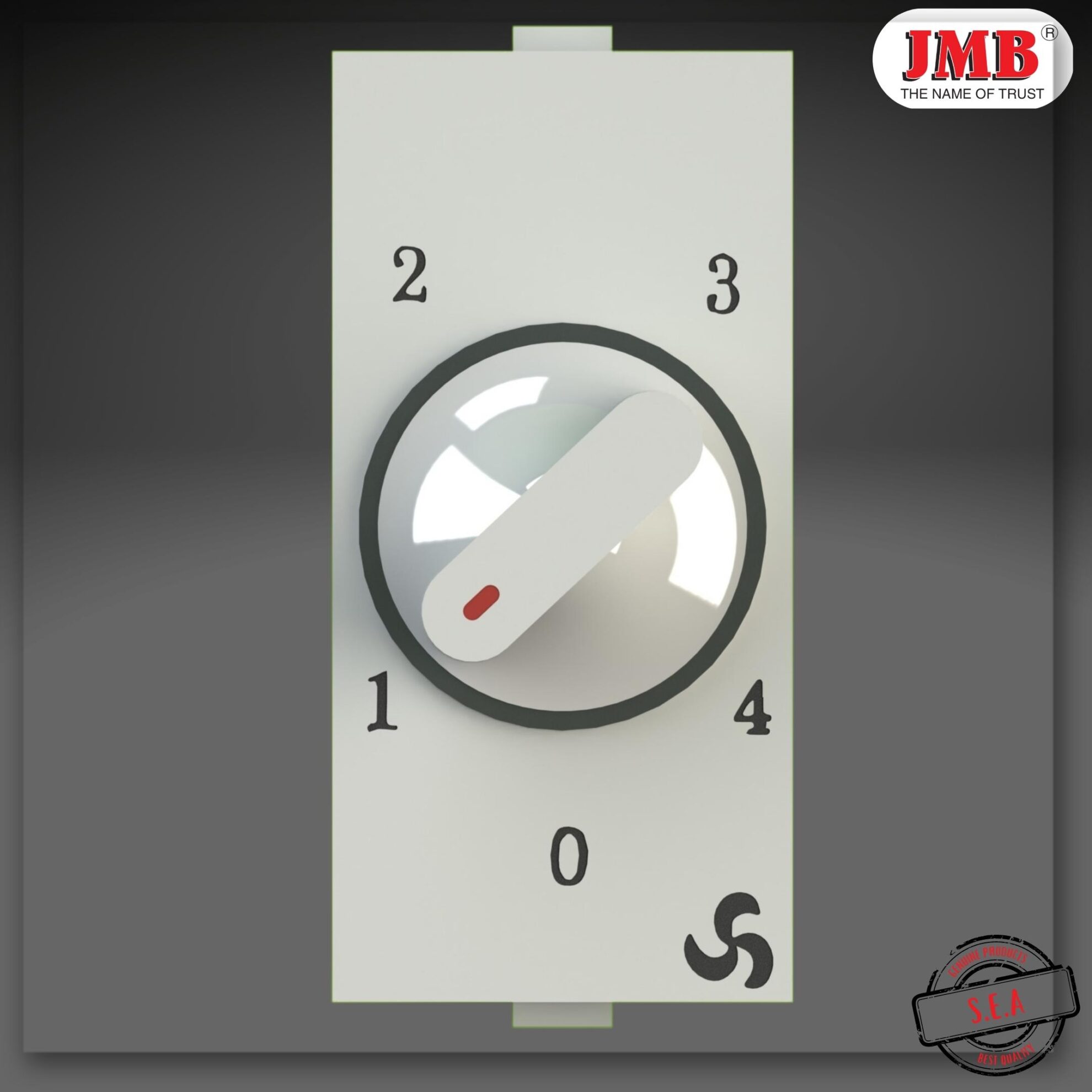
For standard ceiling fan installations, a BIS-certified modular regulator is the more reliable long-term choice. Sai Electronics India manufactures these to verified standards, and the 1-module 4-step modular regulator fits standard single-module switchboard openings and provides consistent 4-step control without the heating issues common in uncertified alternatives.

If the switchboard has more space or the installation requires a slightly different form factor, the classic 4-step modular fan regulator is another option worth considering. Both are built for easy retrofitting into existing switchboards.

You can view the full range at the Sai Electronics product store.

Electrical Safety: What You Should Know Before Working on Fan Wiring

Working on ceiling fan wiring involves live circuits. Before you inspect or adjust any connections:

  • Always switch off the circuit at the main distribution board, not just at the wall switch.
  • Use an insulated phase tester to confirm the circuit is dead before touching wires.
  • Do not work on wiring if you are unfamiliar with basic electrical safety practices.
  • In rental properties or commercial premises, electrical work must comply with applicable local regulations and should be performed by a licensed electrician.

If you are unsure about any step, do not proceed. A qualified electrician can identify and fix a fan regulator wiring connection error in a short visit, and it is far safer than working on live circuits without the right background.

Quick Reference: Fan Speed Not Changing Checklist

Check What to Look For
Line and load terminals Verify phase enters the input terminal, fan connects to output
Wire tightness Each wire fully seated and terminal screw firmly tightened
Neutral routing Neutral bypasses regulator entirely
Capacitor condition Use multimeter to compare measured vs. rated capacitance
Fan wattage vs. regulator rating Regulator wattage must meet or exceed fan motor draw
Motor type compatibility BLDC fans require BLDC-compatible regulators
Substitution test Swap with a working unit to confirm regulator fault

When to Contact a Specialist

If you have worked through every check above and the fan speed is still fixed at one level, the fault may be deeper inside the fan motor winding or the switchboard wiring rather than the regulator itself. At that point, bring in a qualified electrician who can trace the complete circuit with proper test equipment.

For technical questions about regulator selection, wiring configurations, or bulk supply for commercial projects, you can contact Sai Electronics for technical support.

How to Diagnose Whether the Regulator Itself Is Faulty

Once wiring errors and capacitor issues have been ruled out, you can confirm whether the regulator unit itself has failed by doing a simple substitution test:

  1. Temporarily connect a known working regulator of the same type in place of the suspect unit, using the same wiring.
  2. If the fan responds correctly to speed adjustments, the original regulator has an internal fault and should be replaced.
  3. If the fan still does not respond, the fault lies outside the regulator, most likely in the fan motor, wiring, or switchboard.

This method saves time and avoids unnecessary purchases.

Choosing a Replacement: What to Look for

When a regulator does need replacing, the choice of replacement matters. Low-quality regulators sold without any certification often fail prematurely, produce heat even at idle, and offer inconsistent speed steps.

For standard ceiling fan installations, a BIS-certified modular regulator is the more reliable long-term choice. Sai Electronics India manufactures these to verified standards, and the 1-module 4-step modular regulator fits standard single-module switchboard openings and provides consistent 4-step control without the heating issues common in uncertified alternatives.

If the switchboard has more space or the installation requires a slightly different form factor, the classic 4-step modular fan regulator is another option worth considering. Both are built for easy retrofitting into existing switchboards.

You can view the full range at the Sai Electronics product store.

Electrical Safety: What You Should Know Before Working on Fan Wiring

Working on ceiling fan wiring involves live circuits. Before you inspect or adjust any connections:

  • Always switch off the circuit at the main distribution board, not just at the wall switch.
  • Use an insulated phase tester to confirm the circuit is dead before touching wires.
  • Do not work on wiring if you are unfamiliar with basic electrical safety practices.
  • In rental properties or commercial premises, electrical work must comply with applicable local regulations and should be performed by a licensed electrician.

If you are unsure about any step, do not proceed. A qualified electrician can identify and fix a fan regulator wiring connection error in a short visit, and it is far safer than working on live circuits without the right background.

Quick Reference: Fan Speed Not Changing Checklist

Check What to Look For
Line and load terminals Verify phase enters the input terminal, fan connects to output
Wire tightness Each wire fully seated and terminal screw firmly tightened
Neutral routing Neutral bypasses regulator entirely
Capacitor condition Use multimeter to compare measured vs. rated capacitance
Fan wattage vs. regulator rating Regulator wattage must meet or exceed fan motor draw
Motor type compatibility BLDC fans require BLDC-compatible regulators
Substitution test Swap with a working unit to confirm regulator fault

When to Contact a Specialist

If you have worked through every check above and the fan speed is still fixed at one level, the fault may be deeper inside the fan motor winding or the switchboard wiring rather than the regulator itself. At that point, bring in a qualified electrician who can trace the complete circuit with proper test equipment.

For technical questions about regulator selection, wiring configurations, or bulk supply for commercial projects, you can contact Sai Electronics for technical support.

Frequently Asked Questions

Q1. Why is my ceiling fan running at full speed even when the regulator is at step 1?

This usually happens when the line (mains live) and load (fan output) wires are swapped during installation. When reversed, power bypasses the regulator’s internal control circuit, causing the fan to receive full voltage constantly regardless of the knob position.

Q2. Can a loose terminal connection stop a fan regulator from changing speed?

Yes. Loose wires inside the terminal block create high electrical resistance or incomplete contact. This can cause erratic speed control, buzzing noises, or prevent the regulator from stepping down the voltage properly, leaving the fan stuck at one speed.

Q3. How do I test if my fan regulator capacitor is faulty using a multimeter?

Turn off the main power supply, disconnect the regulator, and use a multimeter set to capacitance mode ($\mu\text{F}$). Measure across the capacitor terminals. If the reading is significantly lower than the rated value printed on the capacitor (or shows open circuit), the capacitor has degraded and needs replacement.

Q4. Can I use a standard modular fan regulator with a BLDC ceiling fan?

No. BLDC (Brushless DC) fans use an internal electronic drive circuit that requires clean, unmodulated AC power. Connecting a traditional capacitor or resistive regulator to a BLDC fan can cause humming noises, incomplete speed control, or permanent damage to the fan’s drive board.

Q5. Is the neutral wire connected to the fan regulator?

No. Fan regulators only control the live (phase) wire. The neutral wire from the power supply goes directly to the ceiling fan motor terminal. Connecting a neutral wire to a regulator terminal will cause a short circuit or prevent the speed control circuit from functioning.

Wrapping Up

A fan speed that refuses to change is almost always the result of a wiring fault, a degraded capacitor, or a compatibility mismatch between the regulator and the fan. None of these require an immediate product replacement. Start with the basics: check your terminal connections, verify line versus load orientation, and test the capacitor before drawing conclusions.

If a replacement does turn out to be necessary, choosing a BIS-certified capacitor-type regulator from a verified manufacturer means fewer faults over the product’s lifespan and consistent speed control across all steps. The star capacitor fan regulator is a practical option for homes and light commercial use where reliable speed control matters.

Fix the wiring first. Replace only when necessary. And always put safety ahead of convenience when working with electrical circuits.

Get In Touch

Not Sure Which Fan Regulator Fixes Your Wiring Issue?

Whether you need a replacement modular unit, a capacitor-type regulator, or bulk supply for a commercial project, our team can help you select the right model based on your switchboard type, fan wattage, and installation requirements.

Contact Us Now

Categories
4 Step Fan Regulator Blogs

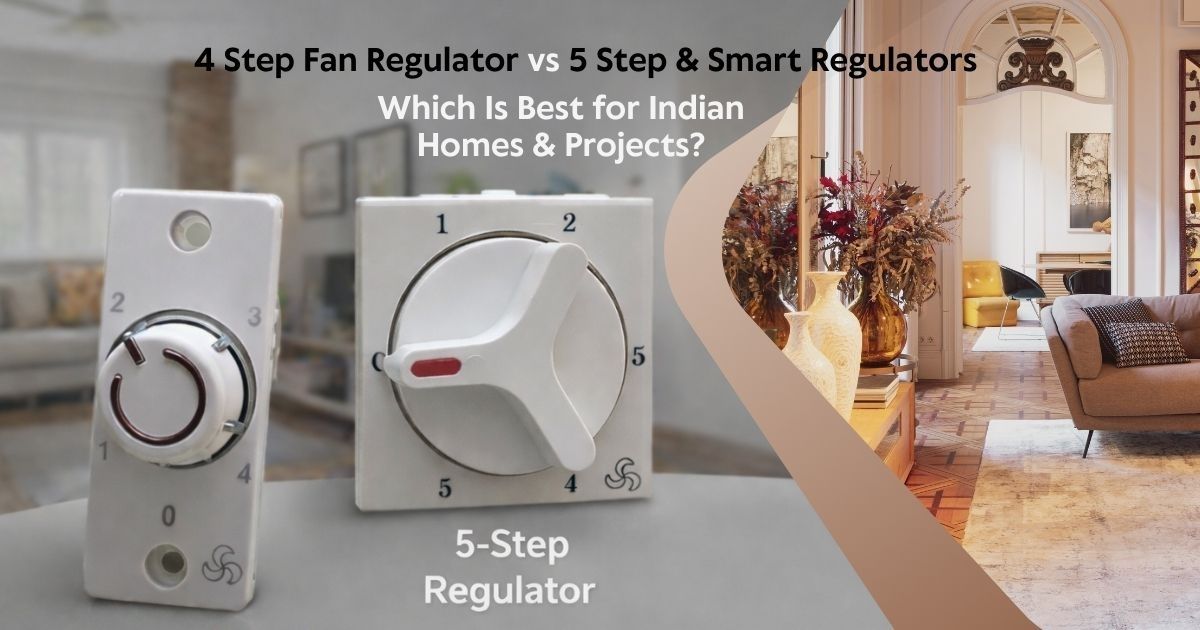
4 Step Fan Regulator vs 5 Step & Smart Regulators: Which Is Best for Indian Homes & Projects?

Choosing the right fan speed controller can make a real difference in comfort, energy bills, and long-term reliability. In 2026, Indian buyers face three main options: traditional 4 step models, 5 step variants, and modern smart controllers. Each has distinct advantages depending on your specific needs, budget, and installation environment.

What Is a 4 Step Fan Regulator?

A 4 Step Fan Regulator uses a rotary switch mechanism to offer four distinct speed settings for ceiling fans. Unlike older resistance-based dimmers, modern step regulators use capacitor-based circuits that reduce energy waste while delivering consistent performance across different voltage conditions.

How Step-Based Speed Control Works

The technology relies on switching different capacitor values into the fan motor circuit. Each position on the dial connects a specific capacitor rating, which alters the phase angle of the current supplied to the fan. This creates distinct speed levels without generating excessive heat, making these controllers safer and more energy-efficient than outdated resistance models.

Typical Applications in Indian Homes, Offices & Projects

These controllers fit seamlessly into residential bedrooms, living rooms, and office spaces where straightforward operation matters most. Builders prefer them for apartment complexes and housing projects because residents find the tactile knob interface intuitive. The 1 M C CLASSIC Modular Regulator works well in standard modular switch plates, giving architects flexibility in design planning.

What Is a 5 Step Fan Regulator?

The 5 step variant adds one additional speed setting between the existing levels. This means you get five distinct fan speeds instead of four, theoretically offering finer control over airflow.

Extra Speed Level – Is It Really Needed?

For most Indian users, the difference between four and five speeds is barely noticeable in daily use. The middle speed on a 5 step unit sits between what would be speeds 2 and 3 on a 4 step model. In practice, people tend to stick with three main settings: low for sleeping, medium for normal use, and high for hot afternoons. The extra granularity rarely justifies the added cost.

Price Difference vs Performance

Five step models typically cost 15-25% more than their four step counterparts. Unless you’re extremely particular about finding that perfect airflow sweet spot, the performance gain doesn’t match the price increase. Most electricians and contractors stick with four step options for better value.

What Are Smart Fan Regulators?

Smart controllers let you adjust fan speed through smartphone apps, voice assistants, or remote controls. They often include features like scheduling, timer functions, and integration with home automation systems.

App & Remote Control Features

Modern smart regulators connect via Wi-Fi or Bluetooth, allowing you to change speeds without getting up. Some models support Google Assistant or Alexa voice commands. You can program them to automatically adjust speeds based on time of day or room temperature sensors.

Compatibility with Old Wiring Systems

Here’s where many Indian homes face challenges. Smart regulators often require a neutral wire connection, which isn’t present in older wiring setups common in buildings constructed before 2010. Retrofitting neutral wires means breaking walls and rewiring, adding significant installation costs. Traditional step regulators work with existing two-wire systems, making them plug-and-play replacements.

4 Step vs 5 Step vs Smart – Feature Comparison

Speed Control Precision

Four step units provide adequate speed variation for typical ceiling fans. Five step models add marginal precision that most users won’t notice. Smart controllers offer theoretically infinite speed adjustment through dimming circuits, but this smoothness comes at the cost of complexity and potential compatibility issues with older fan motors.

Power Consumption

Modern capacitor-based step regulators are highly efficient, wasting minimal energy as heat. The 1 M C INDICO Modular Regulator uses quality components that maintain efficiency across all speed settings. Smart controllers add their own power draw for the wireless circuitry, even when the fan is off. This standby consumption can add up over time, though it’s usually minimal.

Installation & Maintenance

Step-based controllers install in minutes using standard electrical connections. Any electrician can handle the job without special training. Smart units require app setup, network configuration, and occasional firmware updates. If your Wi-Fi goes down or the manufacturer stops supporting the app, you might lose control features. Physical step switches have no such dependencies.

Cost & Long-Term Value

A quality 4 Step Fan Regulator Manufacturer in India offers products ranging from ₹150 to ₹400 depending on finish and features. Five step models cost ₹200 to ₹500. Smart regulators start around ₹800 and can exceed ₹2,000 for feature-rich versions. Over a 10-year lifespan, step regulators require virtually no maintenance, while smart devices may need replacement if technology standards change.

Why 4 Step Fan Regulators Still Lead the Indian Market

Reliability in Voltage Fluctuations

Indian power grids experience frequent voltage variations, especially in tier 2 and tier 3 cities. Capacitor-based step controllers handle these fluctuations gracefully without damage. The electronic circuits in smart regulators are more sensitive to voltage spikes and brownouts, potentially failing without proper stabilization.

Budget-Friendly for Mass Housing

Developers building 500-unit apartment complexes need cost-effective solutions that won’t burden homebuyers. When you multiply ₹300 versus ₹1,500 across hundreds of units, the savings become substantial. The 1 M C RED Modular Regulator offers excellent value for such projects without compromising quality.

Easy Availability from Indian Manufacturers

Cities like Ahmedabad and other industrial hubs in Gujarat produce millions of step regulators annually. As a 4 Step Regulator Manufacturer in India, Sai Electronics India maintains ready stock and can fulfill orders within days. This local manufacturing ecosystem ensures quick replacement availability and better after-sales support compared to imported smart devices.

Which Regulator Should You Choose?

Best for Homes

For single-family homes and apartments, four step controllers offer the best balance of functionality, reliability, and cost. They work with existing wiring, need no technical knowledge to operate, and last for years without issues. The 1 M CROMA BLACK Modular Regulator provides a sleek aesthetic that complements modern interior designs.

Best for Builders & Electricians

Construction professionals should stick with four step models for residential projects. They’re easier to install in bulk, have fewer failure points, and residents of all ages can use them without confusion. When sourcing from reliable Fan Regulator Manufacturers in India, you ensure consistent quality across all units in your project.

Best for Commercial Projects

Offices, showrooms, and commercial spaces benefit from four step regulators due to their durability under frequent use. For high-end commercial buildings where automation is a priority, smart regulators make sense, but ensure your electrical contractor includes proper surge protection and network infrastructure.

Why Buy from a Trusted 4 Step Fan Regulator Manufacturer in India

BIS Certification & Quality Testing

Reputable manufacturers comply with Bureau of Indian Standards safety requirements. BIS-marked products undergo rigorous testing for electrical safety, fire resistance, and performance consistency. Choosing certified 4 Step Fan Regulator Supplier ensures you’re not compromising on safety standards. Understanding what makes top manufacturers stand out helps you make informed purchasing decisions.

Benefits of Local Manufacturing in Gujarat & Ahmedabad

Gujarat’s industrial infrastructure supports efficient production with quality control at every stage. As a 4 Step Fan Regulator Manufacturer in Ahmedabad, local producers reduce transportation costs and carbon footprint while supporting regional employment. The 1 M CROMA GREY Modular Regulator exemplifies how local manufacturing can deliver international quality standards.

Bulk Supply, OEM & Export Advantages

Working with a 4 Step Fan Regulator Wholesaler gives contractors access to volume pricing and customization options. Many Indian manufacturers offer OEM services for branded housing projects and export to markets in Africa, Middle East, and Southeast Asia. The impact of locally made products extends beyond individual projects to support national manufacturing goals.

Final Verdict – Is 4 Step Fan Regulator Still the Smartest Choice in 2026?

For the vast majority of Indian buyers, yes. The 4 Step Regulator Manufacturer in India continues to serve market needs effectively because these products deliver reliable performance at accessible prices. While smart home technology has its place in premium projects, traditional step controllers remain unbeatable for mass-market applications.

If you’re building a tech-forward home with comprehensive automation, smart regulators make sense as part of a broader ecosystem. For everyone else, including builders, electricians, and homeowners who value simplicity and longevity, the four step option remains the practical choice.

The key is selecting products from established manufacturers who stand behind their quality. Whether you need single units for home renovation or bulk quantities for construction projects, partnering with a dependable 4 Step Regulator Exporter ensures you get products that perform consistently for years.

Ready to make your purchase decision? Check out the complete range of reliable regulators or get in touch to discuss your specific project requirements.

FAQs

Q. Is a 4 step fan regulator better than a 5 step regulator?

A. For most users, yes. The four step model provides sufficient speed variation for comfortable airflow control while costing less. The extra speed level in five step units rarely provides noticeable improvement in daily use. Four step regulators also have a proven track record of reliability and wider availability from manufacturers across India.

Q. Do smart fan regulators save more electricity than step regulators?

A. Not significantly. Modern capacitor-based step regulators are already highly efficient. Smart controllers add convenience features but consume standby power for their wireless connectivity. The energy savings from optimized scheduling might offset this, but the difference is minimal in practical terms for a typical household.

Q. Which fan regulator is best for Indian voltage conditions?

A. Capacitor-based step regulators handle voltage fluctuations better than electronic smart controllers. Indian power grids often experience variations that can damage sensitive electronics. Four step models from quality manufacturers include components rated for these conditions, making them more reliable across different regions.

Q. Are 4 step fan regulators suitable for modular switches?

A. Absolutely. Modern step regulators are specifically designed to fit standard modular switch plates. They’re available in various colors and finishes to match different interior styles. The modular format makes installation straightforward and allows easy replacement without changing the entire switch plate.

Q. Where can I buy bulk 4 step fan regulators in India?

A. Contact manufacturers and wholesalers directly for bulk orders. Gujarat and Ahmedabad have numerous established producers who supply to contractors, builders, and exporters. For consistent quality and competitive pricing on large orders, working directly with a 4 Step Fan Regulator Manufacturer in Gujarat ensures better terms and reliable delivery schedules.

Chat With Us