Categories
Blogs Fan Regulator Manufacturing

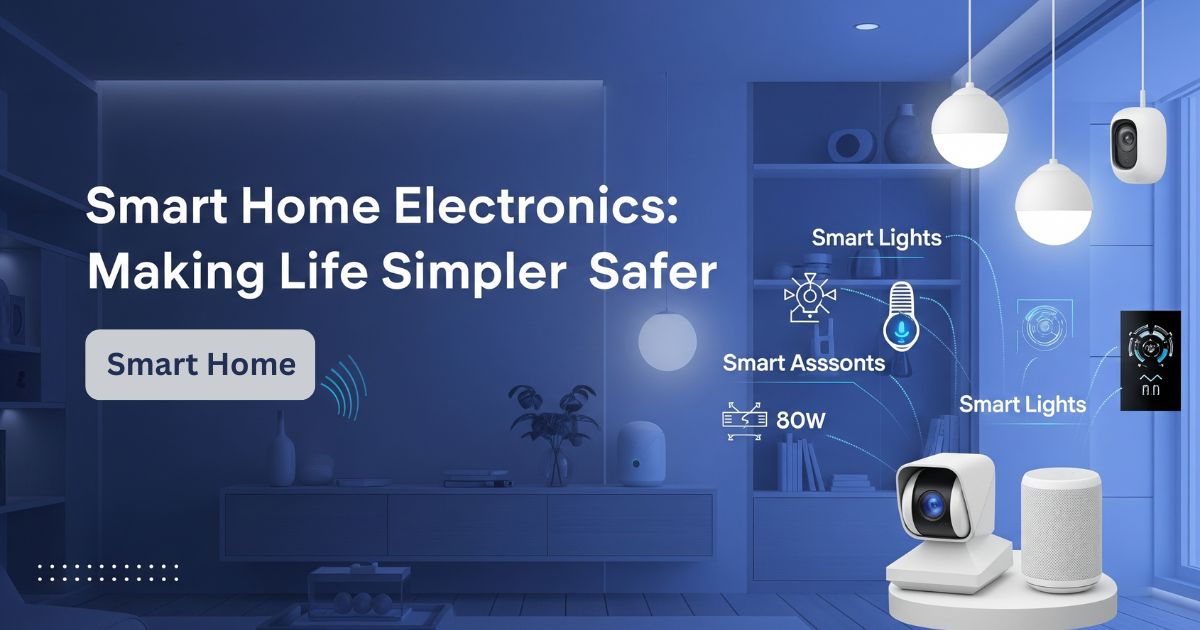
Smart Home Electronics: Making Life Simpler and Safer

The world of home living has undergone a significant transformation, largely thanks to the rapid evolution of smart home electronics. What was once the stuff of science fiction is now an everyday reality, making our residences more convenient, comfortable, and secure. From controlling major appliances remotely to optimizing energy consumption, these technological leaps have completely redefined what a modern home can be. This shift isn’t just about adding gadgets; it’s about seamlessly integrating technology to simplify daily routines and enhance personal safety.

A Look Back: The Journey of Smart Home Technology

The idea of an automated, intelligent dwelling has fascinated people for generations. While early concepts existed primarily in books and films, practical applications started emerging in the late 20th century. Basic home automation systems, early programmable thermostats, and rudimentary remote-controlled lighting set the stage. These early steps demonstrated the potential for technology to take over mundane tasks, freeing up homeowners’ time and effort.

The Connectivity Revolution: The Internet of Things (IoT)

The real explosion in home intelligence came with the widespread adoption of the Internet of Things (IoT). Simply put, IoT is the network of physical devices equipped with sensors, software, and network connectivity, allowing them to collect and exchange data. In the smart home context, this means your thermostat can talk to your lighting system, your security camera can send alerts to your phone, and even subtle but crucial devices like modern fan regulator manufacturers in India have embraced smarter, more efficient designs. This level of interconnectivity allows for a unified, responsive living environment.

Essential Smart Home Devices and Their Impact

Today, smart home technology offers an extensive array of devices designed to improve various facets of home life. Let’s look at some key examples:

  • Virtual Assistants and Smart Speakers: Devices like Google Home and Amazon Echo act as the central nervous system for many smart homes. They enable voice control over a host of other devices, allowing users to adjust the temperature, play music, manage lights, and much more, all through simple spoken commands.
  • Intelligent Climate Control (Thermostats): Modern smart thermostats go far beyond simple on/off switches. They learn your preferred schedules, adapt to seasonal changes, and, crucially, can be adjusted from anywhere via a smartphone. This leads directly to substantial energy efficiency and cost savings.
  • Advanced Security Systems: Home safety has been dramatically upgraded with the introduction of smart doorbells, high-definition cameras, and sensitive motion sensors. Homeowners can monitor their property in real-time, receive instant alerts for any unusual activity, and even communicate with visitors remotely, significantly boosting security and providing unparalleled peace of mind.
  • Smarter Lighting Solutions: Smart lighting systems offer not only convenience through remote control and scheduling but also energy savings. Users can customize light color and intensity to create the perfect ambiance for any occasion.
  • High-Tech Kitchen Appliances: From smart ovens that can be preheated on the commute home to refrigerators that help track inventory, these appliances simplify kitchen management and daily chores.
  • Keyless and Smart Locks: These systems enhance security by allowing homeowners to lock and unlock doors remotely, grant temporary access codes to guests or service providers, and monitor all entries and exits.

Enhancing Comfort and Efficiency with Fan Regulation

In a climate like India’s, the ceiling fan is a staple appliance. While often overlooked, the device that controls its speed, the fan speed controller or electric fan regulator, is a critical component for both comfort and energy consumption. Modern smart homes are moving away from older, less efficient components and adopting intelligent, reliable solutions.

The evolution from bulky, less-precise resistors to compact, highly efficient electronic options has been a game-changer. For example, a quality modular fan regulator offers smoother speed control and better energy savings compared to its older counterparts. Knowing the differences can be helpful. You can learn more about the technical aspects by reading this helpful resource: The Science Behind Fan Regulators: Analog vs Digital Explained.

When considering an upgrade, people often look for a good balance of quality and affordability, asking about the fan regulator cost, fan regulator price, or the ceiling fan regulator price. Fortunately, the market now offers competitive pricing on high-quality components. If you are in the market to buy fan regulator online or are a B2B client looking for reliable suppliers, the focus should be on manufacturers who adhere to strict quality standards.

For contractors, distributors, and bulk purchasers looking for a dependable fan regulator manufacturer in Ahmedabad or across the nation, finding reliable partners is key. The reputation of a fan regulator company hinges on the longevity and efficiency of its products. Look for established fan regulator manufacturers that provide robust and energy-efficient options. This is a crucial element of any modern electrical fitting.

The demand for better control has led to innovations like the fan regulator with remote or remote control fan regulator, which further integrates the fan into the smart home ecosystem. Imagine adjusting your fan speed from your couch using a small remote, or even integrating it into a smart speaker routine. This level of convenience is becoming the new norm. Whether you need a standard ceiling fan regulator, a sleek modular regulator, or information on a specific product like the 1 M 7 Diamond Modular Ceiling Fan Regulator, quality options are widely available.

Reliable, well-designed regulators, such as the 1 M 7 Dio Modular Regulator or the 1 M 7 Indico Modular Regulator, ensure that your fan operates efficiently at every setting, reducing power wastage. For those interested in sourcing the best components, it is worthwhile to connect with experienced fan regulator manufacturers in India.

When issues arise with existing systems, it’s beneficial to have resources available. Even simple fixes can sometimes be necessary. If you encounter any snags, this might help: Troubleshooting Guide: Fixing Common Fan Regulator Issues at Home.

The Profound Impact of Smart Tech on Daily Life

The integration of smart home technology delivers profound benefits that enhance the quality of life:

  • Unmatched Convenience: The ability to control almost any aspect of your home via voice command or a mobile app fundamentally simplifies daily routines. Adjusting the speed regulator for fan without getting up, turning off lights remotely, or receiving a notification when a package arrives makes life genuinely easier.
  • Optimized Household Management: Automated systems are excellent at managing energy. They can learn peak times and automatically reduce consumption, leading to lower utility bills and a smaller carbon footprint. This focus on efficiency extends even to small but important devices, such as selecting an electronic fan regulator over a conventional one.
  • Boosted Safety and Security: Real-time monitoring and instant alerts transform home security. Knowing you can check on your property instantly, regardless of your location, offers incredible assurance.

Smart Home Technology and Enhanced Accessibility

An important, often understated benefit of smart home technology is its potential to significantly enhance accessibility. Individuals with mobility challenges or cognitive impairments can greatly benefit from voice-activated controls and automated routines. Smart devices can empower them to manage their living spaces with ease, fostering a greater sense of independence and dignity within the home.

Addressing Concerns: Security, Integration, and Longevity

While the advantages are compelling, a responsible discussion must address potential downsides. Data security and user privacy remain paramount concerns. As devices collect and transmit personal data, manufacturers must commit to the highest security protocols to protect sensitive information. Users must also be diligent about securing their home networks.

Another practical challenge is ensuring different devices can work together seamlessly. While progress has been made, the “interoperability” of various smart devices remains a key factor for a frustration-free smart home experience. A smart home should be a cohesive system, not a collection of isolated gadgets. Furthermore, when selecting components like a modular regulator, considering the brand’s reliability and the product’s longevity, such as the widely used 1 M 7 SILVER, is crucial. Quality should always outweigh the initial low cost.

The Trajectory of Smart Home Technology

The future of the smart home is extraordinarily bright and continues to accelerate, driven by leaps in machine learning, Artificial Intelligence (AI), and next-generation connectivity like 5G. Future homes will likely feature even more self-governing systems that anticipate and respond to occupant needs without explicit instruction. Imagine a home that adjusts the ceiling fan speed controller not just based on a set time, but based on a combination of the external weather, the internal temperature, and the specific number of people in the room.

The push for energy efficiency and sustainable living will also drive innovation, making devices like advanced electronic fan regulator manufacturers even more central to the design of an eco-friendly dwelling. As technology becomes more intuitive and costs continue to moderate, the sophisticated, interconnected smart home will move from luxury to standard.

If you are looking to learn more about setting up your smart home or sourcing high-quality electrical components like fan regulators, you can always Contact Us for expert advice.

Conclusion

The evolution of smart home electronics is more than a trend; it’s a fundamental shift in how we interact with our living spaces. From early automation to today’s complex IoT-powered environments, technology has continuously delivered greater simplicity and enhanced safety. By responsibly embracing innovations, from smart cameras to energy-saving fan regulator manufacturers, we are paving the way for homes that are not only smarter but also more efficient, secure, and ultimately, better places to live.

Categories
Blogs Fan Regulator Manufacturing

How to Choose the Best Fan Regulator for Your Lifestyle

Picture this: It’s a warm evening in Ahmedabad, and you’re trying to relax at home. You reach for your ceiling fan remote, only to find the speed settings aren’t quite right. Too fast, and you’re chilly. Too slow, and you’re still uncomfortable. Sound familiar? The solution might be simpler than you think – choosing the right fan speed controller for your needs.

In today’s world, where comfort meets energy consciousness, selecting an appropriate regulator for your ceiling fan has become more important than ever. Whether you’re building a new home, renovating your space, or simply upgrading your electrical fittings, understanding fan regulators can make a significant difference in your daily comfort and monthly electricity bills.

Understanding Fan Regulators: More Than Just Speed Control

Before diving into selection criteria, let’s understand what makes these devices tick. A fan regulator, at its core, controls the voltage supplied to your ceiling fan motor, thereby adjusting its speed. But modern regulators do much more than that – they’re sophisticated devices that balance energy efficiency with precise control.

The evolution from traditional resistive regulators to today’s electronic fan regulator models represents a significant leap in technology. While older models wasted energy as heat, contemporary designs from leading fan regulator manufacturers ensure minimal energy loss and maximum efficiency.

Types of Fan Regulators Available in the Market

The Indian market offers various options, each suited to different needs and preferences:

Step-Type Regulators: These offer discrete speed levels, typically 1-5 settings. They’re perfect for those who prefer simple, straightforward control. A quality 5 step fan regulator price ranges from ₹200 to ₹500, depending on the brand and features.

Continuous Regulators: These provide smooth, variable speed control, allowing you to fine-tune your fan’s speed to exact preferences. They’re ideal for those seeking precise comfort levels.

Smart Regulators: The newest entrants, these connect to your home automation system. A fan regulator with remote capability or app control brings convenience to your fingertips.

Modular Regulators: Designed to fit seamlessly into modern modular switches, these combine aesthetics with functionality. The modular fan regulator price varies based on design and features.

Key Factors to Consider When Choosing Your Fan Regulator

1. Your Lifestyle and Usage Patterns

Your daily routine significantly impacts your choice. If you work from home, you might benefit from a remote control fan regulator that allows adjustments without leaving your desk. Night owls might prefer models with LED indicators for easy visibility in darkness.

Consider your family’s needs too. Households with elderly members or children often find remote-controlled options more convenient. Meanwhile, tech-savvy families might gravitate toward smart regulators integrated with home automation systems.

2. Room Size and Fan Specifications

Not all regulators work with every fan. The capacity of your ceiling fan with regulator combination matters. Larger rooms with bigger fans require regulators capable of handling higher loads. Always check:

  • Your fan’s wattage rating
  • The regulator’s maximum load capacity
  • Compatibility with your existing electrical setup

A mismatch can lead to poor performance or even damage to your equipment. When in doubt, consult the specifications or speak with experts who understand The Science Behind Fan Regulators: Analog vs Digital Explained.

3. Energy Efficiency Considerations

With rising electricity costs, energy efficiency isn’t just an environmental concern – it’s a financial one. Electronic regulators typically consume 40-50% less power than traditional resistive models. Over a fan’s lifetime, this translates to substantial savings.

Look for regulators with:

  • Low standby power consumption
  • Efficient voltage regulation
  • Minimal heat generation

The initial fan regulator cost might be higher for energy-efficient models, but the long-term savings justify the investment.

4. Budget and Value Analysis

Understanding fan regulator price variations helps make informed decisions. While fan regulator low price options might seem attractive, consider the total cost of ownership:

  • Initial purchase price
  • Installation costs
  • Energy consumption over time
  • Replacement frequency

Quality regulators from established fan regulator manufacturers in India often provide better value despite higher upfront costs. The cost of fan regulator replacement, including labor, makes durability an important consideration.

Installation and Compatibility

Understanding Your Electrical Setup

Before purchasing, assess your home’s electrical infrastructure. Modern modular regulator systems require compatible switch plates. If you’re upgrading from traditional switches, factor in the modular regulator price along with installation costs.

Key compatibility checks include:

  • Voltage requirements (typically 220-240V in India)
  • Switch box dimensions
  • Existing wiring condition
  • Load capacity of your circuit

Professional Installation vs. DIY

While understanding how to connect fan regulator might seem straightforward, professional installation ensures safety and optimal performance. Incorrect wiring can damage the regulator or fan motor. If you encounter issues post-installation, refer to this helpful Troubleshooting Guide: Fixing Common Fan Regulator Issues at Home.

Popular Models and Their Features

Entry-Level Options

For budget-conscious consumers, basic step-type regulators offer reliable performance. Products like the 1 M 7 SILVER provide essential speed control without breaking the bank. These models typically feature:

  • 4-5 speed settings
  • Simple rotary or slide controls
  • Durable construction
  • Easy installation

Mid-Range Solutions

The sweet spot for most households, mid-range options balance features with affordability. Models such as the 1 M 7 Diamond Modular Ceiling Fan Regulator offer:

  • Smooth speed transitions
  • Modular design compatibility
  • Enhanced durability
  • Better energy efficiency

Premium Choices

For those seeking the best fan regulator experience, premium models deliver advanced features. The 1 M 7 Dio Modular Regulator and 1 M 7 Indico Modular Regulator represent top-tier options with:

  • Superior build quality
  • Extended warranties
  • Advanced circuitry for minimal power loss
  • Aesthetic designs that complement modern interiors

Understanding Technical Specifications

Reading the Circuit Diagram

For technically inclined users, understanding the fan regulator circuit diagram helps in troubleshooting and maintenance. Key components include:

  • Capacitors: In electronic models, the fan regulator cap manages voltage regulation
  • Triacs or Thyristors: Control power flow to the motor
  • Protection circuits: Prevent damage from voltage spikes

Power Ratings and Safety

Always match your regulator’s power rating to your fan’s requirements. A ceiling fan speed controller rated for 100W won’t adequately control a 120W fan. This mismatch can cause:

  • Overheating
  • Reduced regulator lifespan
  • Potential fire hazards
  • Poor speed control

The Digital Revolution in Fan Control

Smart Home Integration

Modern living demands connected devices. Smart regulators offer:

  • Voice control via Alexa or Google Assistant
  • Scheduling capabilities
  • Energy monitoring
  • Remote access via smartphone apps

While the electronic fan regulator price for smart models is higher, the convenience and energy insights they provide often justify the investment.

Future-Proofing Your Choice

Technology evolves rapidly. When selecting a fan speed regulator, consider:

  • Upgrade possibilities
  • Compatibility with emerging standards
  • Manufacturer support and updates
  • Availability of replacement parts

Making Your Purchase Decision

Where to Buy

You have several options when ready to buy fan regulator online or offline:

Online Platforms: Offer convenience, reviews, and competitive pricing. The ability to compare fan regulator online prices across multiple sellers helps find the best deals.

Local Electrical Shops: Provide hands-on inspection and immediate availability. Search for “fan regulator shop near me” to find nearby options.

Authorized Dealers: Ensure genuine products with valid warranties. Established fan regulator company outlets often provide expert guidance.

Comparing Options

Create a comparison chart considering:

  • Features vs. price
  • Warranty terms
  • User reviews
  • Brand reputation
  • After-sales service

The 2 module fan regulator price might vary significantly between brands, but factors beyond cost determine value.

Regional Considerations for Indian Consumers

Climate Impact

India’s diverse climate zones affect regulator choice:

  • Coastal areas: High humidity demands corrosion-resistant models
  • Northern plains: Extreme temperature variations require robust components
  • Southern regions: Year-round usage necessitates durable options

Local Availability and Service

Choosing from fan regulator manufacturers in Ahmedabad or other major cities ensures:

  • Readily available spare parts
  • Local service support
  • Faster warranty claims
  • Regional language support

Maintenance and Longevity

Extending Regulator Life

Proper care ensures years of trouble-free operation:

  • Regular cleaning prevents dust accumulation
  • Avoid overloading beyond rated capacity
  • Ensure proper ventilation around the regulator
  • Address unusual noises or heating promptly

When to Replace

Signs indicating replacement need:

  • Inconsistent speed control
  • Excessive heating
  • Unusual sounds during operation
  • Visible damage or burn marks

The electric fan regulator price for replacement varies, but safety should never be compromised.

Environmental Impact and Sustainability

Choosing energy-efficient regulators contributes to environmental conservation. Electronic fan regulator manufacturers increasingly focus on:

  • Reduced power consumption
  • Recyclable materials
  • Longer product lifespans
  • Minimal packaging

Your choice impacts not just your electricity bill but also your carbon footprint.

Expert Tips for Optimal Selection

Based on extensive market analysis and user feedback, here are insider recommendations:

  1. Prioritize Quality: The best fan regulator isn’t always the most expensive, but extremely cheap options often disappoint. 
  2. Check Certifications: Look for ISI marks and other quality certifications. 
  3. Consider Future Needs: Your requirements might change. Choose flexible solutions. 
  4. Read Reviews: Real user experiences provide valuable insights beyond specifications. 
  5. Warranty Matters: Longer warranties often indicate manufacturer confidence. 

Common Mistakes to Avoid

Learning from others’ experiences helps make better choices:

  • Ignoring Compatibility: Not all regulators work with all fans
  • Overlooking Installation Costs: Factor in professional installation charges
  • Choosing Based on Price Alone: Cheapest isn’t always most economical
  • Forgetting About Aesthetics: Regulators are visible; design matters
  • Neglecting Safety Features: Surge protection and overload protection are crucial

The Indian Market Perspective

The Indian market offers unique advantages:

Local Manufacturing

Many fan regulator manufacturers in India provide:

  • Competitive pricing
  • Products designed for local conditions
  • Faster delivery and service
  • Support for Make in India initiative

Price Range Overview

Understanding market pricing helps set realistic budgets:

  • Basic models: ₹150-300
  • Mid-range options: ₹300-600
  • Premium regulators: ₹600-1500
  • Smart regulators: ₹1500 and above

The ceiling fan regulator price varies based on features, brand, and technology.

Conclusion: Making the Right Choice

Selecting the ideal fan regulator involves balancing multiple factors – from technical specifications to lifestyle needs. Whether you opt for a simple electric regulator or a sophisticated smart model, the key lies in understanding your requirements and matching them with available options.

Remember, the perfect regulator enhances comfort while reducing energy consumption. It’s an investment in your daily comfort and long-term savings. Take time to research, compare options, and choose wisely.

For those seeking quality products from reliable fan regulator manufacturers, exploring established brands ensures peace of mind. Whether you need a basic speed regulator for fan or an advanced 4 step modular fan regulator, the Indian market offers solutions for every need and budget.

Ready to upgrade your comfort? Start by assessing your needs, setting a budget, and exploring options from trusted manufacturers. For personalized recommendations or technical queries, don’t hesitate to Contact Us – because your comfort matters, and choosing the right fan regulator is the first step toward achieving it.

Categories
Blogs Fan Regulator Manufacturing

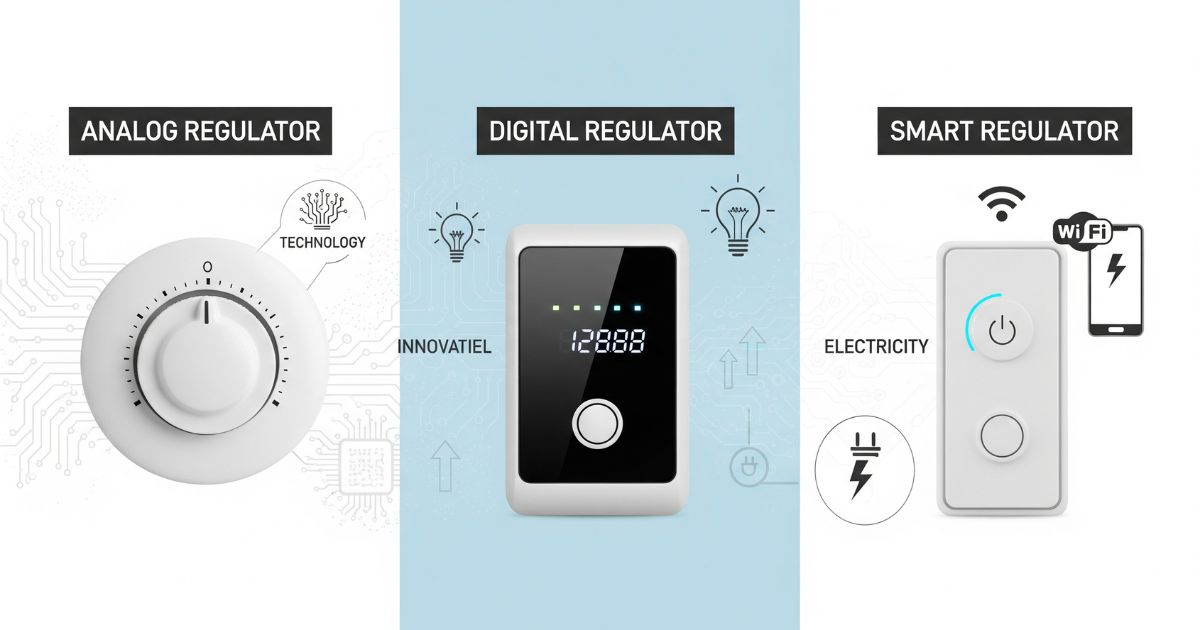
Choosing Between Analog, Digital, and Smart Fan Regulators

When it’s time to upgrade your home’s cooling system or replace that old ceiling fan regulator, you’re faced with more options than ever before. The days of simply picking up any fan speed controller from the local hardware store are behind us. Today’s market offers analog, digital, and smart fan regulators, each with distinct advantages and price points that cater to different needs and budgets.

Making the right choice between these technologies isn’t just about the fan regulator cost anymore. It’s about finding the perfect balance between functionality, energy efficiency, and your lifestyle requirements. Whether you’re building a new home in Ahmedabad or upgrading your existing setup, understanding these differences will help you make an informed decision that you won’t regret later.

Understanding the Basics: What Makes Each Type Different?

Analog Fan Regulators: The Traditional Choice

Analog regulators have been the backbone of ceiling fan control for decades. These mechanical devices use a simple resistance-based system to control your fan’s speed. When you rotate that familiar dial or slide the switch, you’re physically changing the resistance in the circuit, which directly affects how fast your ceiling fan spins.

The beauty of analog regulators lies in their simplicity. There’s no complicated setup, no need for smartphone apps, and definitely no Wi-Fi connection required. Just install it, turn the dial, and you’re good to go. For many homeowners, especially those who value straightforward solutions, this remains an attractive option when considering the cost of fan regulator installations.

However, this simplicity comes with a trade-off. Analog regulators work by dissipating excess energy as heat, which means they’re not the most energy-efficient option available. If you’ve ever noticed your old regulator getting warm to the touch, that’s wasted energy being converted to heat instead of being saved on your electricity bill.

Digital Fan Regulators: The Modern Middle Ground

Digital or electronic fan regulator technology represents a significant step forward in efficiency and precision. Instead of using resistance to control speed, these devices employ electronic circuits that regulate voltage more precisely. This means smoother speed transitions, better energy efficiency, and often a longer lifespan for both the regulator and your ceiling fan motor.

The fan regulator price for digital models typically sits between analog and smart options, making them an excellent choice for budget-conscious consumers who still want improved efficiency. Many modular fan regulator designs now incorporate digital technology, fitting seamlessly into modern electrical panels and switch plates.

What sets digital regulators apart is their ability to maintain consistent fan speeds regardless of voltage fluctuations. If you live in an area where power supply isn’t always stable, a digital regulator can help protect your fan motor while ensuring consistent performance. The 1 M 7 Diamond Modular Ceiling Fan Regulator exemplifies this technology, offering precise control in a sleek, modular design.

Smart Fan Regulators: The Future of Climate Control

Smart regulators represent the cutting edge of fan control technology. These devices don’t just regulate speed; they integrate with your entire home ecosystem. Imagine adjusting your ceiling fan regulator from your office, scheduling it to turn on before you arrive home, or having it automatically adjust based on room temperature and occupancy.

The remote control fan regulator functionality is just the beginning. Modern smart regulators can connect to your home’s Wi-Fi network, allowing control through smartphone apps, voice assistants like Alexa or Google Assistant, and even automated routines based on your daily schedule. Some advanced models include sensors that detect room temperature, humidity, and even the number of people present, adjusting fan speed accordingly for optimal comfort and energy savings.

Breaking Down the Cost Factor: Initial Investment vs. Long-term Savings

Initial Investment vs. Long-term Savings comparison, relevant to costs in fan regulator manufacturing. Visual representation of the trade-off between initial investment costs and potential long-term savings, a key consideration for fan regulator manufacturing processes.

Analog Regulator Pricing

When examining fan regulator lowest price options, analog models typically win the initial cost battle. You can find basic analog regulators starting from as low as ₹150-200, with more durable branded options ranging from ₹300-500. The installation is straightforward, often requiring no professional help if you have basic electrical knowledge.

However, the real cost consideration comes in energy consumption. Since analog regulators waste energy as heat, they can add approximately 15-20% to your fan’s operating cost over time. For a household running multiple fans regularly, this inefficiency can translate to noticeable increases in electricity bills.

Digital Regulator Investment

The electronic fan regulator price typically ranges from ₹400-1,200, depending on features and brand quality. Products like the 1 M 7 Dio Modular Regulator offer excellent value in this category, combining modern aesthetics with reliable digital control.

The energy savings with digital regulators can be substantial. They typically reduce energy consumption by 30-40% compared to analog models, which means the higher initial investment often pays for itself within 1-2 years of regular use. Additionally, the precise control reduces wear on your fan motor, potentially extending its lifespan significantly.

Smart Regulator Economics

Smart fan regulators command premium prices, typically starting from ₹1,500 and going up to ₹5,000 or more for advanced models. The 2 module fan regulator price for smart variants can be even higher when you factor in professional installation and setup requirements.

Yet, the economic argument for smart regulators extends beyond simple energy savings. These devices can reduce your cooling costs by up to 50% through intelligent scheduling and adaptive control. If you’re already invested in home automation or planning to build a smart home, the integration capabilities alone might justify the investment.

Installation and Setup: What to Expect with Each Type

Installing Analog Regulators

The installation process for analog regulators remains refreshingly simple. If you’re replacing an existing regulator, it’s often a matter of disconnecting the old unit and connecting the new one following the same wiring pattern. The typical installation involves:

  • Turning off power at the main circuit breaker
  • Removing the old regulator
  • Connecting live, neutral, and fan wires to the new unit
  • Securing the regulator in the electrical box
  • Testing at different speed settings

Most homeowners with basic DIY skills can complete this installation in under 30 minutes. The fan regulator switch type doesn’t require any special tools beyond a screwdriver and wire stripper.

Setting Up Digital Regulators

Digital regulator installation follows a similar process to analog models, but with a few additional considerations. The modular regulator design of modern digital units often requires specific mounting brackets or frames. The 1 M 7 Indico Modular Regulator comes with clear installation instructions that make the process manageable for most users.

The key difference lies in ensuring compatibility with your existing wiring and electrical box. Some digital regulators require a neutral wire connection, which older homes might not have readily available at the switch location. In such cases, professional installation might be necessary.

Configuring Smart Regulators

Smart regulator installation represents a more complex undertaking. Beyond the physical installation, which often mirrors digital regulators, you’ll need to:

  • Connect the device to your home Wi-Fi network
  • Download and configure the manufacturer’s app
  • Set up voice control integration if desired
  • Create schedules and automation rules
  • Test remote access and control features

While manufacturers have made significant strides in simplifying this process, first-time smart home users might find the setup overwhelming. Many fan regulator manufacturers now offer detailed video tutorials and customer support to guide users through the installation process.

Energy Efficiency: The Hidden Savings Calculator

Understanding Power Consumption Patterns

The way different regulator types consume and manage power directly impacts your electricity bills. Analog regulators using resistance-based control convert unused electricity into heat. Running a 75-watt ceiling fan at 50% speed with an analog regulator still consumes nearly 60-65 watts, with the difference being wasted as heat.

Digital regulators employ pulse width modulation or similar technologies to actually reduce power consumption at lower speeds. That same 75-watt fan at 50% speed would consume approximately 35-40 watts with a digital regulator, representing real energy savings.

Smart regulators take this further by optimizing usage patterns. They can automatically reduce speed during cooler parts of the day, turn off when rooms are unoccupied, and work in conjunction with air conditioning systems to maximize comfort while minimizing energy use.

Regional Considerations for Indian Homes

In cities like Ahmedabad, where summer temperatures regularly exceed 40°C, ceiling fans run almost continuously for several months. The choice of regulator can significantly impact annual electricity costs. A household with four ceiling fans running 12 hours daily during summer months could save ₹2,000-3,000 annually by switching from analog to digital regulators, and potentially double that amount with smart regulators properly configured.

The 5 step fan regulator price might seem attractive initially, but understanding these long-term implications helps put the investment in perspective. Quality products from established fan regulator manufacturers in India factor in local climate conditions and usage patterns in their design.

Feature Comparison: Beyond Basic Speed Control

Analog Regulator Features

Despite their simplicity, analog regulators offer some advantages:

  • Reliability: Fewer components mean fewer potential failure points
  • No electromagnetic interference: Unlike digital devices, they don’t generate EMI
  • Universal compatibility: Works with virtually any ceiling fan model
  • Silent operation: No electronic buzzing or clicking sounds
  • Independence from power quality: Functions regardless of voltage fluctuations

Digital Regulator Capabilities

Modern digital regulators bring enhanced functionality:

  • Precise speed control: Maintains exact speeds without drift
  • LED indicators: Visual confirmation of selected speed settings
  • Capacitor protection: Built-in safeguards for fan motor capacitors
  • Compact design: The modular fan regulator price often includes space-saving benefits
  • Touch controls: Many models feature modern touch-sensitive panels

The 1 M 7 SILVER series demonstrates how digital technology can be packaged in aesthetically pleasing designs that complement modern interiors.

Smart Regulator Innovation

Smart regulators revolutionize fan control with features like:

  • Geofencing: Automatically adjusts when you leave or approach home
  • Weather integration: Responds to outdoor temperature and humidity changes
  • Energy monitoring: Tracks and reports actual power consumption
  • Multi-user profiles: Different settings for different family members
  • Integration capabilities: Works with other smart home devices for coordinated climate control
  • Firmware updates: Receives new features and improvements over time

Making the Right Choice for Your Home

For Traditional Homes and Rental Properties

If you’re living in a rental property or prefer keeping things simple, analog regulators remain a viable choice. The low fan regulator cost and easy installation make them perfect for temporary setups. They’re also ideal for outdoor installations where smart features would go unused.

Consider analog regulators if:

  • You’re on a tight budget
  • The fan usage is minimal
  • You prefer mechanical controls
  • You’re installing in locations without stable internet
  • Simplicity is your priority

For Modern Living Spaces

Digital regulators strike an excellent balance for most modern homes. The electronic fan regulator price has become increasingly competitive, making them accessible to middle-class households. They’re particularly suitable for:

  • Family homes with regular fan usage
  • Locations with unstable power supply
  • Users wanting energy savings without complexity
  • Modern modular electrical installations
  • Those planning gradual home upgrades

For Tech-Forward Households

Smart regulators suit homes where technology enhances daily living. If you already use smart speakers, automated lighting, or security systems, adding smart fan control creates a cohesive ecosystem. They’re ideal when:

  • Energy efficiency is a top priority
  • You travel frequently and want remote control
  • You’re building or renovating with future-proofing in mind
  • Comfort and convenience justify the investment
  • You enjoy data-driven insights about home energy use

Understanding Technical Specifications

Reading the Fan Regulator Circuit Diagram

Whether you’re technically inclined or just curious, understanding how to connect fan regulator units properly ensures safe installation. The basic fan regulator circuit involves connections to:

  1. Input line (Live): Connects to the main power supply
  2. Output to fan: Carries regulated power to the ceiling fan
  3. Neutral: Completes the circuit (required for some digital and all smart regulators)
  4. Ground: Safety connection (when available)

The regulator fan circuit for analog models is straightforward, with the resistance element in series with the fan motor. Digital circuits are more complex, incorporating semiconductors and control logic, while smart regulators add wireless communication modules and processors.

Compatibility Considerations

Before purchasing any regulator, verify compatibility with your ceiling fan. Most Indian ceiling fans work with standard regulators, but some considerations include:

  • Fan wattage: Ensure the regulator can handle your fan’s power rating
  • Number of speeds: Match the regulator’s speed options to your preferences
  • Mounting type: Confirm whether you need modular or conventional mounting
  • Wiring availability: Check for neutral wire availability for digital/smart options
  • Load capacity: Some regulators can control multiple fans

Maintenance and Longevity Factors

Analog Regulator Durability

The mechanical nature of analog regulators means wear and tear over time. The rotating components can develop dead spots, leading to inconsistent speed control. However, their simple construction means they often last 5-7 years with minimal maintenance. Regular cleaning of contacts and checking for loose connections can extend their lifespan.

Digital Regulator Reliability

Electronic components in digital regulators are generally more durable than mechanical parts. With no moving parts except for touch buttons or switches, they typically last 7-10 years. The main vulnerability comes from power surges and voltage spikes, making surge protection a worthwhile investment. The 4 step modular fan regulator designs often include built-in protection circuits.

Smart Regulator Maintenance

Smart regulators require both physical and software maintenance. While the hardware can last 10+ years with proper care, software updates are crucial for security and functionality. Regular app updates, occasional Wi-Fi reconnection, and firmware updates keep these devices running optimally.

The Environmental Impact Perspective

Choosing the right regulator for ceiling fan applications goes beyond personal convenience and cost savings. The environmental implications of your choice deserve consideration.

Energy-efficient regulators reduce carbon footprints by consuming less electricity. In a country where coal still generates significant electricity, every kilowatt saved matters. Digital and smart regulators can reduce a household’s fan-related energy consumption by 30-50%, translating to meaningful environmental benefits when multiplied across millions of homes.

Additionally, longer-lasting digital and smart regulators mean fewer devices in landfills. While they contain more complex electronics requiring proper disposal, their extended lifespan often results in less overall waste compared to frequently replaced analog units.

Future Trends in Fan Regulation Technology

The fan regulator industry continues evolving, with exciting developments on the horizon:

IoT Integration Advances

Future smart regulators will likely integrate with more IoT devices, creating truly intelligent climate control systems. Imagine regulators that communicate with smart windows, automated blinds, and HVAC systems to maintain perfect comfort with minimal energy use.

AI-Powered Optimization

Machine learning algorithms are beginning to appear in premium smart regulators. These systems learn your preferences and routines, automatically adjusting fan speeds based on historical data and predictive modeling.

Voice Control Evolution

While current smart regulators support basic voice commands, future models will understand natural language and context. Instead of saying “Set fan to speed 3,” you might simply say “I’m feeling a bit warm,” and the system will adjust accordingly.

Regional Market Insights: Focus on Indian Consumers

The Indian market for fan regulators presents unique characteristics. With ceiling fans being ubiquitous across the country, from metro cities to rural areas, the demand for efficient regulators continues growing. Fan regulator manufacturers in Ahmedabad and other industrial hubs are responding with products tailored to local needs.

The fan regulator price India market shows interesting segmentation:

  • Budget segment (₹150-400): Dominated by basic analog and entry-level digital regulators
  • Mid-range (₹400-1,200): Quality digital and modular options
  • Premium (₹1,200+): Smart regulators and high-end digital models

When you buy fan regulator online, you’ll notice increasing availability of all three types, with e-commerce platforms offering detailed comparisons and reviews. The electric fan regulator price varies significantly based on features, brand reputation, and warranty terms.

Making Your Final Decision: A Practical Framework

To choose the best fan regulator for your needs, consider these factors:

Budget Analysis

Calculate not just the initial ceiling fan regulator price but also:

  • Installation costs (if professional help needed)
  • Expected energy savings over 5 years
  • Potential maintenance or replacement costs
  • Value of convenience features for your lifestyle

Usage Patterns

Evaluate how you use ceiling fans:

  • Hours of daily operation
  • Seasonal usage variations
  • Number of speed changes typically needed
  • Importance of remote or automated control

Technical Comfort Level

Be honest about your technical capabilities:

  • Comfort with smartphone apps and settings
  • Willingness to troubleshoot connectivity issues
  • Interest in home automation
  • Patience for initial setup complexity

Future Plans

Consider your long-term housing situation:

  • Planning to stay long-term or might relocate
  • Interest in gradually building a smart home
  • Potential for elderly family members who might struggle with complex controls
  • Plans for home renovation or electrical upgrades

Expert Recommendations by Room Type

Different rooms in your home might benefit from different regulator types:

Bedrooms

Smart or digital regulators work excellently in bedrooms, where scheduled operation and quiet speed changes enhance sleep quality. The ability to control fans without getting out of bed adds significant convenience.

Living Rooms

Digital modular regulators offer the best balance for living spaces, providing precise control and modern aesthetics without overwhelming guests unfamiliar with smart home technology.

Kitchens

Analog or basic digital regulators often suffice for kitchen exhaust fans, where simple on/off or two-speed operation meets most needs.

Outdoor Spaces

Weather-resistant analog regulators typically work best for verandah or patio fans, where smart features would go unused and exposure to elements could damage sensitive electronics.

Troubleshooting Common Issues

Regardless of which type you choose, understanding common problems helps maintain optimal performance. For detailed solutions to specific issues, Troubleshooting Guide: Fixing Common Fan Regulator Issues at Home provides comprehensive assistance.

Regular issues include:

  • Speed fluctuations (common in worn analog regulators)
  • Humming sounds (often indicating capacitor problems)
  • Remote control range problems (in smart regulators)
  • App connectivity issues (Wi-Fi-related challenges)
  • Heating problems (overloaded or failing components)

The Science Behind Your Choice

Understanding the technical aspects helps make informed decisions. The Science Behind Fan Regulators: Analog vs Digital Explained delves deeper into the physics and electronics involved, perfect for those wanting comprehensive technical knowledge.

Conclusion: Your Path to Better Climate Control

Choosing between analog, digital, and smart fan regulators isn’t just about picking the newest technology or the cheapest option. It’s about finding the right match for your lifestyle, budget, and home environment. While analog regulators continue serving basic needs affordably, digital options offer improved efficiency and control. Smart regulators, despite their higher costs, provide unmatched convenience and energy optimization for tech-savvy users.

The Indian market offers excellent options across all categories, from budget-friendly analog models to cutting-edge smart systems. Whether you’re upgrading a single fan or outfitting an entire home, understanding these differences ensures you make a choice that delivers comfort, efficiency, and value for years to come.

Take time to assess your specific needs, consider long-term costs beyond the initial investment, and don’t hesitate to start with one type and gradually upgrade as your comfort and budget allow. The perfect fan regulator for your home is out there, waiting to transform how you experience comfort in your living spaces.

For personalized recommendations or to explore specific products matching your requirements, Contact Us for expert guidance tailored to your unique situation.

Chat With Us