Categories
Blogs fan dimmer manufacturer Fan Regulator Manufacturing

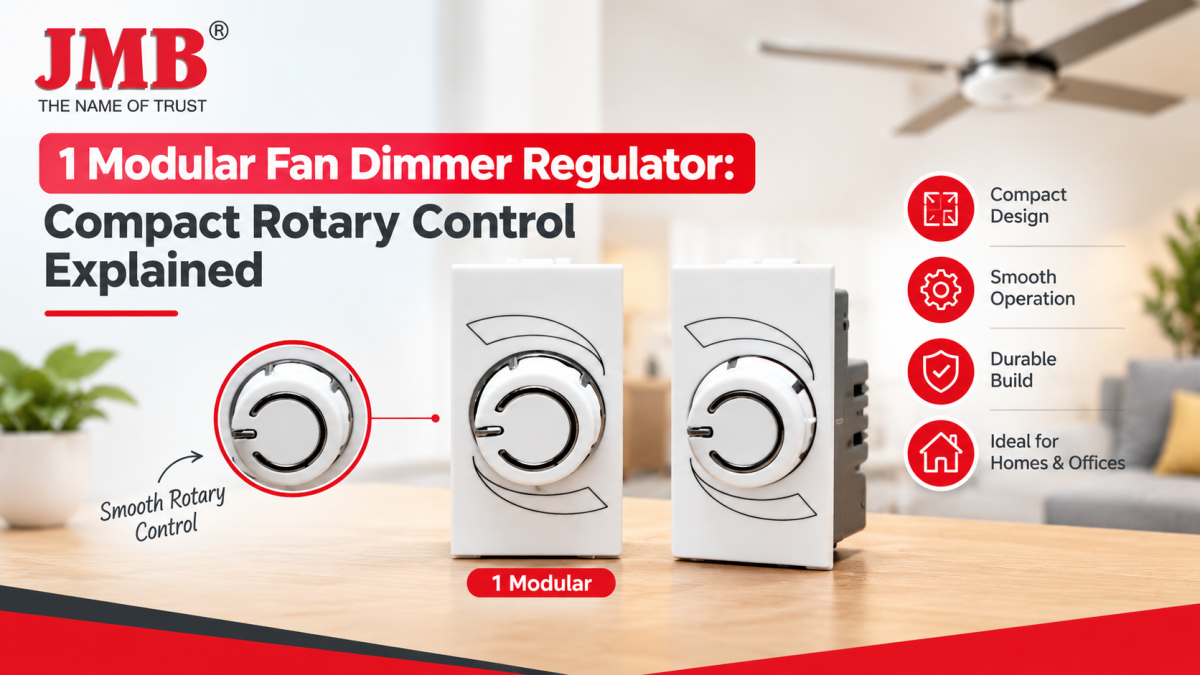
1 Modular Fan Dimmer Regulator: Compact Rotary Control Explained

If your switchboard has limited room and you still want smooth fan speed control, a 1 modular fan dimmer regulator solves that problem without cluttering the panel. It sits inside a single gang slot, works with a simple twist, and gives you a steady range of speeds instead of the fixed steps older regulators offered. This guide walks through how the design works, what sets it apart from bigger regulators, and how to pick the right variant for your home or office board. It fits within the broader Fan Dimmer Regulator in India range that most households now choose over older wire-wound units.

What Is a 1 Modular Fan Dimmer Regulator?

A 1M rotary fan dimmer is a small electronic device fitted directly onto your switchboard that lets you control fan speed by turning a knob instead of flicking a switch through preset stages. Unlike a mechanical regulator with distinct notches, a 1 modular rotary dimmer regulator uses a continuous dial, so you can settle on the exact airflow you want rather than jumping between low, medium, and high. Because it occupies just one module, it pairs neatly with light switches and sockets on the same plate.

The 1M volume fan regulator category exists specifically for boards where space is tight, such as bedrooms, small offices, or older homes with compact switch panels. You get full control without giving up room for other fittings.

Space-Saving Modular Fan Dimmer 1 Module Design

Older fan regulators often took up two or three module slots because of their internal resistor coils and bulky housing. A modular fan dimmer 1 module unit changes that by packing the same control electronics into a footprint the size of a standard switch. This matters more than it sounds. On a board with a tube light switch, a plug socket, and a fan control all in one row, a single 1-module fan regulator dimmer frees up space for future additions without any rewiring of the plate itself.

This compact build is also why so many electricians recommend it during renovations. Instead of replacing the whole switchboard to fit an older-style regulator, you can drop in a unit sized to match everything else already installed, the same approach followed by established fan regulator manufacturers in India that build to modular plate standards.

Explore Our Complete Range of Fan Dimmers

Looking for a space-saving 1M dimmer or a refined Croma finish? Browse our full collection of modular rotary fan dimmers for smooth, hum-free speed control on any switchboard.

Visit Shop

Hum Free Rotary Control Explained

One common complaint with cheap fan regulators is a faint buzzing sound at lower speeds, caused by the motor struggling against uneven voltage steps. A well-built 1M fan dimmer controller avoids this by regulating current smoothly rather than in sharp jumps. The result is what’s often marketed as hum-free modular fan dimmer performance, meaning the fan runs quietly even at its slowest setting.

This matters most at night or in study rooms where background noise is noticeable. An electronic fan dimmer modular unit with proper internal shielding keeps the motor’s electrical noise from carrying into the room, and a 1-module fan speed dimmer built this way tends to last longer since the motor isn’t working against abrupt voltage spikes.

Build Quality: Plates, Knobs and Materials

Durability comes down to the materials used on the visible plate and the internal switching components. A polycarbonate 1M fan dimmer regulator resists yellowing and cracking better than standard plastic housings, which matters in Indian climates where boards can sit in direct sunlight or humid bathrooms for years. The wall plate 1M fan dimmer design should sit flush against the switchboard without gaps, both for appearance and to keep dust out of the internal circuitry.

The knob itself is worth checking closely too. A fan dimmer knob 1 modular unit with a firm, click-free turn tends to hold its setting better over time than loose, wobbly alternatives. Look for a modular fan regulator dimmer with a matte or textured knob finish, since these show fewer fingerprints and stay grippy even with slightly damp hands. Sai Electronics India builds this range with these exact details in mind, matching plate colour and finish options with standard modular switch series so the whole board looks uniform.

1M V Classic and 1M V Croma Variants

Within the 1M range, two variants cover most household needs. The 1M V Classic Rotary Fan Regulator Dimmer suits standard installations where a simple, no-frills rotary control is enough, and it uses the same modular rotary dimmer fan regulator mechanism found across the wider lineup.

For boards where appearance matters more, the 1M V Croma Fan Regulator Dimmer offers a slightly refined knob and plate finish while keeping the same modular fan dimmer 1 module footprint underneath. Both variants share the same internal dimming technology, so the choice mostly comes down to finish preference and how the rest of your switchboard is styled.

Comparing 1 Module, 2 Module and Switch Type Options

Not every room needs the same regulator size. Larger fans, or boards where a single switch controls multiple points, sometimes call for the 2 modular fan dimmer regulator instead, which offers the same rotary dimming principle in a slightly larger housing. A rotary fan dimmer 1 modular unit remains the better fit for single-fan rooms with limited board space, while the 2M version suits setups with additional load or where a slightly larger dial feels more comfortable to adjust.

For households that prefer a familiar toggle action over a rotary dial, the switch-type fan dimmer regulator range provides stepped speed control instead of continuous dimming. It’s a reasonable alternative for anyone upgrading from an old mechanical regulator who isn’t ready to switch to a rotary style, though it doesn’t offer the same fine-tuned control as a 1M rotary fan dimmer.

2M Variants for Larger Boards

If a 2 module unit fits your board better, the 2M V Classic Rotary Fan Regulator Dimmer extends the same dimming technology into a wider housing, useful when a board also needs extra room for larger sockets or additional switches nearby.

Alternatively, the 2M V Croma Rotary Fan Dimmer Regulator offers the refined finish option in the same larger footprint. Both 2M variants share circuitry with the 1M range, so performance and hum free operation stay consistent across both sizes.

Switch Type Alternatives

For boards sticking with a toggle-based layout, the MV Classic Fan Dimmer Switch gives a stepped alternative without moving to rotary control. Electricians sometimes recommend it when replacing an existing switch-type regulator on a like-for-like basis, since the wiring terminals match what’s already in place.

For a slightly different plate finish in the same stepped format, the M V CROMA Fan Dimmer covers that need, avoiding any changes to the board layout during a straightforward swap.

Installation and Wiring Basics

Fitting a fan regulator dimmer is usually a straightforward job for a licensed electrician, though it helps to know the basics before calling one. Most 220V modular fan dimmer 1M units connect using the same two wires as a standard switch, live in and load out to the fan, with no neutral connection required at the regulator itself. Power should always be switched off at the main board before any wiring work, and a proper earth connection on the switchboard plate reduces the risk of static shock when adjusting the knob.

If you’re planning the wiring yourself, a step-by-step wiring guide can walk through the terminal layout and common mistakes to avoid before you begin.

Rotary Regulators vs Remote-Controlled Fans

Some homeowners weigh a rotary regulator against a fully remote controlled fan setup. A ceiling fan dimmer 1 module unit costs less upfront, requires no batteries, and works even if a remote goes missing, which makes it a dependable fallback even in homes that also use smart controls elsewhere. For a closer breakdown of how the two compare on convenience and running cost, this remote control ceiling fan vs. traditional regulator comparison covers the trade-offs in more detail.

Sourcing From a Trusted Manufacturer

Not all regulators on the market meet the same safety or consistency standards, so sourcing from an established 1M fan dimmer manufacturer matters more than it might seem. Look for ISI-marked components, consistent voltage ratings, and a manufacturer that tests units for hum and heat buildup before shipping. A modular fan dimmer manufacturer in India-based supplier also tends to offer easier warranty support and spare parts compared to imported alternatives.

For electricians, contractors, or retailers stocking multiple boards, working with a bulk 1 modular fan dimmer supplier keeps unit pricing consistent across large orders and avoids delays from mismatched batches. Sai Electronics India supplies both retail quantities and bulk orders from the same production line, so quality stays the same regardless of order size.

Frequently Asked Questions

Does a 1 modular fan dimmer regulator work with any ceiling fan?

Most standard AC ceiling fans are compatible, though BLDC or inverter fans often need a dedicated remote or dedicated controller rather than a resistive rotary dimmer, so it’s worth checking your fan’s motor type first.

Why does my old regulator get warm but a modular one doesn’t?

Older wire-wound regulators dissipate excess power as heat at lower speeds, while electronic modular units regulate voltage more efficiently, which is why they stay noticeably cooler during extended use.

Can I fit a 1-module regulator into a board built for 2 modules?

Yes, using a blanking plate or a combination plate designed for mixed module sizes, an electrician can fit a smaller unit into a larger cutout without replacing the whole switchboard.

Is rotary dimming better than switch type for fan longevity?

Rotary dimming generally reduces motor strain compared to abrupt stepped switching, which can extend motor life slightly, though both types are built to standard safety and durability specifications.

What’s the difference between the Classic and Croma finishes?

The difference is mainly cosmetic, with Croma offering a refined knob and plate texture, while Classic keeps a simpler finish. Both use identical internal dimming circuitry.

Final Thoughts

A compact rotary dimmer is a small upgrade that makes a noticeable difference in day-to-day comfort, especially in rooms where board space and quiet operation both matter. Whether you need a single unit for a bedroom or a bulk order for a project, reach out through Contact Us to check current stock, pricing, and finish options.

Get In Touch

Ready to Source the Right Modular Fan Dimmer?

Whether you need a compact 1M unit for a tight bedroom switchboard or bulk quantities for a large project, our team is ready to assist you with pricing, finishes, and technical specifications.

Contact Us Now

Categories
Fan Regulator Manufacturing

2-Module Fan Regulator Guide: Design, Pricing, and Installation Tips

Why 2-Module Fan Regulators Still Matter

When you’re planning or upgrading your home’s electrical setup, choosing the right fan speed control can make a real difference in comfort and energy savings. The 2-module fan regulator remains one of the most practical choices for modern modular switch systems. Unlike older bulky regulators that stuck out from walls, these fit neatly into standard modular boards alongside your switches and dimmers.

Basic regulators control speed through resistance, generating heat and wasting power. Modular options, however, integrate electronic controls that work more efficiently. This matters when you’re running multiple fans during hot months. Leading Fan Regulator Manufacturers in India have refined these designs to balance performance, aesthetics, and durability. Whether you’re a homeowner, interior designer, or electrical contractor, understanding what makes a quality 2-module regulator will help you make smarter choices.

What Is a 2-Module Fan Regulator

A 2-module fan regulator occupies two standard module spaces in your switchboard. Most modular electrical systems in India follow a standard module size, and a 2-module component takes up twice that width. This size accommodates the internal circuitry needed for smooth fan speed control while keeping the design compact.

The regulator connects to your ceiling fan’s power supply and lets you adjust the motor speed by controlling voltage. Inside, electronic components manage this voltage reduction without the inefficiency of old resistor-based models. You’ll find 2-module regulators in homes, small offices, retail stores, and even industrial cabins where individual room climate control matters.

These regulators work with standard single-phase AC fans rated between 60W and 120W. They fit into the same plate as your light switches, creating a uniform look across your room. For anyone building a new home or renovating, this modular approach simplifies both installation and future replacements.

Types of 2-Module Fan Regulators in the Market

Electronic Fan Regulators

Electronic fan regulators use solid-state components like TRIACs and integrated circuits to control fan speed. You turn the knob, and the circuit adjusts the voltage in precise increments. This creates smooth speed transitions without the jerky changes you might remember from older models.

These regulators run cooler because they don’t rely on resistance to limit current. That means less energy wasted as heat and longer component life. Any reliable Electronic Fan Regulators Manufacturer will test their products for thermal performance and voltage stability. When you shop for electronic models, you’re choosing efficiency and consistency.

Fan Dimmer Regulators

A Fan Dimmer Regulator works similarly to electronic models but often includes additional features for fine-tuned control. The term “dimmer” originally applied to lights, but modern fan dimmers use the same principle to vary motor speed.

These work particularly well with ceiling fans and coolers. A Cooler Dimmer Regulator lets you adjust airflow precisely, useful during shoulder seasons when full blast feels too strong. The Fan Regulator Dimmer category includes models with soft-touch controls, rotary knobs, or even touch-sensitive panels.

When searching for a Ceiling fan dimmer price, you’ll notice these typically cost more than basic regulators. The extra investment buys you smoother operation and better heat management. If you search “Fan dimmer price near me,” you’ll find local suppliers often stock multiple brands, but online platforms offer wider selection.

Modular Fan Regulators & Dimmers

Modular Fan Regulators & Dimmers represent the current standard in electrical fittings. They match the design language of modern switchboards, with clean lines and consistent finishes. These units snap into place without exposed screws or uneven surfaces.

Modular Fan Regulator Dealers stock various brands, but it pays to check which ones meet safety standards. A good Modular Dimmer Fan Regulator Manufacturer will provide certifications and clear load ratings. These products often come with customizable face plates in white, black, silver, and wood finishes, letting you match your interior design.

Build Quality and Design Features to Look For

Not all 2-module regulators handle heat equally well. Quality models use heat-resistant polycarbonate or ABS plastic that won’t warp or discolor. The knob should rotate smoothly across its full range without catching or requiring excessive force. Cheap regulators develop scratchy rotation or loose connections after a few months.

Pay attention to the socket design. Reputable fan regulator socket manufacturers engineer secure terminal connections that maintain contact under vibration and thermal cycling. Loose terminals create resistance, generate heat, and eventually fail. The socket should also accommodate a range of wire gauges without requiring excessive stripping.

Modern homeowners prefer modular designs because they look cleaner and allow easy upgrades. You can swap a regulator for a dimmer or timer without replacing the entire board. Many fan regulator manufacturers in Ahmedabad focus on robust builds, combining local manufacturing expertise with quality materials. Their products often undergo extended testing in high-temperature conditions common to Indian climates.

Noise matters too. A quality regulator operates silently. If you hear buzzing or humming when adjusting speed, the internal components aren’t managing the voltage smoothly. This noise indicates poor-quality capacitors or inadequate filtering circuits.

Price Guide: What Affects 2-Module Fan Regulator Cost

Ceiling Fan Dimmer Price Basics

A basic 2-module fan regulator might cost between ₹150 and ₹400, depending on brand and features. Ceiling fan dimmer price ranges typically start around ₹250 for entry-level electronic models and can reach ₹800 for premium touch-control versions.

Several factors push costs higher. IC-based control systems cost more to manufacture than simple TRIAC circuits but deliver better performance. Load capacity matters too. A regulator rated for 120W fans costs more than one rated for only 60W. Higher-capacity models use beefier components that handle current without overheating.

Material quality affects pricing. Regulators with metal inner frames and reinforced terminals last longer and justify their higher cost. Brands that invest in proper testing and certification pass those expenses to customers, but you get reliability in return.

Fan Dimmer Price Near Me Search Behavior

When you search “Fan dimmer price near me,” you’re often comparing local electrical shops against online retailers. Local pricing includes the convenience of immediate purchase and sometimes free installation advice. However, Fan Dimmer Suppliers on e-commerce platforms often offer lower prices due to volume purchasing and reduced overhead.

Regional variations exist. In cities with higher living costs, even basic regulators carry a premium. In manufacturing hubs like Ahmedabad, Delhi, or Mumbai, wholesale rates remain competitive because fan regulator companies distribute directly to local dealers.

Online listings under “Fan Regulators and Dimmers Online at Best Price” aggregate multiple sellers, letting you compare specifications and reviews. The trade-off is shipping time and the inability to physically inspect the product before purchase.

Installation Tips for a 2-Module Fan Regulator

Before starting any electrical work, switch off the main circuit breaker for the room. Test the wires with a voltage tester to confirm power is off. Safety always comes first.

Here’s a simple installation process:

  1. Remove the existing regulator or blank plate from your modular board
  2. Identify the incoming power wire (usually red or brown), neutral (black or blue), and the wire going to the fan
  3. Connect the incoming power to the regulator’s input terminal
  4. Connect the output terminal to the fan wire
  5. Secure the neutral wire to the neutral terminal (some regulators don’t have a neutral connection)
  6. Push the regulator gently into the module space until it clicks
  7. Attach the face plate and knob
  8. Restore power and test all speed settings

If your home has older wiring without proper earthing, consider getting an electrician to upgrade the circuit. Some modern electronic regulators require proper earthing to function safely. When in doubt about compatibility with your modular board or wiring gauge, consult a licensed electrician.

For those interested in understanding the full wiring process, you can Connect a Fan Regulator Step-by-Step with detailed diagrams and safety tips.

Proper installation notes matter to fan regulator manufacturers and suppliers who want to reduce warranty claims. Following correct wiring standards prevents damage and ensures optimal performance.

How to Pick the Right Fan Regulator Manufacturer

A reliable manufacturer stands behind their products with clear specifications, safety certifications, and customer support. Check for ISI marks or equivalent quality certifications that verify the product meets Indian electrical standards.

Fan regulator manufacturers in India range from large-scale producers serving national markets to regional specialists focusing on specific designs. Both can offer quality products, but larger manufacturers typically invest more in research, testing, and quality control systems.

When comparing fan regulator manufacturers in Ahmedabad against brands from other regions, consider factors beyond price. Does the manufacturer offer technical documentation? Can you get replacement parts if needed? How do customer reviews rate their products’ longevity?

Certifications to verify include ISI (Bureau of Indian Standards), ISO quality management certification, and any specific electrical safety approvals. These aren’t just bureaucratic stamps. They indicate the manufacturer tests products for safety, durability, and performance consistency.

Choose manufacturers who clearly state load ratings, operating temperature ranges, and warranty terms. Vague specifications suggest the company hasn’t properly tested their products or doesn’t want to commit to performance standards.

Top Applications for 2-Module Fan Regulators

In residential settings, you’ll typically install these in bedrooms, living rooms, and dining areas. Each room gets individual fan control, letting different family members set their preferred comfort level. Master bedrooms often benefit from having both fan and light dimmers in the same modular board.

Small shops and boutiques use 2-module regulators to manage ceiling fans without sacrificing wall space. The slim profile looks professional and matches other electrical fittings. Retail spaces value the ability to adjust airflow based on customer traffic and seasonal needs.

Industrial cabins and site offices need reliable climate control for workers spending long hours in small spaces. A quality regulator ensures consistent fan operation even in dusty conditions. The modular design simplifies maintenance when components need replacement.

Cooler speed control represents another practical application. A Cooler Dimmer Regulator lets you dial down air cooler fans during cooler evenings while keeping the water pump running. This flexibility saves electricity and reduces noise.

Whether you need products like the 2 M C, 2 M C CLASSIC, or 2 M C CROMA, understanding your application helps you choose the right specifications and features.

Where to Buy 2-Module Fan Regulators

Fan Regulator Suppliers operate through multiple channels. Local electrical wholesalers stock popular brands and offer immediate availability. You can physically inspect products, compare knob feel, and get installation advice. Building relationships with local suppliers helps when you need specialized products or bulk orders for larger projects.

Fan dimmer manufacturers often sell through authorized dealers who understand product specifications and can guide you toward the right model. These dealers may offer installation services or refer you to qualified electricians.

Fan regulator companies with strong distribution networks ensure consistent product availability across regions. Major brands maintain online stores alongside traditional retail presence. This dual approach gives you flexibility in how you shop.

Online shopping offers convenience and price comparison but requires more research. Read specifications carefully, check return policies, and verify seller ratings. Customer reviews provide insights into real-world performance that marketing materials won’t reveal.

For the widest selection and guaranteed quality, you can Check our product range which includes various 2-module options designed for different needs and budgets.

Final Thoughts

Choosing the right 2-module fan regulator involves balancing immediate costs against long-term value. A quality electronic regulator from a reputable fan regulator manufacturer costs more upfront but delivers years of reliable service. Poor-quality alternatives might save ₹100 today but require replacement within months, wasting both money and installation effort.

Focus on three key factors: electronic control for efficiency, robust build quality for durability, and proper certifications for safety. Whether you buy from established Fan Dimmer Manufacturers or newer Fan Dimmer Suppliers, verify the specifications match your fan’s requirements.

Proper installation matters as much as product quality. Follow safety protocols, use the correct wire gauges, and ensure secure terminal connections. When your project involves multiple regulators or complex wiring, hiring a qualified electrician prevents mistakes that could damage equipment or create safety hazards.

The modular electrical system continues evolving, but 2-module fan regulators remain a practical choice that balances size, functionality, and aesthetics. By understanding what makes a quality product and choosing manufacturers who prioritize performance over shortcuts, you’ll create comfortable spaces that serve you reliably for years.

For more information about our manufacturing capabilities and product range, or to discuss specific project requirements, feel free to Reach out to our team. We’re here to help you make informed decisions about your electrical fittings.

Frequently Asked Questions

Q: What is the difference between a 2-module and 4-module fan regulator?

A: The number refers to the width in standard module spaces. A 2-module regulator takes up two spaces in your switchboard, while a 4-module takes four. The 2-module size is more compact and suitable for most residential applications with standard ceiling fans up to 120W. Larger modules may offer additional features or higher load capacity.

Q: Can I use a 2-module fan dimmer with a cooler?

A: Yes, a Cooler Dimmer Regulator works with air coolers to control fan speed. However, verify the regulator’s load rating matches your cooler’s motor wattage. Most 2-module units handle 60W to 120W loads comfortably, which covers most residential coolers.

Q: How do I know if my fan regulator is electronic or resistor-based?

A: Electronic regulators stay relatively cool during operation and provide smooth speed control across the full range. Resistor-based models get hot, especially at lower speeds, and may produce a slight humming sound. Electronic versions from quality Electronic Fan Regulators Manufacturer will explicitly state the technology used.

Q: What should I look for when checking ceiling fan dimmer price?

A: Beyond the base price, consider load capacity, build quality, warranty coverage, and certifications. A slightly higher ceiling fan dimmer price for a certified electronic model often proves more economical than replacing cheap units repeatedly. Compare features across brands rather than focusing solely on cost.

Q: Why do fan regulator manufacturers in Ahmedabad have a strong reputation?

A: Ahmedabad has developed manufacturing expertise in electrical components over decades. Many fan regulator manufacturers in Ahmedabad combine traditional quality control with modern production techniques. The concentration of suppliers and skilled labor in the region helps maintain competitive pricing without compromising standards.

Q: Is online shopping for fan regulators reliable?

A: Buying Fan Regulators and Dimmers Online at Best Price can be reliable when you use reputable platforms and verified sellers. Check for clear return policies, customer reviews, and product certifications. Many established fan regulator companies maintain official online stores with full warranty support.

Q: Do I need an electrician to install a 2-module fan regulator?

A: If you have basic electrical knowledge and follow safety protocols, you can install it yourself. However, if your wiring is old, you’re uncertain about load calculations, or local regulations require licensed installation, hire an electrician. Proper installation ensures safety and optimal performance.

Q: How long should a quality 2-module fan regulator last?

A: A well-made electronic regulator from a reputable manufacturer should last 5-10 years with normal use. Lifespan depends on electrical quality in your area, load matching, and installation quality. Products from established Fan Regulator Suppliers typically include warranties that reflect expected durability.

Chat With Us